Long-tailed Goral (Naemorhedus caudatus): A Comprehensive Guide
Introduction
The long-tailed goral (Naemorhedus caudatus) is a captivating species of wild goat found predominantly in the rugged terrains of Asia. Known for its agility and distinctive appearance, this species belongs to the family Bovidae and is closely related to other ungulates like antelopes and cattle. Despite its relatively obscure status outside of specialized wildlife circles, the long-tailed goral plays an important role in its ecosystem, serving as both prey and a grazer that contributes to habitat maintenance.
With a growing interest in biodiversity and wildlife conservation, understanding the biology and ecology of the long-tailed goral has gained significance. This article aims to provide an in-depth exploration of this fascinating mammal, delving into its physical characteristics, natural habitat, behaviors, and the challenges it faces in the wild.
Physical Description
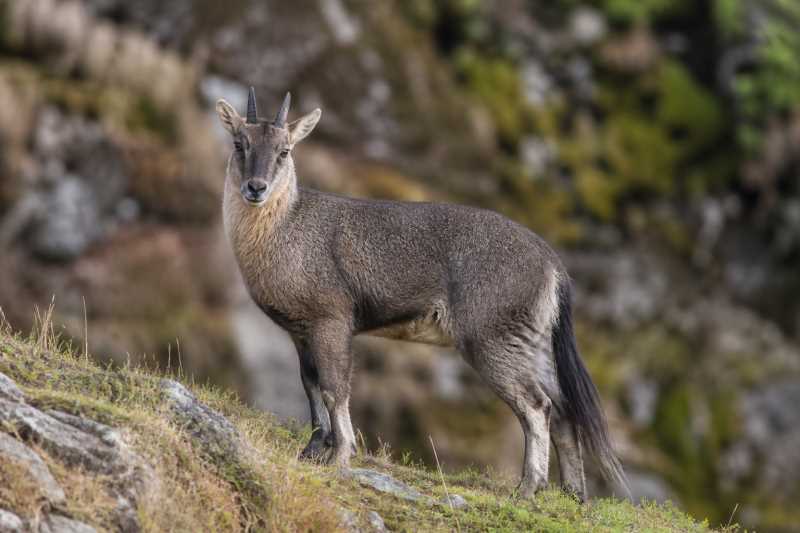
The long-tailed goral is a medium-sized ungulate, characterized by its sturdy build and distinctive long tail, which sets it apart from other species within its genus. Adult gorals typically weigh between 25 to 40 kilograms and stand about 80 centimeters tall at the shoulder. Their coats are dense and coarse, providing insulation against the cold climates they inhabit. The coloration of their fur ranges from grayish-brown to reddish-brown, with lighter underparts, allowing them to blend seamlessly into their rocky environments.
One of the most striking features of the long-tailed goral is its horns. Both males and females possess backward-curving horns, although those of males are generally longer and thicker. These horns are an essential tool for defense against predators and for establishing dominance during mating seasons.
Their facial features include a robust muzzle and large, expressive eyes, which aid in spotting predators from afar. Additionally, their hooves are specially adapted for navigating steep and rocky terrains, giving them an edge in their mountainous habitats.
Range and Habitat
The geographical range of the long-tailed goral spans across several countries in Asia, including China, Russia, and Korea. They primarily inhabit mountainous regions, favoring steep, rocky slopes and cliffs where they can easily evade predators. Their preference for rugged terrain is also linked to their dietary needs, as these areas often provide a rich supply of shrubs, grasses, and other vegetation.
In China, they are found in the northeastern provinces, while in Russia, their presence is noted in the southeastern regions. In Korea, they are primarily located in the northern part of the peninsula. The varied topography of these regions, coupled with the goral’s adaptability, allows it to thrive in a range of altitudes, from sea level to elevations exceeding 2,500 meters.
Behavior and Diet
Long-tailed gorals are primarily diurnal, being most active during the early morning and late afternoon. They exhibit a crepuscular activity pattern, foraging for food during these times while resting during the hottest parts of the day. Gorals are social animals that live in small groups, typically consisting of females and their young, with males often leading solitary lives or forming bachelor groups.
Their diet is predominantly herbivorous, consisting of grasses, leaves, shoots, and shrubs. The availability of specific plant species can vary seasonally, prompting gorals to migrate within their range to find adequate food resources. During the winter months, when vegetation is scarce, they have been known to consume lichens and mosses to supplement their diet.
Social interactions within groups are complex, involving a range of vocalizations and body language to communicate. Dominance hierarchies are established, particularly among males, who engage in displays of strength and horn clashes during mating season.
Identification Tips (Field Recognition Cues)
Spotting a long-tailed goral in the wild can be challenging due to their elusive nature and the rugged terrains they inhabit. However, several key identification cues can aid in their recognition:
- Body Size and Shape: Look for a medium-sized, robust ungulate with a stocky build.
- Horn Structure: Note the backward-curving horns, which are present in both sexes but more prominent in males.
- Coat Coloration: Their grayish-brown to reddish-brown coat helps them blend into rocky backgrounds.
- Tail Length: As their name suggests, they have a notably long tail compared to other goral species.
- Habitat: They are often found on steep, rocky slopes where they can use their agility to navigate the terrain.
Conservation Status (with Threats and Protections)
According to the International Union for Conservation of Nature (IUCN), the long-tailed goral is currently classified as Vulnerable. The primary threats to their survival include habitat loss due to human encroachment, poaching for their meat and horns, and competition with domestic livestock for resources.
Conservation efforts are underway in several countries to protect these animals. Protected areas have been established in regions where gorals are known to exist, and anti-poaching laws are being enforced more rigorously. Additionally, awareness campaigns are aimed at local communities to highlight the ecological importance of gorals and the need for their protection.
International cooperation is also crucial, given the transboundary nature of their habitats. Cross-border conservation initiatives are being explored to ensure that gorals can move freely across their natural range without facing threats from human activities.
Frequently Asked Questions
1. What do long-tailed gorals eat?
Long-tailed gorals primarily consume grasses, leaves, and shrubs. During winter, they may eat lichens and mosses when other food sources are scarce.
2. Where can I find long-tailed gorals in the wild?
They are found in mountainous regions of China, Russia, and Korea, typically in steep, rocky terrains at altitudes ranging from sea level to over 2,500 meters.
3. Are long-tailed gorals endangered?
Long-tailed gorals are classified as Vulnerable by the IUCN due to habitat loss, poaching, and competition with livestock. Conservation efforts are ongoing to protect them.
4. How can I identify a long-tailed goral?
Look for a medium-sized ungulate with a stocky build, backward-curving horns, a grayish-brown coat, and a notably long tail. They are usually found in rocky, mountainous areas.
5. What are the main threats to long-tailed gorals?
The main threats include habitat destruction, poaching, and competition with domestic livestock, which reduce their access to food resources.
Related posts