
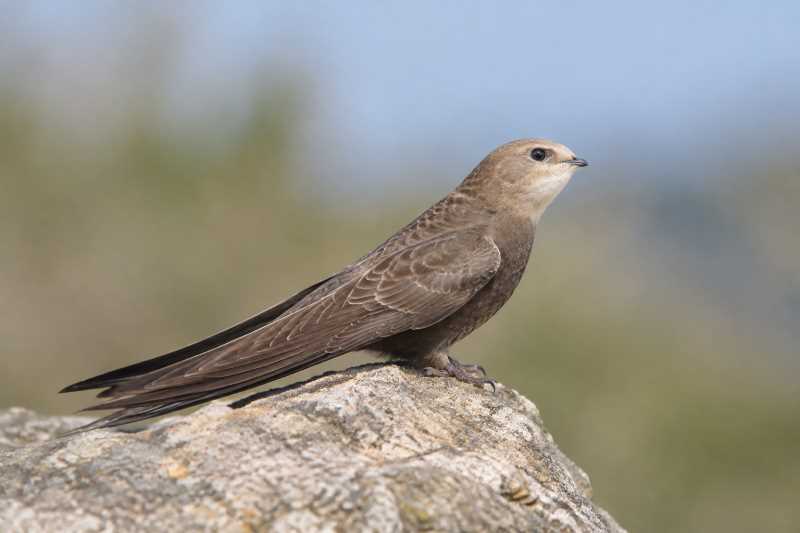
The Pallid Swift: A Master of the Skies
The Pallid Swift (Apus pallidus) is an avian marvel that captivates ornithologists and bird enthusiasts alike with its aerial acrobatics, migratory patterns, and remarkable adaptations to a life spent almost entirely on the wing. Found predominantly in the Mediterranean region, this swift is often mistaken for its close relative, the Common Swift (Apus apus), due to their similar appearance and overlapping habitats. However, the Pallid Swift possesses distinctive features and behaviors that warrant closer examination.
Identification and Physical Characteristics
At first glance, the Pallid Swift may appear unremarkable, with a modest plumage that blends seamlessly with the sky. Yet, its subtle beauty lies in its adaptation to high-speed flight. The Pallid Swift measures approximately 16-17 cm in length, with a wingspan ranging from 42 to 48 cm, making it slightly larger and bulkier than the Common Swift.
The bird’s plumage is predominantly pale brown, with a slight greyish tinge that becomes more apparent in bright sunlight. This coloring serves as excellent camouflage against predators when the swift is airborne. The Pallid Swift’s wings are long and scythe-shaped, allowing for remarkable agility and speed. Its forked tail adds to its aerodynamic efficiency, enabling it to perform swift turns and dives with ease.
One of the key identifying features of the Pallid Swift is its pale throat and belly, which contrast with its darker underwing coverts. This subtle difference can be crucial for bird watchers attempting to distinguish it from the Common Swift, especially during mixed flock encounters.
Habitat and Distribution
The Pallid Swift is primarily a resident of the Mediterranean basin, where it breeds across southern Europe, North Africa, and parts of the Middle East. Its range extends from the Iberian Peninsula and the Balearic Islands in the west to the Levant in the east. During the non-breeding season, Pallid Swifts migrate to sub-Saharan Africa, where they find abundant food sources and favorable weather conditions.
These birds are highly adaptable and can thrive in a variety of environments, from urban areas to rocky cliffs and open countryside. They often nest in man-made structures such as buildings and bridges, taking advantage of crevices and cavities to rear their young. This adaptability has allowed them to coexist with human populations, although urban expansion and habitat destruction pose ongoing threats to their survival.
Behavior and Ecology
Pallid Swifts are renowned for their aerial prowess and spend most of their lives on the wing. They are capable of flying continuously for months at a time, even sleeping while aloft. This remarkable ability is supported by their specialized physiology, including a lightweight skeleton and powerful flight muscles.
Their diet consists primarily of airborne insects, which they catch in flight using their wide mouths. This feeding strategy allows them to exploit a vast aerial niche, supported by their agility and speed. Swifts are social birds and often form large flocks during migration and feeding, benefiting from mutual vigilance against predators.
Breeding occurs between April and July, with pairs often returning to the same nesting sites year after year. The female typically lays two to three eggs, which both parents incubate over a period of about 19 to 20 days. After hatching, the chicks are fed by both parents and fledge after approximately 40 to 45 days.
Conservation Status
While the Pallid Swift is currently classified as a species of Least Concern by the International Union for Conservation of Nature (IUCN), it faces several challenges that could impact its populations in the future. Habitat loss due to urban development and changes in agricultural practices are the primary threats, reducing the availability of suitable nesting sites and food sources.
Climate change also poses a potential threat, as shifts in weather patterns could affect the availability of insects and alter migratory routes. Conservation efforts must focus on protecting key habitats, promoting biodiversity-friendly urban planning, and raising public awareness about the ecological importance of these remarkable birds.
Conclusion
The Pallid Swift is a testament to nature’s ingenuity, perfectly adapted to a life in the skies. Its incredible flight capabilities, coupled with its adaptability and resilience, make it a fascinating subject of study. As we continue to learn more about this remarkable species, it is crucial to ensure that conservation efforts keep pace with the challenges it faces, safeguarding its place in the avian world for generations to come.
Related posts


