Northern Chamois (Rupicapra rupicapra): A Comprehensive Guide
Introduction
The Northern Chamois, scientifically known as Rupicapra rupicapra, is a remarkable species of goat-antelope found in the mountainous regions of Europe. Renowned for its agility and adaptability, the Northern Chamois is a symbol of the rugged beauty of the alpine and subalpine landscapes it inhabits. This article delves into various aspects of the Northern Chamois, offering insights into its physical characteristics, habitat, behavior, and the conservation efforts aimed at preserving this iconic species.
Physical Description
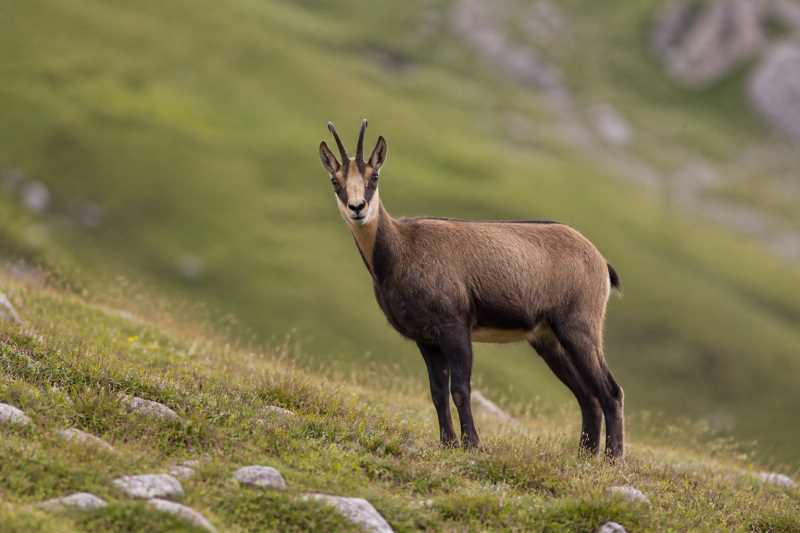
The Northern Chamois is a medium-sized ungulate with a robust and agile build, perfectly suited for its mountainous environment. Adult males, known as bucks, are slightly larger than females, called does. On average, a Northern Chamois stands about 70–80 cm (28–31 inches) at the shoulder and weighs between 25–50 kg (55–110 lbs).
One of the most distinctive features of the Northern Chamois is its sharp, backward-curving horns, present in both sexes. These horns can grow up to 20–30 cm (8–12 inches) long and are used for defense and dominance displays.
The chamois’ coat changes with the seasons. In summer, it is a short, sleek reddish-brown, which transforms into a thicker, darker brown or black coat in winter, providing insulation against the cold. A notable characteristic is the white facial markings and the dark stripe that runs from the nose to behind the ears, adding to the chamois’ striking appearance.
Range and Habitat
The Northern Chamois inhabits a range that extends across the mountainous regions of Europe, including the Alps, Carpathians, and Balkans. It is also found in parts of Turkey and the Caucasus. These animals are highly adapted to rugged terrains, living at elevations ranging from 800 meters (2,600 feet) to 3,000 meters (9,800 feet).
Chamois prefer alpine meadows, rocky outcrops, and forested areas, where they can graze and find refuge from predators. During summer, they often migrate to higher elevations to take advantage of the abundant alpine vegetation, while in winter, they descend to lower, more sheltered areas.
Behavior and Diet
The Northern Chamois is a social animal, typically forming small groups or herds known as ‘troops.’ These groups usually consist of females and their young, while males are more solitary, joining the groups mainly during the mating season.
Chamois are crepuscular, being most active during the early morning and late afternoon. Their agility and speed are noteworthy; they can climb steep slopes and leap across rocky outcrops with ease.
Their diet consists primarily of a variety of grasses, herbs, leaves, and buds. In winter, when vegetation is scarce, they may feed on lichens, mosses, and bark. Their foraging behavior is adapted to the changing availability of food across seasons.
Identification Tips (Field Recognition Cues)
When observing Northern Chamois in the wild, there are several key identification cues to consider:
- Horns: Both sexes have distinctive, backward-curving horns. Males tend to have thicker and more robust horns than females.
- Coloration: Look for the seasonal color changes—lighter coats in summer and darker, denser fur in winter.
- Facial Markings: The white face with a dark stripe from the nose to the ears is a distinctive feature.
- Behavior: Note their agile movements and tendency to inhabit steep, rocky terrains.
Conservation Status (With Threats and Protections)
The Northern Chamois is currently listed as Least Concern by the International Union for Conservation of Nature (IUCN). However, it faces several threats that could impact its populations if not managed properly.
Threats
- Habitat Loss: Expansion of human activities, such as agriculture and infrastructure development, can lead to habitat fragmentation.
- Hunting: Although regulated, hunting remains a pressure, especially in areas where enforcement is weak.
- Climate Change: Alters the alpine ecosystems, affecting the availability of food and suitable habitats.
Protections
- Protected Areas: Many habitats fall within national parks and reserves, providing a safe haven for the species.
- Regulated Hunting: Hunting quotas and seasons are strictly controlled in many regions to ensure sustainable populations.
- Conservation Programs: Efforts include habitat restoration and monitoring of populations to understand and mitigate threats.
Frequently Asked Questions
What is the best time to observe Northern Chamois in their natural habitat?
The best times to observe Northern Chamois are during the early morning and late afternoon when they are most active. In summer, visiting alpine meadows at higher elevations can provide opportunities for sightings, while in winter, they may be found at lower elevations.
How do Northern Chamois adapt to their cold environment?
Northern Chamois adapt to cold environments with their seasonal fur changes. In winter, their coats become thicker and darker, providing insulation against the cold. Additionally, their agile movements allow them to navigate through snow and rocky terrains efficiently.
Are Northern Chamois endangered?
Currently, the Northern Chamois is not endangered and is listed as Least Concern by the IUCN. However, continued conservation efforts are necessary to manage threats such as habitat loss and climate change.
What do Northern Chamois eat in winter?
In winter, when vegetation is scarce, Northern Chamois feed on lichens, mosses, and bark. They may also dig through snow to access buried vegetation.
How do Northern Chamois communicate?
Northern Chamois communicate using a variety of vocalizations, body postures, and scent markings. During the mating season, males emit loud whistles to assert dominance and attract females.
Related posts