Introduction
The Northern Ghost Bat, scientifically known as Diclidurus albus, is a fascinating yet enigmatic species of bat. As a member of the family Emballonuridae, the Northern Ghost Bat possesses unique characteristics that set it apart from other bat species. This medium-sized bat is recognized for its distinctive appearance and fascinating behaviors, making it a subject of interest for both researchers and bat enthusiasts alike. This article aims to provide a comprehensive overview of the Northern Ghost Bat, covering its physical description, range and habitat, behavior and diet, identification tips, and conservation status.
Physical Description
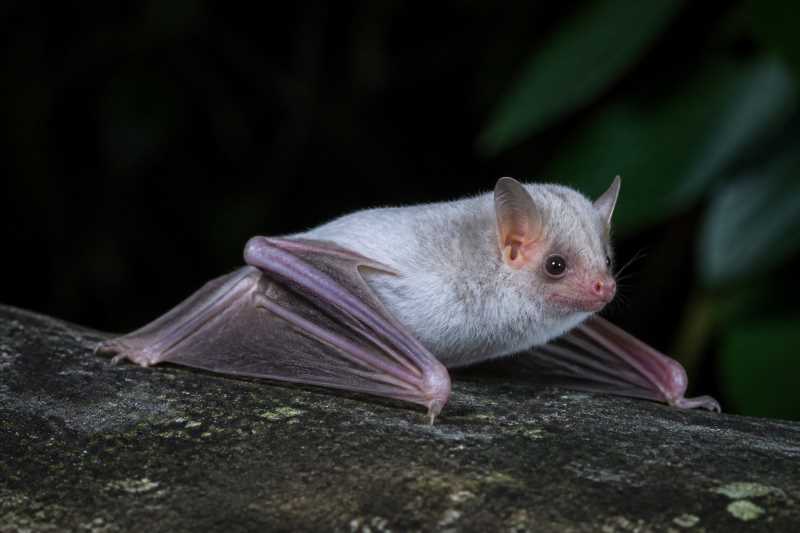
The Northern Ghost Bat is notable for its striking appearance. As its common name suggests, the bat has a ghostly white coloration, which is quite rare among bats. Its fur is typically white or pale, providing excellent camouflage against the bark of trees where it often roosts. The bat’s wings are translucent, giving it a spectral appearance when flying at night.
The Northern Ghost Bat has a body length ranging from 5 to 7 centimeters, with a wingspan of approximately 30 to 35 centimeters. Despite its relatively small size, the bat is well-adapted for flight, possessing long, narrow wings that allow for agile and efficient movement through the air. Its ears are short and rounded, and it lacks a nose leaf, a common feature in many other bat species.
Another distinctive feature of the Northern Ghost Bat is its uropatagium, the membrane that stretches between its hind legs and tail. This membrane is used for maneuvering during flight and possibly for capturing prey.
Range and Habitat
The Northern Ghost Bat inhabits a range that extends across much of Central and South America. Its geographical distribution includes countries such as Mexico, Belize, Costa Rica, Panama, Colombia, Venezuela, Ecuador, Peru, Guyana, Suriname, French Guiana, and Brazil. It is most commonly found in lowland areas, although it can also inhabit montane regions up to 1,000 meters above sea level.
The preferred habitat of the Northern Ghost Bat includes tropical and subtropical forests, where it roosts in tree hollows, under large leaves, or in man-made structures like buildings. The bat’s coloration provides excellent camouflage within these environments, allowing it to blend seamlessly with its surroundings. This cryptic coloration is crucial for avoiding predators during the day when the bat is at rest.
Behavior and Diet
The Northern Ghost Bat is predominantly nocturnal, emerging at dusk to begin its nightly foraging activities. It employs a form of echolocation to navigate and hunt for food in the dark. This echolocation system, although less sophisticated than that of some other bat species, is highly effective for detecting prey in cluttered environments.
The diet of the Northern Ghost Bat primarily consists of insects, with a preference for moths, beetles, and other flying insects. It is an aerial hawker, capturing prey on the wing with remarkable agility. The bat’s long, narrow wings provide it with the speed and maneuverability required to pursue and capture fast-moving insects.
During the day, the Northern Ghost Bat seeks out roosting sites that offer both protection from predators and a stable microclimate. These roosting sites are typically well-concealed and may be shared with other bats, although the species is generally solitary in nature.
Identification Tips (Field Recognition Cues)
For those interested in identifying the Northern Ghost Bat in the field, several key features can aid in its recognition:
- Coloration: Look for the distinctive white or pale fur that gives the bat its ghostly appearance.
- Size and Shape: Note the bat’s medium size, with a body length of 5 to 7 centimeters and a wingspan of 30 to 35 centimeters.
- Habitat: Search for the bat in tropical or subtropical forests, especially near water sources where insects are abundant.
- Flight Pattern: Observe the bat’s flight, which is characterized by swift, agile movements as it hunts for insects.
Conservation Status (with Threats and Protections)
The Northern Ghost Bat is currently listed as Least Concern on the IUCN Red List, indicating that it is not presently at risk of extinction. However, like many bat species, it faces several threats that could impact its populations in the future.
Threats
- Habitat Loss: Deforestation and habitat destruction for agriculture, logging, and urban development pose significant threats to the Northern Ghost Bat. The loss of natural roosting sites can force bats to seek shelter in less suitable environments, increasing their vulnerability to predators and environmental stressors.
- Pesticide Use: The widespread use of pesticides in agricultural areas can reduce the availability of insect prey and expose bats to harmful chemicals.
- Climate Change: Changes in climate patterns can disrupt the ecosystems that support the Northern Ghost Bat, potentially altering its food sources and roosting habitats.
Protections
Conservation efforts aimed at preserving tropical and subtropical forests are crucial for the protection of the Northern Ghost Bat. Protected areas and national parks play a vital role in safeguarding the habitats of this and other bat species. Additionally, initiatives to reduce pesticide use and promote sustainable agricultural practices can help mitigate some of the threats facing the Northern Ghost Bat.
Frequently Asked Questions
What does the Northern Ghost Bat eat?
The Northern Ghost Bat primarily feeds on insects, with a particular preference for moths and beetles. It is an aerial insectivore, capturing its prey mid-flight using echolocation to detect and pursue insects in the dark.
Where can I find the Northern Ghost Bat?
The Northern Ghost Bat is found across Central and South America, inhabiting countries such as Mexico, Costa Rica, Colombia, and Brazil. It prefers tropical and subtropical forests, often roosting in tree hollows or under large leaves.
How can I identify a Northern Ghost Bat?
Identifying a Northern Ghost Bat involves looking for its distinctive white or pale fur, medium size, and swift, agile flight pattern. Observing its habitat and behavior can also provide clues to its identity.
What are the main threats to the Northern Ghost Bat?
The main threats to the Northern Ghost Bat include habitat loss due to deforestation, pesticide use that reduces insect prey availability, and climate change impacting its ecosystem.
Is the Northern Ghost Bat endangered?
No, the Northern Ghost Bat is currently listed as Least Concern on the IUCN Red List. However, it faces threats that could impact its populations if not addressed.
Related posts