Sokolov White-toothed Shrew (Crocidura sokolovi)
Introduction
The Sokolov White-toothed Shrew, scientifically known as Crocidura sokolovi, is a relatively obscure yet fascinating mammal that inhabits specific regions within Southeast Asia. This small insectivorous mammal is part of the Soricidae family, which encompasses a wide variety of shrew species known for their sharp, unpigmented teeth. Despite their diminutive size, shrews play a crucial role in their ecosystems as both predator and prey, contributing to the ecological balance. The Sokolov White-toothed Shrew is particularly interesting due to its restricted range and distinctive features, making it a subject of interest for mammalogists and conservationists alike.
Physical Description
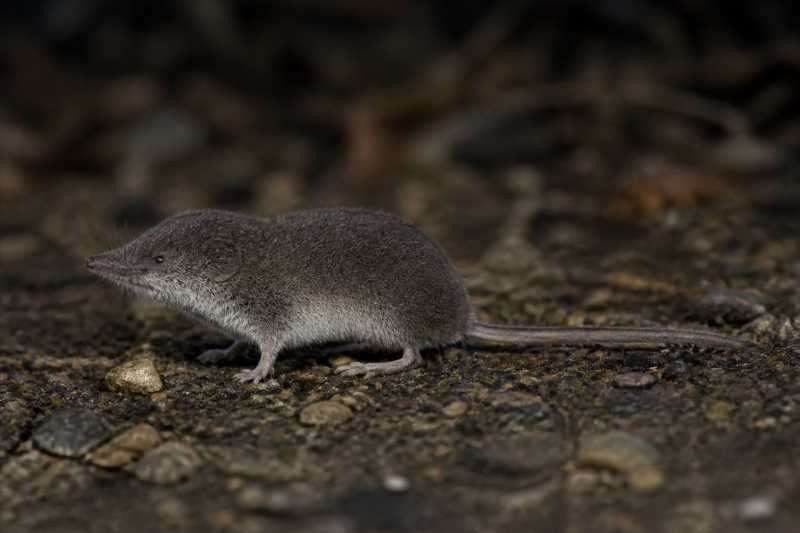
The Sokolov White-toothed Shrew is a small mammal characterized by its elongated snout and sharp, white teeth that lack pigmentation—a defining trait of the white-toothed shrews. Typically, adult shrews of this species measure about 6 to 9 centimeters in body length, with a tail length ranging from 3 to 7 centimeters. The overall body weight typically varies between 4 to 12 grams, depending on factors such as age and nutritional status.
The fur of the Sokolov White-toothed Shrew is generally uniform in color, often appearing in shades of gray or brown, which provides effective camouflage against the forest floor. The texture of the fur is dense and soft, offering protection from the elements. The ears are small and rounded, while the eyes are relatively tiny, suggesting a reliance on other senses such as hearing and smell rather than vision.
Range and Habitat
Crocidura sokolovi is endemic to Vietnam, specifically within the montane forest regions. Its habitat range is notably limited, predominantly found in the central and northern parts of the country. The shrew favors moist, forested environments, particularly those that offer dense ground cover, which is essential for foraging and protection from predators.
The species is typically associated with subtropical or tropical moist lowland forests, where it can exploit the rich diversity of invertebrates as a food source. The presence of leaf litter and fallen logs in these habitats is crucial, as they provide both refuge and abundant hunting grounds for this small mammal.
Behavior and Diet
The Sokolov White-toothed Shrew is primarily nocturnal, engaging in most of its activities during the nighttime. This behavior helps it avoid many diurnal predators and exploit nighttime insect activity. Like many shrew species, it has a high metabolic rate, necessitating frequent feeding sessions.
Its diet mainly consists of insects and other small invertebrates, such as worms and larvae. The shrew’s keen sense of smell and hearing aids in locating prey under the leaf litter and soil. It employs a rapid and aggressive hunting style, capturing prey with its sharp teeth.
Socially, the Sokolov White-toothed Shrew is mostly solitary, coming together only for mating purposes. The breeding season is not well-documented but is believed to occur multiple times throughout the year, given the species’ need to maintain its population in a competitive environment.
Identification Tips
Identifying the Sokolov White-toothed Shrew in the field can be challenging due to its small size and elusive nature. However, several characteristics can aid in its recognition:
- Size and Shape: Look for a small, mouse-like mammal with a pointed snout and a streamlined body.
- Fur Coloration: Note the uniform gray or brown fur, which helps it blend into the forest floor.
- Tail Length: A relatively long tail compared to body length, often used for balance and navigation through dense underbrush.
- Behavior: Observations of rapid, scurrying movements during nighttime hours can indicate its presence.
- Sound: Listen for high-pitched squeaks or rustling noises in leaf litter, which may signal shrew activity.
Conservation Status
The Sokolov White-toothed Shrew is currently classified as Data Deficient by the International Union for Conservation of Nature (IUCN). This classification indicates that there is insufficient information to make a direct, or indirect, assessment of its risk of extinction based on its distribution and population status.
Threats
The primary threat to the Sokolov White-toothed Shrew is habitat loss due to deforestation and land conversion for agriculture and development. The fragmentation of its natural habitat poses a significant risk by isolating populations and limiting their access to resources.
Protections
Conservation efforts for the Sokolov White-toothed Shrew are limited but include habitat protection initiatives. National parks and nature reserves in Vietnam offer some degree of protection, but more comprehensive measures are needed to ensure the long-term survival of this species. Further research is essential to better understand its ecology and inform conservation strategies.
Frequently Asked Questions
What is the diet of the Sokolov White-toothed Shrew?
The Sokolov White-toothed Shrew primarily feeds on insects and other small invertebrates. Its diet includes worms, larvae, and various insects found within its forest habitat.
Where can the Sokolov White-toothed Shrew be found?
This shrew species is endemic to Vietnam, specifically in the montane forests of the central and northern regions. It thrives in moist, forested environments.
How does the Sokolov White-toothed Shrew contribute to its ecosystem?
As an insectivore, the Sokolov White-toothed Shrew plays a crucial role in controlling insect populations, thus maintaining ecological balance. It also serves as prey for larger predators, contributing to the food web.
What are the main threats to the Sokolov White-toothed Shrew?
The primary threat is habitat loss due to deforestation and land conversion. Fragmentation of its habitat further exacerbates the risk to its population.
How can the Sokolov White-toothed Shrew be identified in the wild?
Identification can be aided by its small size, pointed snout, uniform fur coloration, and behaviors such as nocturnal activity and rapid movements.
Related posts