Introduction
Azara’s Agouti (Dasyprocta azarae) is a fascinating mammal species native to South America. Known for its remarkable foraging skills and ecological importance, this rodent plays a crucial role in seed dispersal, which contributes significantly to forest regeneration. Named after the Spanish naturalist Félix de Azara, Azara’s Agouti is an intriguing subject for both wildlife enthusiasts and researchers. Its unique behaviors and adaptations make it a valuable species in understanding the dynamics of tropical and subtropical ecosystems.
Physical Description
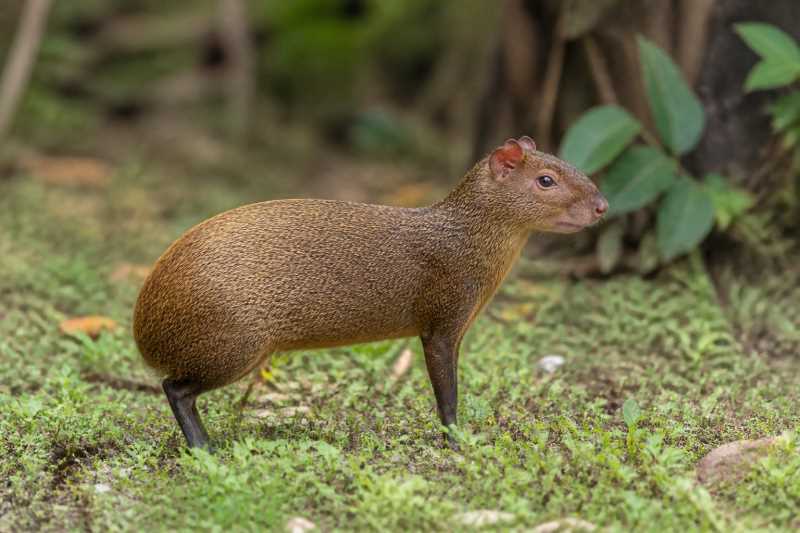
Azara’s Agouti is a medium-sized rodent, measuring between 45 to 60 centimeters in length, with a tail that is typically short and inconspicuous. It weighs around 3 to 6 kilograms. The species is characterized by its robust body, long legs, and a rounded back, which gives it a distinctive silhouette. The fur is coarse and varies in color from reddish-brown to dark brown, with a lighter underbelly. This coloration provides excellent camouflage in their natural habitat. The agouti has sharp, continuously growing incisors, essential for gnawing on hard seeds and nuts.
The eyes of Azara’s Agouti are large and set on the sides of its head, providing a wide field of vision. Its ears are small and rounded, enabling it to hear potential predators from a distance. The limbs are well-adapted for running and digging, with strong claws that aid in foraging.
Range and Habitat
Azara’s Agouti is predominantly found in the lowland forests of South America, specifically in countries like Brazil, Paraguay, and Argentina. It thrives in dense, tropical rainforests but is also found in savannas and secondary forests. The species shows a preference for habitats near water sources, such as rivers and streams, which provide ample food resources and cover from predators.
The agouti’s habitat is characterized by rich biodiversity, and the animal plays an integral role in its ecosystem. By burying seeds, Azara’s Agouti inadvertently promotes forest growth, making it a vital component of its environment.
Behavior and Diet
Azara’s Agouti is primarily diurnal, being most active during the early morning and late afternoon. This behavior helps it avoid the midday heat and nocturnal predators. The species is solitary, except during mating season or when mothers are caring for their young. Agoutis communicate through a series of vocalizations and scent markings to establish territory and social bonds.
The diet of Azara’s Agouti is varied, consisting mainly of fruits, seeds, and nuts. The animal’s impressive ability to crack open hard shells with its powerful jaws is well-documented. Occasionally, it may consume insects and small vertebrates, but plant-based foods remain its primary sustenance. The agouti’s role as a seed disperser is crucial, as it collects and buries seeds, some of which are forgotten and eventually sprout into new plants.
Identification Tips (Field Recognition Cues)
To identify Azara’s Agouti in the wild, observe the following characteristics:
- Size and Shape: Look for a medium-sized rodent with a robust build, long legs, and a rounded back.
- Coloration: Note the reddish-brown to dark brown fur, with a lighter underside.
- Tail: Unlike other rodents, Azara’s Agouti has a noticeably short tail.
- Behavior: Diurnal activity patterns and solitary behavior can help in differentiation from other similar species.
- Vocalizations: Listen for their distinct sounds, which are used for communication and territorial marking.
Conservation Status (With Threats and Protections)
The International Union for Conservation of Nature (IUCN) currently classifies Azara’s Agouti as Least Concern. However, the species faces several threats that could impact its population in the future. Habitat destruction due to deforestation, agricultural expansion, and urbanization poses significant risks. Additionally, hunting for meat and the pet trade are prevalent in some regions.
Conservation efforts are underway to mitigate these threats. Protected areas and national parks in Brazil, Paraguay, and Argentina provide sanctuary for Azara’s Agouti. Efforts to curb deforestation and promote sustainable land-use practices are essential for ensuring the species’ long-term survival. Public awareness campaigns also play a crucial role in reducing hunting pressures and promoting the ecological importance of this species.
Frequently Asked Questions
1. Where can I find Azara’s Agouti in the wild? Azara’s Agouti is commonly found in the lowland forests of Brazil, Paraguay, and Argentina. They prefer dense, tropical rainforests but can also be spotted in savannas and secondary forests, particularly near water sources.
2. What is the primary diet of Azara’s Agouti? Azara’s Agouti primarily feeds on fruits, seeds, and nuts, using its powerful jaws to crack open hard shells. It occasionally eats insects and small vertebrates but relies mainly on plant-based foods.
3. How does Azara’s Agouti contribute to its ecosystem? Azara’s Agouti plays a critical role in seed dispersal. By burying seeds, it inadvertently aids in forest regeneration, supporting biodiversity and the health of its ecosystem.
4. What are the main threats to Azara’s Agouti? The main threats include habitat destruction due to deforestation, agricultural expansion, and urbanization, as well as hunting for meat and the pet trade.
5. How can I identify Azara’s Agouti in the wild? Look for a medium-sized rodent with a robust build, reddish-brown to dark brown fur, a short tail, and diurnal activity patterns. Listen for their distinct vocalizations, which help in identifying them.
Related posts