Introduction
The Red Tree Rat (Pithecheir melanurus), a fascinating species found in Southeast Asia, is part of the Muridae family, which includes mice and rats. This nocturnal mammal is known for its distinctive reddish fur and arboreal lifestyle. Despite being relatively understudied, this species plays a crucial role in the ecosystems it inhabits. This comprehensive guide explores the Red Tree Rat’s physical characteristics, habitat, behavior, and conservation status, providing valuable insights for researchers, conservationists, and wildlife enthusiasts.
Physical Description
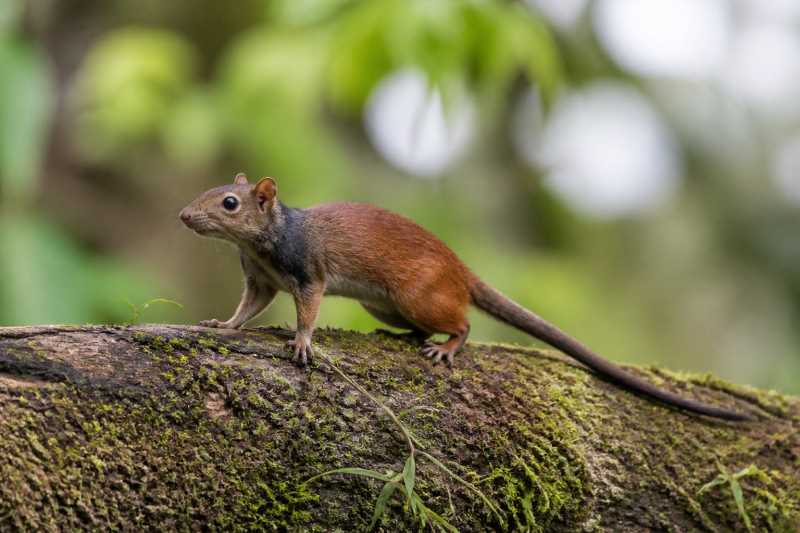
The Red Tree Rat is medium-sized, with an average body length of 15 to 20 centimeters and a tail that can measure up to 22 centimeters. This species is characterized by its dense, soft fur that ranges in color from reddish-brown to dark brown, providing excellent camouflage among the forest canopy. The underbelly is typically lighter, often displaying a grayish or whitish hue. Their large, rounded ears and prominent eyes are adaptations for their nocturnal lifestyle, enhancing their hearing and night vision.
Notably, the Red Tree Rat has a prehensile tail, which aids in balance and grasping branches as it navigates the treetops. Its limbs are well-adapted for climbing, with strong, dexterous paws and sharp claws that provide a firm grip on bark and foliage.
Range and Habitat
The Red Tree Rat is primarily found in the tropical rainforests of Southeast Asia, including the Malay Peninsula, Sumatra, and Borneo. It thrives in dense, humid environments where towering trees and a rich understory provide ample food and shelter. These rats prefer primary and secondary forests but can occasionally be found in plantations and other altered landscapes if sufficient vegetation is present.
Their arboreal nature confines them largely to the forest canopy, where they construct nests in tree hollows or among dense foliage. This habitat choice not only offers protection from ground-dwelling predators but also provides access to a diverse diet of fruits, leaves, and small invertebrates.
Behavior and Diet
Red Tree Rats are primarily nocturnal, coming to life as the sun sets. Their activity peaks during the night when they forage for food, using their acute senses to locate fruits, seeds, and insects. While they are primarily herbivorous, their diet is opportunistic, occasionally including small vertebrates and eggs.
These rats are solitary creatures, with individuals maintaining and defending their own territories. Communication between Red Tree Rats occurs through vocalizations, scent markings, and body language. They are known for their agility and can move swiftly through the trees, leaping from branch to branch with ease thanks to their prehensile tails.
Reproduction occurs year-round, with females giving birth to litters of two to four young after a gestation period of approximately three weeks. The young are altricial, meaning they are born blind and helpless, requiring significant parental care until they are capable of independent survival.
Identification Tips
Identifying the Red Tree Rat in the field requires attention to several key characteristics:
- Fur Color: Look for the reddish-brown to dark brown fur, which distinguishes it from other tree-dwelling rodents.
- Tail: The prehensile tail, which is longer than the body, is a significant marker.
- Size: At 15 to 20 cm in body length, they are larger than typical mice but smaller than many other rat species.
- Behavior: Observe their nocturnal activity and arboreal habits, which are indicative of the species.
- Ears and Eyes: Large ears and eyes are adaptations for their nocturnal and arboreal lifestyle.
Conservation Status
The conservation status of the Red Tree Rat is currently listed as "Least Concern" by the IUCN Red List. However, this does not mean the species is free from threats. Habitat destruction due to logging, agriculture, and urbanization poses significant risks, as these activities lead to fragmentation and loss of their forest habitat.
In addition to habitat loss, climate change may alter the ecosystems they depend on, further threatening their survival. Conservation efforts focus on preserving forest habitats and promoting sustainable land-use practices. Protected areas and national parks in their range provide some degree of refuge, but continued monitoring and research are essential to ensure their long-term survival.
Frequently Asked Questions
What does the diet of a Red Tree Rat consist of?
The Red Tree Rat primarily eats fruits, seeds, and leaves, but it is an opportunistic feeder that may also consume insects, small vertebrates, and eggs when available.
Where can you find the Red Tree Rat in the wild?
Red Tree Rats inhabit the tropical rainforests of Southeast Asia, particularly in the Malay Peninsula, Sumatra, and Borneo. They prefer dense, humid forests with a rich canopy and understory.
How does the Red Tree Rat adapt to its arboreal lifestyle?
The Red Tree Rat has several adaptations for tree-dwelling, including a prehensile tail for balance, strong limbs with sharp claws for climbing, and keen senses for navigating the forest canopy at night.
What are the main threats to the Red Tree Rat?
The primary threats include habitat loss due to deforestation, agricultural expansion, and urbanization. Climate change also poses a risk by altering their natural habitat.
How can we help conserve the Red Tree Rat?
Conservation efforts should focus on preserving and restoring forest habitats, implementing sustainable land-use practices, and supporting protected areas that safeguard their environment.
Related posts