Introduction
The Atalaye Nesophontes, scientifically known as Nesophontes hypomicrus, is a fascinating, albeit elusive, member of the extinct Nesophontidae family. Commonly referred to as the "Haitian shrew," this small mammal once inhabited the Caribbean islands. Its mysterious existence and subsequent extinction have spurred significant interest among paleontologists and conservation biologists alike, as they strive to piece together the ecological roles these mammals once played and the factors that led to their disappearance.
The Nesophontes genus, to which the Atalaye Nesophontes belongs, is a group of mammals that has intrigued scientists due to its unique evolutionary path. Unlike many mammals, the Nesophontes species were endemic to the Caribbean, making them an integral part of the region’s natural history. The Atalaye Nesophontes, in particular, offers a window into the rich biodiversity that once flourished in these islands.
Physical Description
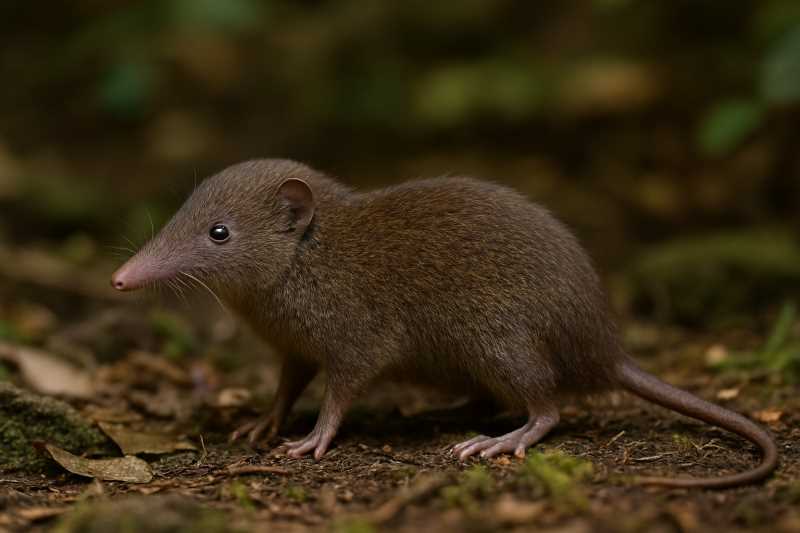
The Atalaye Nesophontes was a small, insectivorous mammal characterized by its distinct features that set it apart from other contemporary mammals. With a body length that typically ranged from 10 to 15 centimeters, it was a diminutive creature. Its elongated snout, reminiscent of modern shrews, was perfectly adapted for foraging insects and small invertebrates from the undergrowth.
Fossil evidence suggests that the Atalaye Nesophontes had a dense, fur-covered body, which likely provided insulation and camouflage within its forested habitat. The fur coloration is presumed to have been a mix of browns and grays, allowing it to blend seamlessly into the leaf litter and shadowy underbrush of its environment.
Its limbs were relatively short but robust, suggesting it was adept at burrowing and navigating through dense foliage. The tail was proportionately long, likely aiding in balance and maneuverability as it scurried through its habitat.
Range and Habitat
The Atalaye Nesophontes was exclusively found in the Caribbean, with a range primarily concentrated in the island of Hispaniola, which today comprises Haiti and the Dominican Republic. This limited geographic range underscores the species’ vulnerability to environmental changes and human encroachment.
The preferred habitat of the Atalaye Nesophontes was the dense tropical and subtropical forests that once blanketed Hispaniola. These forests provided an abundance of food resources and shelter, crucial for the survival of this small mammal. The forest floor, rich in leaf litter and decaying wood, offered a perfect foraging ground for insects and other small prey.
The species’ habitat would have included areas with a high degree of biodiversity, supporting various plants and animals that formed the complex ecosystem in which the Atalaye Nesophontes played a crucial role. Unfortunately, much of this habitat has been altered or destroyed due to human activities, contributing to the decline of numerous endemic species.
Behavior and Diet
The Atalaye Nesophontes was primarily insectivorous, with a diet that consisted mainly of insects, spiders, and other small invertebrates. This dietary preference is inferred from its dental structure, which includes sharp, pointed teeth ideal for grasping and consuming such prey.
Behaviorally, the Atalaye Nesophontes is believed to have been nocturnal, foraging under the cover of darkness to avoid predators and competition. Its keen sense of smell and acute hearing would have been advantageous in locating prey during the night.
Social behavior in Nesophontes hypomicrus remains largely speculative due to the lack of direct observation, but it is likely that they were solitary creatures, like many insectivorous mammals, coming together only for breeding purposes. Their activity patterns would have been closely tied to the availability of food resources, as well as the need to avoid predators.
Identification Tips (field recognition cues)
Identifying the Atalaye Nesophontes in the field would have been a challenge due to its small size and elusive nature. However, there are several key characteristics that would have aided in its identification:
- Size and Shape: Look for a small mammal with a body length of 10-15 cm, featuring an elongated snout and a proportionately long tail.
- Fur Coloration: The coloration would likely be a mix of browns and grays, blending in with the forest floor.
- Behavioral Cues: Being nocturnal, sightings would most likely occur at night. Listen for rustling in the leaf litter and faint, high-pitched squeaks.
- Habitat: Search in dense, tropical forests with abundant undergrowth and leaf litter.
Conservation Status (with threats and protections)
The Atalaye Nesophontes is classified as extinct, with the primary causes attributed to habitat destruction and the introduction of invasive species. The colonization of the Caribbean islands resulted in significant environmental changes, including deforestation and the introduction of predators such as rats, cats, and mongoose, which preyed on native species like the Nesophontes.
Efforts to protect the remaining biodiversity of Hispaniola continue, with conservation organizations working to preserve the remaining forested areas and control invasive species. While it is too late for the Atalaye Nesophontes, understanding the factors that led to its extinction can help inform current conservation strategies to protect other endemic species on the island.
Frequently Asked Questions
What did the Atalaye Nesophontes eat?
The Atalaye Nesophontes was primarily insectivorous, feeding on insects, spiders, and small invertebrates found in the forest undergrowth.
Where was the Atalaye Nesophontes found?
This species was endemic to the island of Hispaniola in the Caribbean, inhabiting the dense tropical and subtropical forests of the region.
Why did the Atalaye Nesophontes go extinct?
The extinction of the Atalaye Nesophontes is attributed to habitat destruction and the introduction of invasive species, which led to increased predation and competition.
How can we prevent more extinctions of island species?
Preventing further extinctions requires preserving natural habitats, controlling invasive species, and implementing effective conservation strategies tailored to the specific needs of island ecosystems.
Is there any chance of rediscovering the Atalaye Nesophontes?
While the Atalaye Nesophontes is considered extinct, ongoing research and exploration in remote parts of the Caribbean might yield new discoveries, although the probability remains low.
Related posts