Introduction
The Siberian chipmunk (Eutamias sibiricus) is a small, ground-dwelling rodent belonging to the Sciuridae family. Known for its distinctive striped appearance and lively behavior, the Siberian chipmunk is the only member of the genus Eutamias. These charming creatures are native to northern Asia and have captured the fascination of wildlife enthusiasts and researchers alike. In recent years, the Siberian chipmunk has gained popularity in the pet trade, further expanding its presence beyond its natural range. This article delves into the intriguing world of the Siberian chipmunk, exploring its physical characteristics, habitat, behavior, and conservation status.
Physical Description
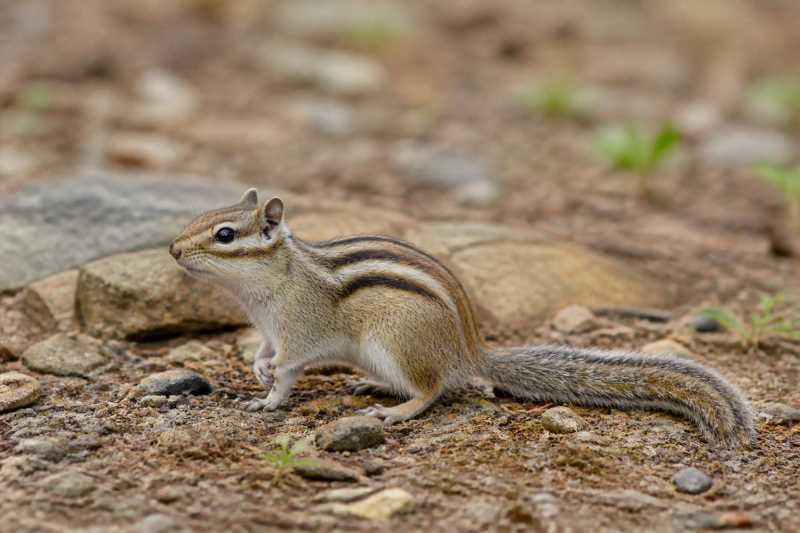
The Siberian chipmunk is a small rodent, typically measuring about 18 to 25 centimeters (7 to 10 inches) in total length, including its bushy tail, which constitutes roughly half of its length. Adult chipmunks generally weigh between 50 to 150 grams (1.8 to 5.3 ounces). One of the most distinctive features of the Siberian chipmunk is its coat, adorned with five dark brown or black stripes that run longitudinally along its back, interspersed with lighter tan or white stripes. This striking pattern serves as excellent camouflage against the forest floor.
The chipmunk’s fur is soft and varies in color from a light brown to a more reddish hue, depending on the season and individual variation. The underparts are typically white or cream-colored. The Siberian chipmunk’s large, dark eyes and rounded ears enhance its alert appearance, aiding in its survival by detecting predators quickly. Its strong hind legs are adapted for jumping and climbing, while its sharp claws are ideal for digging and holding food.
Range and Habitat
The Siberian chipmunk is native to a vast range across northern Asia, including Russia, China, Korea, and Japan. It inhabits a variety of forested environments, from the coniferous forests of Siberia to the mixed and deciduous forests found further south. The species is particularly well-adapted to the taiga biome, characterized by dense forests and cold climates.
In addition to its native range, the Siberian chipmunk has been introduced to several parts of Europe, including France, Germany, and Belgium, primarily due to the pet trade. In these areas, it often inhabits urban parks, gardens, and wooded areas where it can find food and shelter.
The Siberian chipmunk is a versatile species capable of thriving in various habitats, including mountainous regions, forest edges, and even suburban areas. It prefers environments with abundant ground cover for protection and plentiful food resources.
Behavior and Diet
Siberian chipmunks are diurnal animals, meaning they are active during the day and rest at night. They are solitary creatures, each maintaining a territory that they defend vigorously against intruders. These small mammals are known for their energetic and curious nature, often seen scurrying across the forest floor or darting up trees in search of food.
The diet of the Siberian chipmunk is omnivorous, consisting of a wide variety of foods. In the wild, they primarily feed on seeds, nuts, berries, and fruits, but they also consume insects, small birds, and eggs when available. Their strong cheek pouches allow them to transport food back to their burrows for storage. This behavior is particularly important as it helps them survive the harsh winter months when food is scarce.
During the autumn, Siberian chipmunks are especially busy gathering and hoarding food. They create complex burrow systems with multiple chambers to store their winter provisions. Although they do not hibernate in the traditional sense, they enter a state of torpor, a period of reduced metabolic rate, during which they rely on their stored food reserves.
Identification Tips
Identifying the Siberian chipmunk in the field can be a rewarding experience for wildlife enthusiasts. Here are some key features to help you recognize this species:
- Striped Pattern: Look for the distinctive five dark stripes running along the back, separated by lighter stripes.
- Size and Shape: Note the small size, with a body length of 18 to 25 centimeters and a bushy tail.
- Coloration: Observe the reddish-brown to light brown fur, with white or cream underparts.
- Behavior: Watch for their fast, agile movements and curious nature as they forage during the day.
- Habitat: Check forested areas, particularly those with dense ground cover and plenty of food sources.
Conservation Status
The Siberian chipmunk is currently classified as Least Concern on the International Union for Conservation of Nature (IUCN) Red List. This status indicates that the species is not at immediate risk of extinction. However, several factors threaten its populations, particularly in areas where it has been introduced.
In its native range, habitat destruction due to logging and land conversion poses a significant threat. In areas where the Siberian chipmunk has been introduced, such as Europe, it can become an invasive species, competing with native wildlife for resources and potentially spreading diseases.
Conservation efforts for the Siberian chipmunk focus on habitat preservation and managing populations in non-native areas. In some European countries, measures have been implemented to control and monitor chipmunk populations to prevent them from negatively impacting local ecosystems.
Frequently Asked Questions
1. How can I distinguish a Siberian chipmunk from other chipmunks?
The Siberian chipmunk is unique due to its five dark stripes and light tan or white stripes. Its range in Asia and introduced areas in Europe also helps distinguish it from North American chipmunks.
2. What do Siberian chipmunks eat in the wild?
In the wild, Siberian chipmunks have an omnivorous diet, consuming seeds, nuts, berries, fruits, insects, and occasionally small birds and eggs.
3. Are Siberian chipmunks good pets?
Siberian chipmunks can be kept as pets, but they require specific care, including a large enclosure, a varied diet, and social interaction. Potential owners should research thoroughly before acquiring them.
4. Where have Siberian chipmunks been introduced outside their native range?
Siberian chipmunks have been introduced to several European countries, including France, Germany, and Belgium, primarily through the pet trade.
5. Do Siberian chipmunks hibernate?
Siberian chipmunks do not hibernate in the traditional sense, but they enter a state of torpor during winter, relying on stored food to survive the cold months.
Related posts