Introduction
Kirchners’ Viscacha Rat (Tympanoctomys kirchnerorum) is a fascinating rodent species native to a unique desert ecosystem in South America. Named in honor of former Argentine President Néstor Kirchner, this species belongs to the family Octodontidae and is notable for its adaptation to arid environments. Despite being relatively new to science, having been described in 2005, the Kirchners’ Viscacha Rat has caught the attention of researchers and conservationists due to its specialized habitat and potential vulnerabilities.
Physical Description
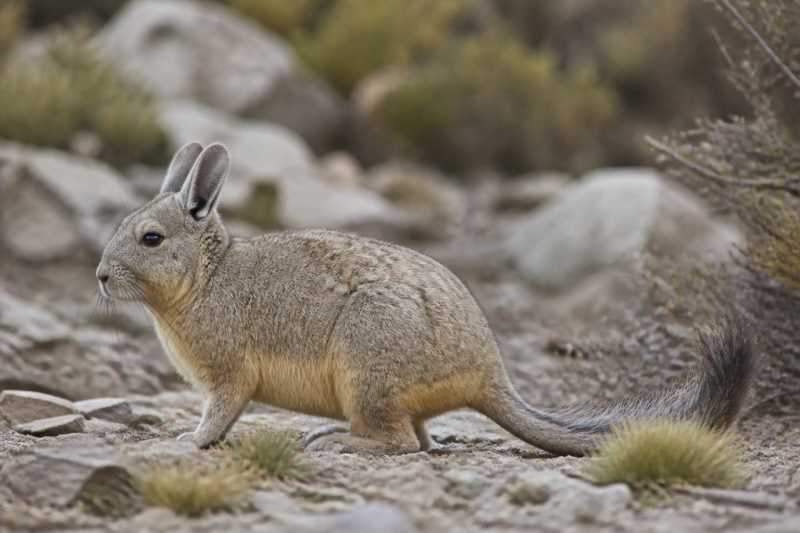
Kirchners’ Viscacha Rat is a medium-sized rodent that exhibits several physical traits adapted to its desert habitat. Adults typically weigh between 80 to 120 grams and measure about 15 to 20 centimeters in body length, excluding the tail, which adds an additional 10 to 15 centimeters. The species is characterized by its soft, dense fur that ranges from grayish-brown to reddish-brown, providing excellent camouflage against the sandy desert backdrop.
One of the most distinctive features of the Kirchners’ Viscacha Rat is its large, rounded ears and prominent, dark eyes, which are adaptations for enhanced nocturnal activity. The long, bushy tail is not only used for balance but also serves as a communication tool during social interactions.
Range and Habitat
Kirchners’ Viscacha Rat is endemic to the Monte Desert in Argentina, specifically in the provinces of Mendoza and San Juan. This region is characterized by extreme aridity, with low annual rainfall and significant temperature fluctuations between day and night.
The Monte Desert is home to sparse vegetation, including shrubs and grasses, which provide both food and shelter for the Viscacha Rat. These rodents are typically found in areas with sandy soils, where they can easily dig burrows to escape the harsh daytime temperatures and predators.
Behavior and Diet
Kirchners’ Viscacha Rat is primarily nocturnal, emerging from its burrows at dusk to forage for food. Its diet consists mainly of seeds, leaves, and stems of desert plants, which are sufficient to meet its water requirements in this arid environment. The Viscacha Rat has evolved specialized kidneys that allow it to conserve water efficiently, a vital adaptation for survival in such a dry climate.
Socially, Kirchners’ Viscacha Rats are known to live in small family groups or pairs. They communicate using a series of high-pitched vocalizations and tail movements. These rodents are territorial and will defend their burrow systems from intruders.
Identification Tips (Field Recognition Cues)
For those interested in spotting Kirchners’ Viscacha Rat in the wild, several field recognition cues can aid in identification:
- Habitat: Look for them in sandy areas of the Monte Desert, particularly near vegetation.
- Appearance: Note their distinctive grayish-brown to reddish-brown fur and long bushy tail.
- Behavior: Observe their nocturnal activity patterns and listen for high-pitched calls at dusk.
Conservation Status (With Threats and Protections)
The conservation status of Kirchners’ Viscacha Rat is currently listed as "Data Deficient" by the International Union for Conservation of Nature (IUCN). This classification indicates that there is insufficient data to make a comprehensive assessment of their population trends and threats.
However, the primary threats to their habitat include land-use changes such as agriculture expansion, mining activities, and climate change, which can alter the delicate balance of the desert ecosystem. Conservation efforts are focused on habitat preservation and further research to better understand the species’ ecology and population dynamics.
Frequently Asked Questions
What are the main predators of Kirchners’ Viscacha Rat?
The primary predators of Kirchners’ Viscacha Rat include birds of prey such as owls and hawks, as well as terrestrial predators like foxes and small carnivorous mammals. Their nocturnal lifestyle and burrowing behavior help mitigate predation risks.
How does Kirchners’ Viscacha Rat obtain water in the desert?
Kirchners’ Viscacha Rat meets its water needs through the food it consumes, primarily desert plants that contain moisture. Additionally, its kidneys are highly efficient at conserving water, an essential adaptation to survive in arid conditions.
Are Kirchners’ Viscacha Rats social animals?
Yes, they are known to be social, often living in small family groups or pairs. They communicate through vocalizations and tail movements, and they exhibit territorial behavior to protect their burrows.
How can I help in the conservation of Kirchners’ Viscacha Rat?
Supporting habitat preservation initiatives and engaging in citizen science projects that monitor local wildlife populations can contribute significantly to the conservation of Kirchners’ Viscacha Rat. Raising awareness about the impact of land-use changes on desert ecosystems can also make a difference.
Related posts