The Sierra Madre Crow: A Hidden Gem of Mexico’s Avian Biodiversity
The Sierra Madre Crow (Corvus sierramadrensis) is a lesser-known member of the Corvidae family, a group of birds that includes crows, ravens, and magpies. This species, endemic to the Sierra Madre Occidental mountain range in Mexico, has managed to captivate ornithologists and bird enthusiasts alike with its unique adaptations and ecological significance. This article aims to shed light on the Sierra Madre Crow’s distinguishing characteristics, habitat, behavior, and the conservation challenges it faces.
Distinguishing Characteristics
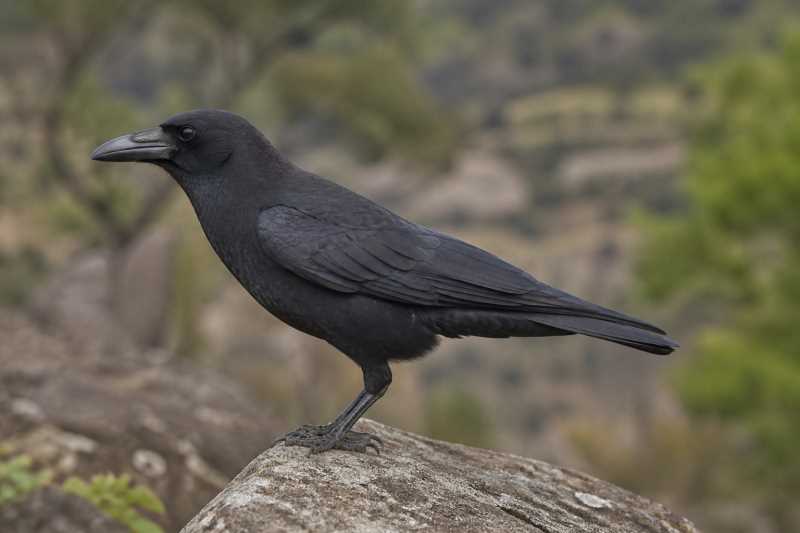
The Sierra Madre Crow is a medium-sized bird, measuring approximately 40-50 cm in length, with a wingspan that can reach up to 100 cm. Its plumage is predominantly black, with a slight iridescent sheen that can appear blue or violet under direct sunlight. This iridescence is due to the microscopic structure of the feathers, which refracts light in a way that creates a shimmering effect. The crow’s beak is robust and slightly curved, adapted for a varied diet, while its legs and feet are strong, aiding in its agile movement through the rugged terrain of its mountainous habitat.
Unlike some of its more vocal relatives, the Sierra Madre Crow is known for its relatively subdued calls. Its vocalizations consist of a series of low-pitched caws and croaks, which it uses for communication within its flocks. Despite its quieter demeanor, this crow exhibits an impressive level of intelligence and social structure, akin to other members of the Corvidae family.
Habitat and Distribution
The Sierra Madre Crow is primarily found in the temperate forest regions of the Sierra Madre Occidental, spanning across several Mexican states including Chihuahua, Durango, and Sinaloa. These forests, rich in coniferous and deciduous trees, provide an ideal environment for the crow, offering ample food sources and nesting sites. The bird’s altitudinal range extends from 1,500 to 3,000 meters above sea level, where it can be seen foraging in mixed-species flocks or solitary pairs.
This geographic isolation has played a significant role in the species’ evolution, leading to its distinct characteristics compared to other crows. The Sierra Madre Crow’s adaptation to this specific habitat underscores its importance in the region’s ecosystem, as it contributes to seed dispersal and pest control.
Behavior and Diet
The Sierra Madre Crow is omnivorous, with a diet that includes insects, small mammals, fruits, seeds, and occasionally carrion. Its foraging behavior is both opportunistic and strategic, as it has been observed using tools, such as sticks, to extract insects from tree bark. This behavior highlights the crow’s problem-solving abilities and adaptability, which are hallmarks of corvid intelligence.
Socially, Sierra Madre Crows form monogamous pairs that often collaborate in raising their young. During the breeding season, which typically occurs from March to June, pairs build large nests made of twigs and lined with softer materials such as moss and feathers. The female lays between 3 to 5 eggs, which both parents incubate and later feed the hatchlings.
Conservation Status and Challenges
Currently, the Sierra Madre Crow is classified as Near Threatened by the International Union for Conservation of Nature (IUCN). This status is primarily due to habitat loss driven by logging, agriculture, and urban expansion. As human activities continue to encroach on the Sierra Madre Occidental, the crow’s natural habitat is being fragmented, posing significant challenges to its survival.
Conservation efforts are crucial to ensure the long-term survival of the Sierra Madre Crow. Initiatives focusing on habitat protection and restoration, along with promoting sustainable land-use practices, are vital. Furthermore, raising awareness about the species’ ecological role and the threats it faces can foster community support for conservation measures.
In conclusion, the Sierra Madre Crow is a fascinating species that embodies the rich biodiversity of Mexico’s Sierra Madre Occidental. Its unique adaptations, intelligence, and ecological significance make it a subject worthy of attention and conservation. By understanding and addressing the challenges this crow faces, we can work towards preserving not only the species but also the intricate ecosystem it inhabits.
References
1. BirdLife International. (2023). *Corvus sierramadrensis* species factsheet. Retrieved from [BirdLife International website]
2. IUCN Red List of Threatened Species. (2023). *Corvus sierramadrensis*. Retrieved from [IUCN website]
3. Johnson, R. (2021). “Avian Adaptations in the Sierra Madre Occidental.” *Journal of Mexican Ornithology*, vol. 12, no. 3, pp. 45-56.
—
Related posts