Introduction
The Moloch Gibbon, scientifically known as Hylobates moloch, is a captivating primate species distinguished by its unique vocalizations and arboreal lifestyle. Endemic to the island of Java in Indonesia, this gibbon is among the lesser-known primates, yet it plays a crucial role in the biodiversity of its habitat. Moloch Gibbons are part of the Hylobatidae family, often referred to as the "lesser apes," which also includes other gibbon species. Unlike their "great ape" counterparts, gibbons are smaller, lack tails, and are known for their impressive acrobatic abilities and complex social structures. This article delves into the physical characteristics, habitat, behavior, and conservation challenges faced by the Moloch Gibbon, providing a comprehensive overview for enthusiasts and researchers alike.
Physical Description
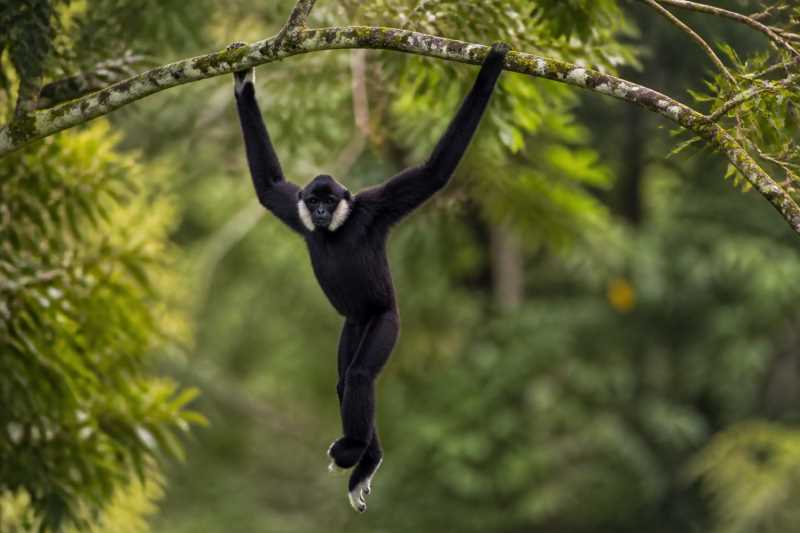
Moloch Gibbons are relatively small primates, with adult males typically weighing between 6 to 8 kilograms (13 to 18 pounds) and females slightly lighter. They possess a slender, elongated body, with long arms that are perfectly adapted for brachiation—a form of arboreal locomotion that involves swinging from branch to branch. Their fur is predominantly a silvery-grey color, with darker tones on the chest and limbs, and a lighter face surrounded by a ring of white fur, giving them a distinctive appearance.
One of the most remarkable features of the Moloch Gibbon is its vocalization ability. Known for their "songs," these gibbons use a series of complex calls to communicate, establish territory, and strengthen social bonds. The vocalizations are most pronounced in the early morning, serving as a natural alarm clock in the dense Javan forests.
Range and Habitat
The Moloch Gibbon is exclusively found on the island of Java, Indonesia. They inhabit the lowland and montane rainforests of the western and central parts of the island. These forests are rich in biodiversity, offering a plethora of fruits, leaves, and insects that constitute the gibbons’ diet.
The gibbons thrive in areas with dense canopy cover, allowing them to move efficiently through the trees. However, their range is increasingly restricted due to habitat fragmentation and deforestation, which pose significant challenges to their survival. Conservation efforts are essential to preserve the remaining forested areas and ensure the gibbons’ continued existence in the wild.
Behavior and Diet
Moloch Gibbons are diurnal, spending their active hours from dawn until dusk. Their social structure is typically monogamous, with pairs forming strong bonds that last for years. These pairs often engage in "duets," synchronizing their calls in a display of unity and territorial claim.
Their diet primarily consists of fruits, which provide the necessary sugars and nutrients for their active lifestyle. They also consume leaves, flowers, and insects, allowing for a balanced intake of protein and fiber. The gibbons’ foraging behavior is adapted to their arboreal habitat, with their long arms enabling them to reach and pluck fruit from branches effortlessly.
Identification Tips (Field Recognition Cues)
Identifying the Moloch Gibbon in the wild requires a keen eye and ear. Here are some tips:
- Vocalizations: Listen for their distinctive morning calls, which are melodic and carry over long distances.
- Appearance: Look for their silvery-grey fur and the white facial ring that contrasts with their darker limbs.
- Movement: Observe their characteristic brachiation, as they swing effortlessly from tree to tree.
- Social Behavior: Watch for pairs, as they often stay close and communicate frequently through vocalizations and physical gestures.
Conservation Status (With Threats and Protections)
The Moloch Gibbon is classified as Endangered on the IUCN Red List. The primary threats to their survival include habitat loss due to logging, agriculture, and human encroachment. Additionally, illegal pet trade poses a significant risk, as young gibbons are often captured and sold.
Conservation efforts are underway to protect the remaining populations. These include habitat restoration projects, legal protection of forested areas, and community education programs to raise awareness about the gibbons’ plight. International collaborations have also been established to support conservation initiatives and enforce anti-poaching laws.
Frequently Asked Questions
What is the lifespan of a Moloch Gibbon in the wild? Moloch Gibbons can live for approximately 25 to 30 years in the wild. In captivity, with proper care, they may live slightly longer due to the lack of predators and consistent food supply.
How do Moloch Gibbons contribute to their ecosystem? As frugivores, Moloch Gibbons play a vital role in seed dispersal. By consuming fruits and excreting seeds in different locations, they help maintain forest biodiversity and regeneration.
What measures are being taken to protect Moloch Gibbons? Conservation measures include protecting natural habitats, enforcing anti-poaching laws, and creating awareness through education programs. International collaborations also focus on habitat restoration and captive breeding programs.
Are Moloch Gibbons social animals? Yes, Moloch Gibbons are highly social and typically live in small family groups consisting of a monogamous pair and their offspring. Their social interactions are an essential aspect of their daily life, involving vocal communication and grooming.
Why are Moloch Gibbons referred to as "lesser apes"? Gibbons, including the Moloch Gibbon, are called "lesser apes" due to their smaller size compared to "great apes" like gorillas and chimpanzees. They also lack a tail and exhibit distinct differences in their social and locomotion behaviors.
Related posts