The Blue Noddy: A Unique Seabird of the Tropical Oceans
The Blue Noddy, scientifically known as *Anous ceruleus*, is a distinctive seabird that captivates ornithologists and bird enthusiasts alike. This medium-sized bird, belonging to the family Laridae, is notable for its striking features and unique behaviors. Found primarily in tropical and subtropical oceans, the Blue Noddy plays a significant role in the marine ecosystems it inhabits.
Physical Description
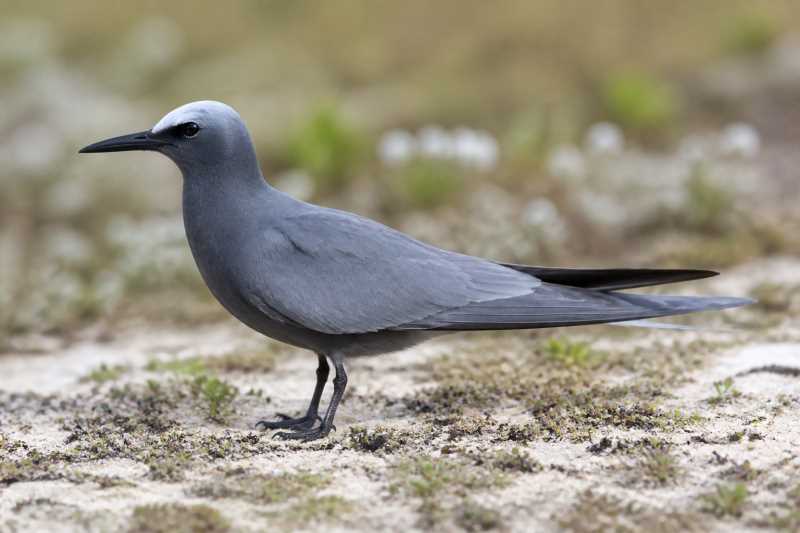
The Blue Noddy is easily recognizable with its soft, slate-blue plumage, which provides excellent camouflage against the ocean backdrop. Its body measures approximately 25-30 cm in length, with a wingspan ranging from 58-66 cm. The bird’s distinctive black cap and white forehead add to its unique appearance, while its long, forked tail aids in agile flight. The noddy’s slender, black bill is perfectly adapted for catching fish and other marine prey.
Habitat and Distribution
Primarily found in the tropical regions of the Pacific and Indian Oceans, the Blue Noddy favors remote, uninhabited islands as breeding sites. These islands, often characterized by rocky cliffs and sparse vegetation, provide ideal nesting grounds free from land predators. Some of the key locations where this species is observed include islands in the central Pacific, such as Hawaii and French Polynesia, as well as islands in the Indian Ocean like the Maldives and Seychelles.
Behavior and Diet
The Blue Noddy is a highly social bird, often observed in large flocks both at sea and on land. It exhibits a remarkable affinity for floating objects, often seen resting on drifting debris or buoys. This behavior not only aids in conserving energy during long flights but also helps in foraging. Blue Noddies primarily feed on small fish and squid, employing a plunge-diving technique to capture prey beneath the water’s surface.
These birds are also known for their unique courtship displays, which involve aerial acrobatics and synchronized flight patterns. During the breeding season, pairs engage in mutual preening and bill-touching rituals, strengthening their pair bonds. Once a bond is established, Blue Noddies show remarkable site fidelity, often returning to the same nesting sites year after year.
Breeding and Nesting
The breeding season for the Blue Noddy varies depending on the geographical location, but it typically occurs during the warmer months when food is abundant. Nests are constructed on rocky ledges or in crevices, often using seaweed, twigs, and other marine debris. The typical clutch consists of one egg, which is incubated by both parents for about 35 days.
After hatching, the chick is cared for by both parents, who take turns feeding and guarding the young. The fledging period lasts approximately 40-45 days, after which the juvenile noddy becomes independent. The high level of parental care and the relatively low number of eggs laid per season underscore the importance of each offspring for the survival of the species.
Conservation Status and Threats
Currently, the Blue Noddy is classified as a species of Least Concern by the International Union for Conservation of Nature (IUCN). However, like many seabirds, it faces numerous threats that could impact its populations in the future. Habitat loss due to human activities, such as development and pollution, poses significant risks. Additionally, climate change, with its impact on sea levels and ocean temperatures, could alter the noddy’s habitat and food availability.
Predation by introduced species, such as rats and cats, on nesting islands remains a significant threat. Conservation efforts aimed at protecting breeding sites and controlling invasive species are crucial for the long-term survival of the Blue Noddy. Furthermore, international cooperation is essential to address the broader environmental challenges that affect marine ecosystems globally.
The Role of Blue Noddies in Ecosystems
Blue Noddies play an integral role in the ecosystems they inhabit. As predators, they help regulate fish and squid populations, contributing to a balanced marine food web. Moreover, their guano enriches the nutrient content of island soils, supporting plant growth and, in turn, other wildlife.
The presence of Blue Noddies can also serve as indicators of ocean health. Changes in their population dynamics can reflect shifts in marine conditions, making them valuable for ecological monitoring and conservation planning.
Conclusion
The Blue Noddy is a fascinating seabird that deserves attention not only for its unique characteristics and behaviors but also for its role in marine ecosystems. As we continue to understand more about this species, it becomes increasingly clear that its preservation is intertwined with broader environmental conservation efforts. By protecting the habitats and ecosystems that support the Blue Noddy, we contribute to the health and diversity of our planet’s oceans.
Related posts