Caribou (Rangifer tarandus) – A Comprehensive Overview
Introduction
The caribou, scientifically known as Rangifer tarandus, is a captivating species of deer native to the Arctic, Subarctic, tundra, boreal, and mountainous regions of North America, Europe, and Asia. Known as reindeer in Europe and Asia, these remarkable animals are integral to the ecosystems they inhabit and have significant cultural and economic importance to indigenous peoples and other communities. Despite their widespread range, caribou populations face numerous challenges, making their conservation a topic of international concern.
Physical Description
Caribou are uniquely adapted to the harsh climates they inhabit. They are medium to large-sized mammals with males typically weighing between 160 to 300 kilograms (350 to 660 pounds), while females are generally smaller, weighing between 80 to 120 kilograms (180 to 260 pounds). Their height at the shoulder ranges from 0.8 to 1.5 meters (2.6 to 4.9 feet).
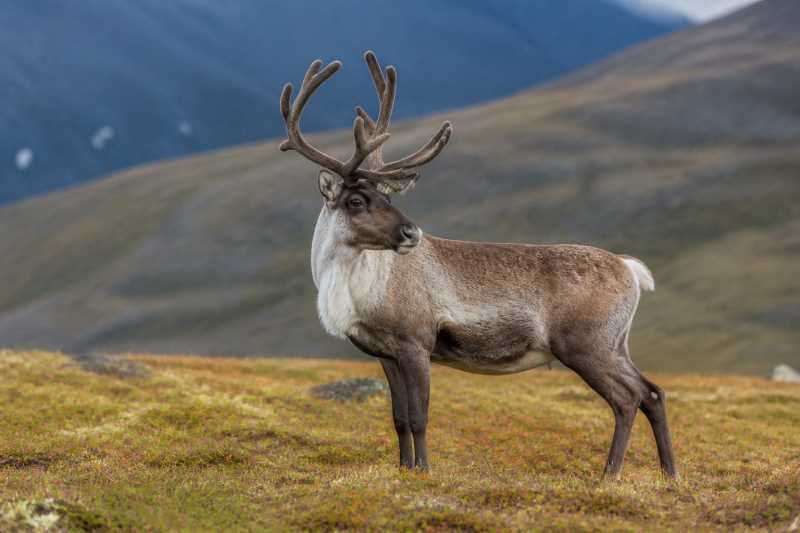
One of the most distinctive features of caribou is their antlers, which are found in both males and females, although males tend to have larger and more elaborate antlers. These antlers are shed and regrown annually, with a complex branching structure that can reach lengths of up to 1.2 meters (3.9 feet).
Their coat provides excellent insulation, consisting of a dense underfur covered by longer guard hairs. The color of their coat varies seasonally, ranging from a lighter grey-brown in winter to a darker brown in summer, providing effective camouflage against predators.
Range and Habitat
Caribou have one of the most expansive ranges of any terrestrial mammal, inhabiting regions across North America, Greenland, Scandinavia, and Russia. In North America, they are primarily found in Alaska, Canada, and parts of the northern contiguous United States.
Caribou are highly migratory, with some populations undertaking seasonal migrations of up to 5,000 kilometers (3,100 miles) annually. These migrations are driven by the need to access food resources and suitable calving grounds, and they represent one of the most significant and awe-inspiring natural phenomena in the animal kingdom.
Their habitats are diverse, including tundra, boreal forests, and mountainous regions. The ability to thrive in such a variety of ecosystems is a testament to their adaptability and resilience.
Behavior and Diet
Caribou are social animals, often found in large herds that can consist of tens of thousands of individuals. These herds are typically segregated by sex and age, with males and females forming separate groups outside of the breeding season.
The breeding season, or rut, occurs in the autumn, during which males compete for the opportunity to mate with females by displaying their antlers and engaging in fights. After a gestation period of about 230 days, females give birth to a single calf, usually in late spring or early summer.
Caribou are primarily herbivores, with a diet that varies seasonally. In the winter, they rely heavily on lichens, which they access by digging through snow with their hooves. In the summer, their diet expands to include grasses, sedges, leaves, and even mushrooms.
Identification Tips (Field Recognition Cues)
Identifying caribou in the wild can be a rewarding experience for wildlife enthusiasts. Here are some cues to help you recognize them:
- Antlers: Look for the distinctive antlers, which are present in both sexes but vary in size and complexity.
- Coat Color: Note the seasonal variation in their coat color, which changes from a lighter grey-brown in winter to a darker brown in summer.
- Hooves: Caribou have large, concave hooves that act like snowshoes, helping them walk on snow and soft tundra.
- Gait and Movement: Observe their distinctive walking pattern, characterized by a unique, bounding gait that allows them to cover vast distances efficiently.
Conservation Status (with Threats and Protections)
The conservation status of caribou varies depending on the population and region. The International Union for Conservation of Nature (IUCN) lists the species as "Vulnerable" due to declining populations in many areas.
Threats
- Habitat Loss: Industrial development, such as oil and gas exploration, logging, and mining, poses a significant threat to caribou habitats.
- Climate Change: Altered weather patterns and changing vegetation due to climate change affect their migratory routes and food availability.
- Predation and Hunting: Predation by wolves and bears, combined with hunting by humans, can impact local populations.
Protections
Efforts to protect caribou include the establishment of protected areas, sustainable hunting regulations, and habitat restoration projects. Indigenous communities play a crucial role in conservation through traditional knowledge and stewardship practices.
Frequently Asked Questions
What do caribou eat in the winter?
Caribou primarily feed on lichens in the winter, which they uncover by digging through the snow with their specialized hooves. They also consume other available vegetation such as mosses and dried grasses.
How far do caribou migrate?
Caribou are known for their long migrations, which can cover up to 5,000 kilometers (3,100 miles) annually. These migrations are among the longest of any terrestrial mammal and are driven by the search for food and suitable calving grounds.
Are caribou and reindeer the same?
Yes, caribou and reindeer are the same species, Rangifer tarandus. The term "caribou" is commonly used in North America, while "reindeer" is used in Europe and Asia. There are also some differences in domestication, with reindeer being more commonly domesticated.
What is the biggest threat to caribou populations?
The biggest threats to caribou populations include habitat loss due to industrial development, the impacts of climate change, and predation pressures. Conservation efforts are critical to addressing these challenges.
How can I help with caribou conservation?
Supporting conservation organizations, advocating for sustainable land-use practices, and raising awareness about the importance of caribou are ways individuals can contribute to their conservation. Engaging with indigenous communities and respecting their traditional knowledge is also vital.
Related posts