Introduction
The Tibetan Gazelle, scientifically known as Procapra picticaudata, is a captivating species native to the high-altitude regions of the Tibetan Plateau. This elegant ungulate is an integral part of the plateau’s ecosystem and plays a crucial role in maintaining the ecological balance of its habitat. Despite facing numerous challenges, including habitat destruction and climate change, the Tibetan Gazelle continues to thrive in one of the harshest environments on Earth. This article delves into the fascinating world of the Tibetan Gazelle, exploring its physical characteristics, habitat, behavior, conservation status, and more.
Physical Description
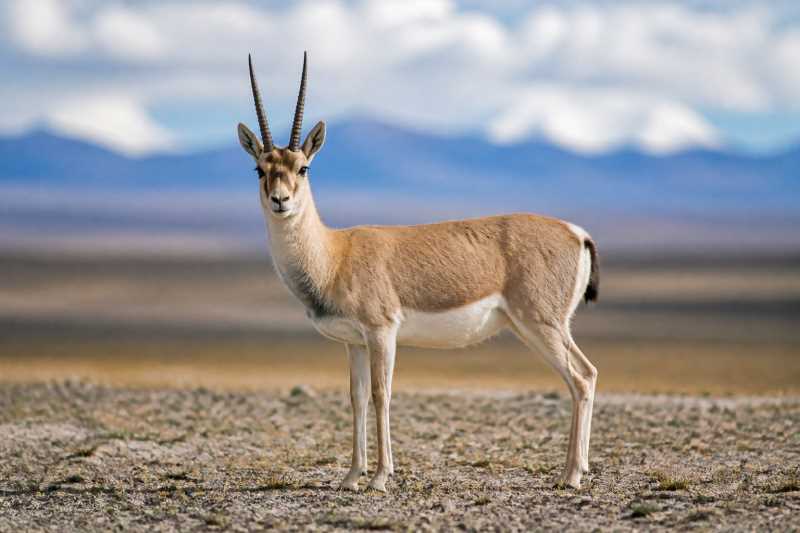
The Tibetan Gazelle is a medium-sized antelope characterized by its slender and graceful build. Adult Tibetan Gazelles typically weigh between 13-16 kilograms (29-35 pounds) and stand about 54-65 centimeters (21-25 inches) at the shoulder. Their bodies are covered in a short, dense coat that varies in color from light brown to grayish-brown, providing excellent camouflage against the rocky terrain of their habitat.
One of the most distinctive features of the Tibetan Gazelle is its tail, which is relatively short and has a white underside, contrasting with the darker body. Both males and females possess horns, although the males’ are more pronounced, measuring approximately 20-30 centimeters (8-12 inches) in length. These horns are slightly curved backward and play a role in social interactions and defense.
Range and Habitat
The Tibetan Gazelle is endemic to the Tibetan Plateau, a vast high-altitude region spanning parts of China, India, and Nepal. This plateau is often referred to as the "Roof of the World" due to its elevation, which averages over 4,500 meters (14,800 feet) above sea level. The gazelle primarily inhabits open steppes, alpine meadows, and arid desert-like areas within this region.
Adapted to these harsh conditions, the Tibetan Gazelle is capable of withstanding extreme temperatures and limited oxygen levels. Their range is primarily concentrated in the Tibetan Autonomous Region, Qinghai, Gansu, and Xinjiang provinces of China, with smaller populations found in Ladakh in India and parts of western Nepal. The gazelle’s habitat is characterized by sparse vegetation, which includes grasses, sedges, and small shrubs.
Behavior and Diet
The Tibetan Gazelle is a diurnal species, meaning it is most active during the day. These gazelles are typically seen in small groups, although solitary individuals are not uncommon. During the harsh winter months, they may form larger herds to increase their chances of survival.
Their diet consists mainly of grasses and other low-lying vegetation. Tibetan Gazelles are highly adapted to grazing on the sparse, nutrient-poor vegetation of the plateau. Their digestive systems are efficient at extracting necessary nutrients from their diet, allowing them to thrive in an environment where resources are limited.
Identification Tips (Field Recognition Cues)
Identifying the Tibetan Gazelle in the field can be a rewarding experience for wildlife enthusiasts. Here are some key identification tips:
- Size and Shape: Look for a medium-sized antelope with a slender build and an overall light brown coloration.
- Horns: Both males and females have horns, but males have longer, backward-curving horns.
- Tail: The short tail with a white underside is a distinguishing feature.
- Behavior: Observe their social structure; they often form small groups or are seen alone.
- Habitat: They are primarily found in open steppes and alpine meadows at high altitudes.
Conservation Status (With Threats and Protections)
The Tibetan Gazelle is currently classified as Near Threatened on the IUCN Red List of Threatened Species. The primary threats facing this species include habitat loss due to human encroachment, overgrazing by domestic livestock, and climate change.
Conservation efforts are underway to protect the Tibetan Gazelle and its habitat. These include the establishment of protected areas and reserves, as well as community-based conservation programs aimed at reducing human-wildlife conflict. Additionally, international cooperation is essential for the conservation of this species, given its transboundary range across several countries.
Frequently Asked Questions
Why is this species unique?
The Tibetan Gazelle is unique due to its adaptation to high-altitude environments. Its ability to survive in low-oxygen, cold, and nutrient-poor conditions sets it apart from other gazelle species, making it a remarkable example of evolutionary adaptation.
What are the main threats to the Tibetan Gazelle?
The main threats include habitat loss from human activities, overgrazing by livestock, and climate change. These factors have led to habitat fragmentation and reduced food availability, impacting their survival.
How can we help in the conservation of the Tibetan Gazelle?
Supporting conservation organizations, promoting sustainable grazing practices, and advocating for the establishment of more protected areas are ways to help conserve the Tibetan Gazelle. Raising awareness about the species and its challenges is also crucial.
Where can I see Tibetan Gazelles in the wild?
Tibetan Gazelles can be seen in the Tibetan Plateau, particularly in the Tibetan Autonomous Region, Qinghai, Gansu, and Xinjiang provinces of China. They are also found in parts of Ladakh in India and western Nepal. Observing them in their natural habitat requires traveling to these remote, high-altitude regions.
What adaptations allow the Tibetan Gazelle to survive at high altitudes?
The Tibetan Gazelle has several adaptations for high-altitude survival, including a specialized respiratory system for efficient oxygen uptake, a dense coat for insulation against cold temperatures, and an efficient digestive system to extract nutrients from sparse vegetation.
Related posts