Introduction
Bryde’s Whale, scientifically named Balaenoptera brydei, is a fascinating marine mammal that roams the world’s tropical and subtropical oceans. Known for its elusive nature, this whale species has intrigued marine biologists and whale watchers alike. Despite being less well-known than their larger relatives, Bryde’s Whales play a significant role in marine ecosystems. This article delves into the various intriguing aspects of Bryde’s Whale, including its physical description, range and habitat, behavior and diet, identification tips, conservation status, and frequently asked questions.
Physical Description
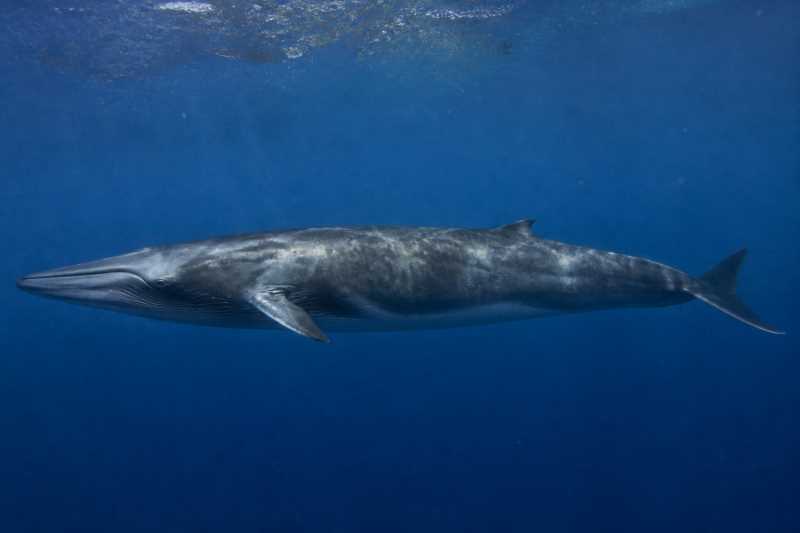
Bryde’s Whales are medium-sized baleen whales, typically measuring between 12 and 16.5 meters (39 to 54 feet) in length and weighing around 12 to 25 tons. Females tend to be slightly larger than males, a common trait among baleen whales. One of the most distinctive features of Bryde’s Whales is their three prominent longitudinal ridges on the top of their heads, a characteristic that sets them apart from most other rorquals, which usually have only one.
The body of a Bryde’s Whale is streamlined and sleek, with a dark gray or bluish-gray coloration on the back and a lighter, often white, underside. The dorsal fin is tall, falcate, and located about two-thirds of the way down the back. Their flippers are relatively short and pointed, while the tail flukes are broad and notched in the center.
Bryde’s Whales possess baleen plates, which are used to filter feed on small fish and plankton. These plates are dark-colored and can measure up to 40 centimeters (about 16 inches) in length.
Range and Habitat
Bryde’s Whales inhabit warm waters, specifically in tropical and subtropical regions between 40°N and 40°S latitude. Unlike some other baleen whales, they do not migrate over long distances but rather tend to remain within these warmer waters throughout the year.
Their range includes the Atlantic, Pacific, and Indian Oceans, where they can be found in coastal and offshore waters. Bryde’s Whales prefer areas with abundant prey, such as upwelling zones where nutrient-rich waters support large populations of fish and plankton.
They are often sighted near the coasts of countries like South Africa, India, the Philippines, and parts of the Gulf of Mexico. However, their elusive nature and the vastness of their range can make them difficult to study and observe consistently.
Behavior and Diet
Bryde’s Whales are generally solitary or found in small groups, often consisting of a mother and calf or a few individuals. They are known for their elusive behavior, frequently diving and resurfacing unexpectedly, making them challenging subjects for researchers and photographers.
These whales are lunge feeders, a feeding method that involves gulping large volumes of water and prey, then filtering out the water through their baleen plates. Their diet primarily consists of small schooling fish like anchovies, sardines, and mackerel, as well as crustaceans such as krill and copepods.
Bryde’s Whales are known for their diverse vocalizations, including low-frequency moans and pulses, which are believed to play a role in communication and navigation. These vocalizations can travel long distances underwater, aiding in the location of prey and interaction with other whales.
Identification Tips (Field Recognition Cues)
Identifying Bryde’s Whales in the field can be challenging due to their resemblance to other rorquals, such as the Sei Whale. However, there are several key characteristics to look for:
- Head Ridges: Look for the three distinct ridges on the top of the whale’s head, a unique feature of Bryde’s Whales.
- Dorsal Fin: Note the tall, falcate dorsal fin located two-thirds back on the body.
- Behavior: Observe their feeding behavior; Bryde’s Whales often exhibit the lunge feeding technique.
- Location: Consider the geographic location and water temperature; if you are in tropical or subtropical waters, it’s more likely to be a Bryde’s Whale.
Conservation Status (With Threats and Protections)
The conservation status of Bryde’s Whales is currently listed as "Least Concern" by the International Union for Conservation of Nature (IUCN). However, certain populations are considered at risk, and the species faces several threats.
Threats
- Fishing Gear Entanglement: Bryde’s Whales are vulnerable to entanglement in fishing gear, which can lead to injury or death.
- Ship Strikes: Their coastal habitats put them at risk of collisions with vessels, a common threat for many marine mammals.
- Pollution: The presence of pollutants, including plastic debris and chemical contaminants, can impact their health and prey availability.
- Climate Change: Changes in ocean temperatures and currents can affect prey distribution, impacting the whales’ feeding grounds.
Protections
- International Whaling Commission (IWC): Bryde’s Whales are protected under the IWC’s moratorium on commercial whaling.
- Marine Protected Areas (MPAs): Some populations benefit from MPAs that limit human activities, providing safer habitats.
- Research and Monitoring: Ongoing research and monitoring efforts help in understanding population dynamics and implementing effective conservation measures.
Frequently Asked Questions
1. What is the average lifespan of a Bryde’s Whale?
Bryde’s Whales typically live for around 50 to 70 years. However, their exact lifespan can vary based on environmental conditions and threats faced throughout their life.
2. How do Bryde’s Whales communicate?
Bryde’s Whales communicate using a range of low-frequency vocalizations, including moans and pulses, which aid in social interaction and navigation.
3. Are Bryde’s Whales migratory?
Unlike many other baleen whales, Bryde’s Whales are not known for long-distance migrations. They usually remain in tropical and subtropical waters year-round.
4. How can you tell a Bryde’s Whale from a Sei Whale?
While both species are similar in appearance, Bryde’s Whales have three head ridges compared to the single ridge found on Sei Whales.
5. What do Bryde’s Whales eat?
Bryde’s Whales primarily feed on small schooling fish such as anchovies, sardines, mackerel, and crustaceans like krill and copepods.
Related posts