Introduction
The Malayan Tapir (Tapirus indicus), also known as the Asian Tapir, is a unique and intriguing mammal that captivates the interest of wildlife enthusiasts and researchers alike. As the largest of the four species of tapirs, the Malayan Tapir is notable for its striking coloration and solitary nature. This article delves into the various aspects of this fascinating species, including its physical characteristics, habitat, behavior, and conservation status.
Physical Description
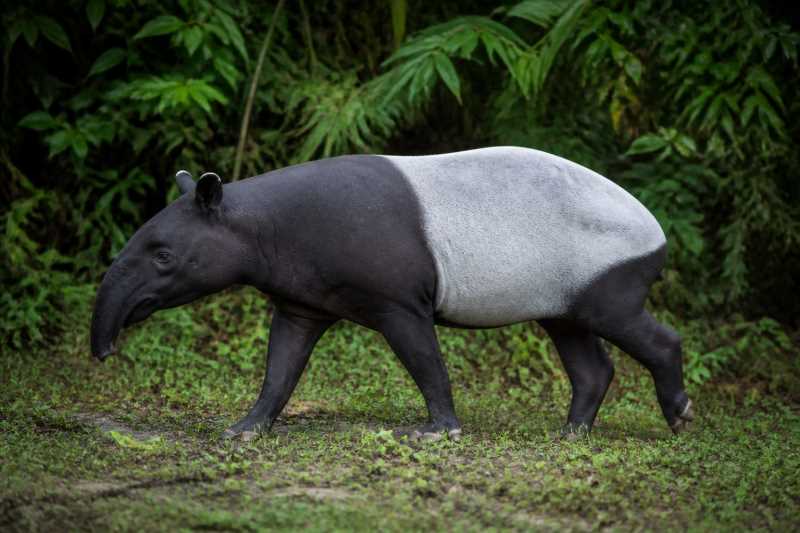
The Malayan Tapir is easily distinguishable by its distinctive black-and-white coloration, which serves as a form of camouflage in its natural habitat. The front half of the body and the hindquarters are black, while the middle section is white, a pattern that breaks up the animal’s outline in the dappled light of the forest. Adult Malayan Tapirs typically measure between 1.8 to 2.5 meters in length and stand about 90 to 110 centimeters tall at the shoulder. They can weigh anywhere from 250 to 320 kilograms.
One of the most notable features of the Malayan Tapir is its prehensile snout, which is an elongated upper lip and nose that functions much like a small trunk. This adaptation allows it to grasp leaves and fruits with ease. The tapir’s ears are rimmed with white, and they possess small, beady eyes, which provide limited vision but are highly sensitive to movement.
Range and Habitat
The Malayan Tapir is native to the dense tropical rainforests of Southeast Asia. Its range includes southern Thailand, Myanmar, the Malay Peninsula, and the island of Sumatra in Indonesia. Historically, the species was also found in Cambodia, Laos, and Vietnam, although its presence in these areas has significantly diminished.
This species prefers lowland forests and is often found near water sources such as rivers and swamps. The tapir’s habitat is characterized by high humidity and dense vegetation, which provides both food and cover from predators. Due to deforestation and habitat fragmentation, the range of the Malayan Tapir has been significantly reduced, posing a threat to its survival.
Behavior and Diet
Malayan Tapirs are primarily solitary animals, with the exception of mothers with their young. They are most active at night (nocturnal) and spend their nights foraging for food. Their diet consists mainly of leaves, twigs, fruits, and aquatic vegetation. The ability to swim allows them to access a variety of plants and escape predators.
Tapirs are known for their excellent swimming capabilities and often spend a significant amount of time in water, which helps them keep cool and avoid insects. They mark their territory with urine and use well-trodden paths to navigate through the forest. Communication among tapirs involves a variety of vocalizations, including whistles and squeaks.
Identification Tips (field recognition cues)
Recognizing a Malayan Tapir in the wild can be a thrilling experience. Here are some tips for identifying this unique mammal:
- Color Pattern: Look for the distinctive black and white coloration. The white saddle marking on its back is a key identifying feature.
- Size and Shape: Note the large, stocky body with short legs and a pronounced snout.
- Habitat: Sightings are most likely in dense, lowland rainforests near water.
- Tracks and Signs: Look for three-toed footprints and paths through dense vegetation.
- Sounds: Listen for high-pitched whistles and squeaks, especially at night.
Conservation Status (with threats and protections)
The Malayan Tapir is classified as Endangered on the IUCN Red List, primarily due to habitat loss and fragmentation. Deforestation for agriculture, logging, and human settlement has drastically reduced its available habitat. Additionally, tapirs are sometimes hunted for their meat and skin, although this is less common.
Conservation efforts for the Malayan Tapir include habitat protection and restoration, as well as anti-poaching measures. Several protected areas have been established within its range, and international cooperation is essential for effective conservation strategies. Public awareness and education campaigns are also crucial in reducing human-wildlife conflict and promoting tapir conservation.
Frequently Asked Questions
What do Malayan Tapirs eat?
Malayan Tapirs are herbivores, feeding primarily on leaves, twigs, fruits, and aquatic vegetation. Their prehensile snout allows them to easily grasp and pull vegetation.
Where do Malayan Tapirs live?
Malayan Tapirs inhabit the dense, lowland rainforests of Southeast Asia, including regions of southern Thailand, Myanmar, the Malay Peninsula, and Sumatra.
Why are Malayan Tapirs endangered?
The primary threats to Malayan Tapirs are habitat loss due to deforestation, agricultural expansion, and human settlement. Hunting also poses a lesser threat.
How do Malayan Tapirs communicate?
Malayan Tapirs communicate using a variety of vocalizations, including whistles and squeaks. They also mark their territory with urine.
Can Malayan Tapirs swim?
Yes, Malayan Tapirs are excellent swimmers and often use water to cool off, escape predators, and access aquatic plants.
Related posts