Introduction
The Malabar Civet (Viverra civettina), a critically endangered mammal species native to India, is a fascinating yet elusive creature that has intrigued biologists and conservationists alike. With its distinctive appearance and unique behaviors, the Malabar Civet holds a significant place in the biodiversity of the Western Ghats. This article delves into the various aspects of the Malabar Civet, from its physical characteristics to its conservation status, providing a comprehensive overview of this remarkable species.
Physical Description
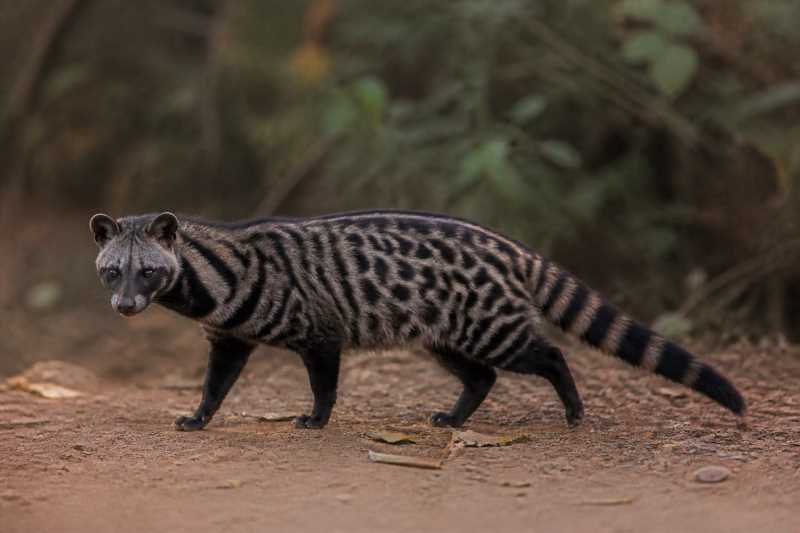
The Malabar Civet is a medium-sized carnivorous mammal belonging to the Viverridae family. It is characterized by its elongated body, short legs, and a bushy tail. The civet’s coat is typically gray with black spots and stripes, which provide excellent camouflage in its natural habitat. One of its most distinguishing features is the black and white facial mask, which enhances its nocturnal adaptations.
Adult Malabar Civets usually measure between 76 to 85 cm in body length, with an additional tail length of 30 to 40 cm. They weigh between 3.5 to 4.5 kg. The species exhibits sexual dimorphism, with males generally being larger than females. Their retractable claws and sharp teeth are well-adapted for hunting and climbing, making them proficient predators in their ecosystem.
Range and Habitat
Historically, the Malabar Civet was found across the Malabar region in southwestern India, particularly in the states of Kerala and Karnataka. However, its current range is severely fragmented due to habitat loss and human encroachment. Today, sightings are rare, and the species is believed to inhabit the remaining patches of the Western Ghats, a biodiversity hotspot recognized for its rich flora and fauna.
The Malabar Civet prefers dense evergreen and semi-evergreen forests, which offer abundant cover and prey. Despite this preference, the civet has occasionally been spotted in degraded habitats and agricultural lands, indicating a degree of adaptability. However, these areas are far from ideal and pose significant risks to their survival.
Behavior and Diet
The Malabar Civet is primarily nocturnal, emerging at dusk to hunt and forage. Its solitary and elusive nature makes it a challenging species to study in the wild. The civet is an opportunistic feeder, with a diet that includes small mammals, birds, insects, fruits, and berries. This varied diet reflects its adaptability to different food sources available in its environment.
During the day, the Malabar Civet rests in dense foliage or burrows, relying on its keen sense of smell and hearing to detect potential threats. Its vocalizations, which include growls and hisses, are used for communication and to deter intruders.
Identification Tips (Field Recognition Cues)
Identifying a Malabar Civet in the wild requires keen observation and an understanding of its unique characteristics. Here are some field recognition cues:
- Coat Pattern: Look for the distinctive black and white facial mask and the spotted and striped gray body.
- Size and Shape: Note the elongated body, short legs, and bushy tail, typical of the civet species.
- Behavior: Observe nocturnal activity patterns and solitary behavior, often near dense vegetation.
- Vocalizations: Listen for low growls and hisses, which are indicative of the Malabar Civet.
Conservation Status (with Threats and Protections)
The Malabar Civet is classified as Critically Endangered by the International Union for Conservation of Nature (IUCN). The primary threat to its survival is habitat destruction due to deforestation and agricultural expansion in the Western Ghats. Additionally, hunting and poaching have historically contributed to its decline.
Conservation efforts are underway to protect the remaining populations of Malabar Civets. These include habitat restoration projects, legal protection under the Wildlife Protection Act of India, and awareness programs to reduce human-wildlife conflict. Captive breeding programs are also being considered to boost population numbers, although success in this area has been limited.
Frequently Asked Questions
1. What are the primary threats to the Malabar Civet? The main threats include habitat loss due to deforestation, agricultural expansion, and human encroachment. Poaching and hunting for bushmeat and traditional medicine also pose significant risks.
2. How can we help in the conservation of the Malabar Civet? Supporting conservation organizations, promoting habitat preservation, and raising awareness about the species’ plight are effective ways to contribute to its conservation.
3. Is the Malabar Civet found outside India? Currently, the Malabar Civet is endemic to India and has not been documented outside the country. Its distribution is now limited to fragmented areas within the Western Ghats.
4. Are there any captive breeding programs for the Malabar Civet? There are efforts to establish captive breeding programs, but they face challenges due to the species’ elusive nature and specific habitat requirements.
5. Why is the Malabar Civet important for the ecosystem? As a predator, the Malabar Civet plays a vital role in controlling the populations of small mammals and insects, thus maintaining ecological balance in its habitat.
Related posts