African Civet (Civettictis civetta): An In-depth Exploration
Introduction
The African Civet, scientifically known as Civettictis civetta, is a unique and fascinating species of mammal native to sub-Saharan Africa. Renowned for its distinctive appearance and role in the ecosystem, the African Civet occupies a significant niche in the biodiversity of the African continent. This article delves into the various aspects of the African Civet, exploring its physical characteristics, habitat, behavior, diet, and conservation status. Understanding this mammal not only enriches our appreciation of wildlife but also informs conservation efforts aimed at preserving its natural habitat.
Physical Description
The African Civet is a robust mammal with a distinctive appearance, making it easily recognizable. It boasts a stocky body with an average length of about 67 to 90 centimeters, excluding its tail, which adds an additional 34 to 47 centimeters. The civet’s weight ranges from 7 to 20 kilograms, with males generally larger than females.
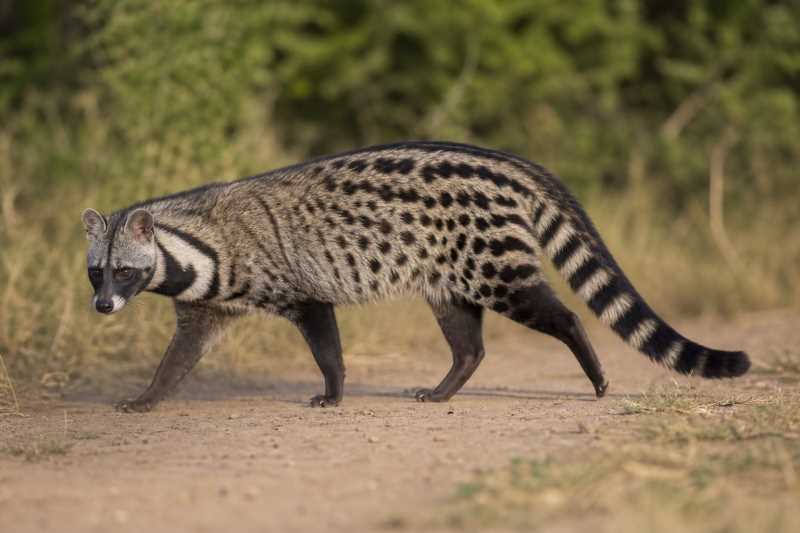
One of the most striking features of the African Civet is its coat, which displays a pattern of black and white stripes and spots. This pattern varies among individuals but usually consists of a series of dark bands running across the body and spots on the legs. The coat is coarse, providing protection against the elements and facilitating camouflage in its natural habitat.
The African Civet’s face is marked by a distinctive black mask around its eyes, reminiscent of a raccoon. This mask contrasts sharply with the lighter fur on its muzzle and throat. The civet’s ears are small and rounded, contributing to its keen sense of hearing.
Range and Habitat
The African Civet is widely distributed across sub-Saharan Africa, from Senegal and Mauritania in the west to Ethiopia and Somalia in the east, extending southward to Namibia and South Africa. This broad distribution is a testament to the civet’s adaptability to various environments.
Typically, African Civets inhabit savannas, forests, and woodlands, often preferring areas with dense vegetation that provides cover from predators. They are also found in agricultural lands and near human settlements, where they can scavenge for food. The civet is a nocturnal creature, seeking shelter in burrows or dense thickets during the day.
Behavior and Diet
African Civets are solitary and primarily nocturnal animals. They are most active during the night when they forage for food. Their diet is omnivorous, consisting of a variety of foods such as rodents, birds, reptiles, insects, fruits, and carrion. This diverse diet is facilitated by the civet’s keen sense of smell and opportunistic feeding habits.
Civets are known for their unique method of scent marking. They possess a gland located near the base of the tail, which secretes a musky substance known as civetone. This substance is used to mark territory and communicate with other civets. Interestingly, civetone has been utilized in the perfume industry for its strong and persistent fragrance.
Identification Tips
Identifying an African Civet in the field can be an exciting experience for wildlife enthusiasts. Here are some tips to help recognize these fascinating creatures:
- Coat Pattern: Look for the distinctive black and white striped and spotted pattern on their bodies.
- Facial Mask: Observe the black mask around their eyes, which is a key identifying feature.
- Size and Build: Note their stocky build and relatively short legs.
- Nocturnal Activity: African Civets are primarily active at night, so sightings are more common during twilight hours.
- Scent: If you are close, you might detect the musky odor of their scent markings.
Conservation Status
The African Civet is currently listed as "Least Concern" on the IUCN Red List. Despite this classification, the species faces several threats, primarily from habitat loss, hunting, and the illegal wildlife trade.
Threats
- Habitat Loss: Expansion of agricultural activities and urban development leads to the destruction of natural habitats.
- Hunting: Civets are hunted for their meat and for the production of civet oil used in traditional medicine and perfumery.
- Trade: The illegal wildlife trade poses a significant threat, with civets often captured and sold as exotic pets.
Protections
Conservation efforts focus on habitat protection and anti-poaching measures. Several national parks and reserves across Africa provide protected environments for the African Civet.
Frequently Asked Questions
What do African Civets eat?
The African Civet has an omnivorous diet, consisting of small mammals, birds, insects, fruits, and carrion. They are opportunistic feeders and adapt their diet based on availability.
Are African Civets dangerous to humans?
African Civets are generally not dangerous to humans. They are shy and elusive, avoiding human interaction when possible. However, they can defend themselves if threatened.
How do African Civets communicate?
African Civets communicate through scent marking, vocalizations, and body language. The scent gland near their tail secretes a musky substance used for marking territory and signaling other civets.
Can African Civets be kept as pets?
While some people have attempted to keep African Civets as pets, they are wild animals with specific needs that are difficult to meet in captivity. It is generally not recommended to keep them as pets.
What is civetone, and why is it significant?
Civetone is a musky substance secreted by the African Civet, used for scent marking. It is significant for its use in the perfume industry, valued for its strong and long-lasting scent.
Related posts