Introduction
The Sulawesi Palm Civet, scientifically known as Macrogalidia musschenbroekii, is a fascinating mammal species indigenous to the lush, biodiverse island of Sulawesi, Indonesia. This elusive creature is the only member of the genus Macrogalidia, making it a unique subject of interest for wildlife enthusiasts and researchers alike. Due to its remote habitat and secretive nature, the Sulawesi Palm Civet remains one of the lesser-known members of the viverrid family, yet it plays a crucial role in the ecosystem of Sulawesi’s tropical forests.
Physical Description
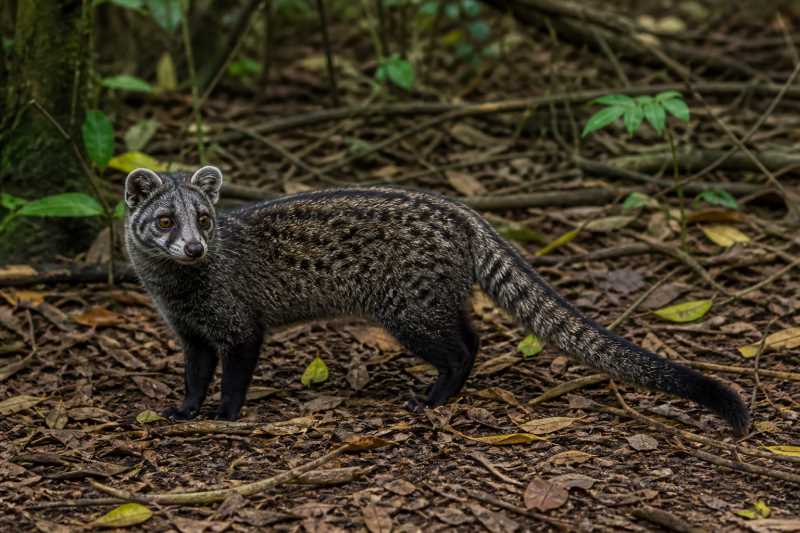
The Sulawesi Palm Civet is a medium-sized mammal characterized by its elongated body and short limbs, which are typical features of the viverrid family. Adults typically weigh between 3 to 6 kilograms (6.6 to 13.2 pounds) and measure approximately 60 to 80 centimeters (24 to 31 inches) in body length, excluding the tail, which adds another 40 to 65 centimeters (16 to 26 inches). The civet’s coat is a blend of dark brown and gray, with a lighter underbelly, and is marked by faint spots that provide camouflage within its forest habitat. Its face features a distinctive bandit-like mask, and it possesses a long, bushy tail that aids in balance and agility among the trees.
Range and Habitat
The Sulawesi Palm Civet is endemic to the island of Sulawesi, located in Indonesia. Sulawesi is renowned for its unique biodiversity, a result of millions of years of geographical isolation. The civet inhabits a range of forested environments, including lowland primary forests, montane forests, and occasionally disturbed or secondary forests. These habitats provide ample cover and food resources, which are critical for the civet’s survival. The civet’s distribution is primarily concentrated in the central and northern regions of Sulawesi, although its exact range remains poorly understood due to the limited research and the challenges of studying such an elusive species.
Behavior and Diet
Sulawesi Palm Civets are nocturnal creatures, primarily active during the night when they engage in foraging and other activities. They are solitary animals, with individuals maintaining territories that they mark using scent glands. These civets are arboreal, spending a significant amount of time in the trees, although they also descend to the ground in search of food.
Their diet is omnivorous, consisting of a variety of fruits, small mammals, birds, insects, and occasionally carrion. The civet’s ability to consume a diverse range of foods makes it an important seed disperser, contributing to the health and regeneration of its forest ecosystem.
Identification Tips (Field Recognition Cues)
Identifying a Sulawesi Palm Civet in the wild can be challenging due to its secretive nature and nocturnal habits. However, there are several cues to look for:
- Appearance: Look for a medium-sized mammal with a long body and a bushy tail. The civet’s coat is a mix of dark brown and gray, with faint spots and a lighter underbelly.
- Facial Features: The civet has a distinctive "mask" around its eyes, similar to a raccoon’s.
- Habitat: Focus on forested areas within Sulawesi, particularly during nighttime hours when the civet is most active.
- Behavior: Listen for rustling in the trees or forest floor, as well as vocalizations that resemble chirps or barks.
Conservation Status (With Threats and Protections)
The Sulawesi Palm Civet is currently classified as Vulnerable on the IUCN Red List. The primary threats to its survival include habitat loss due to deforestation, agricultural expansion, and illegal hunting. The rapid rate of forest degradation in Sulawesi poses a significant risk to the civet’s natural habitat and food sources.
Conservation efforts are underway to protect the remaining forest areas and promote sustainable land use practices. Protected areas within Sulawesi, such as national parks and wildlife reserves, provide some refuge for the civet and other endemic species. Moreover, increased awareness and research are crucial for developing effective conservation strategies and ensuring the long-term survival of the Sulawesi Palm Civet.
Frequently Asked Questions
What does the Sulawesi Palm Civet eat?
The Sulawesi Palm Civet has an omnivorous diet that includes fruits, small mammals, birds, insects, and occasionally carrion. This dietary flexibility allows it to adapt to varying food availability within its forest habitat.
Where can I find the Sulawesi Palm Civet in the wild?
The Sulawesi Palm Civet is endemic to the island of Sulawesi, Indonesia. It inhabits primary and secondary forests, particularly in the central and northern regions of the island.
Why is the Sulawesi Palm Civet considered vulnerable?
The civet is classified as Vulnerable due to threats from habitat loss, deforestation, and illegal hunting. Conservation efforts focus on protecting habitat and promoting sustainable practices.
How does the Sulawesi Palm Civet contribute to its ecosystem?
As a seed disperser, the Sulawesi Palm Civet plays a vital role in maintaining forest health and promoting biodiversity by aiding in the regeneration of plant life through seed distribution.
Is the Sulawesi Palm Civet active during the day?
No, the Sulawesi Palm Civet is primarily nocturnal, meaning it is most active during the night. It spends its daytime hours resting in the dense cover of forest vegetation.
Related posts