Introduction
The Wallace’s Stripe-faced Fruit Bat, scientifically known as Styloctenium wallacei, is a remarkable species of fruit bat found in parts of Southeast Asia. Named in honor of the British naturalist Alfred Russel Wallace, this bat is noted for its distinctive facial markings and its important ecological role in forest ecosystems. As seed dispersers and pollinators, these bats contribute significantly to the health and regeneration of tropical forests. Understanding their biology, behavior, and the conservation challenges they face is crucial for the preservation of biodiversity in their native habitats.
Physical Description
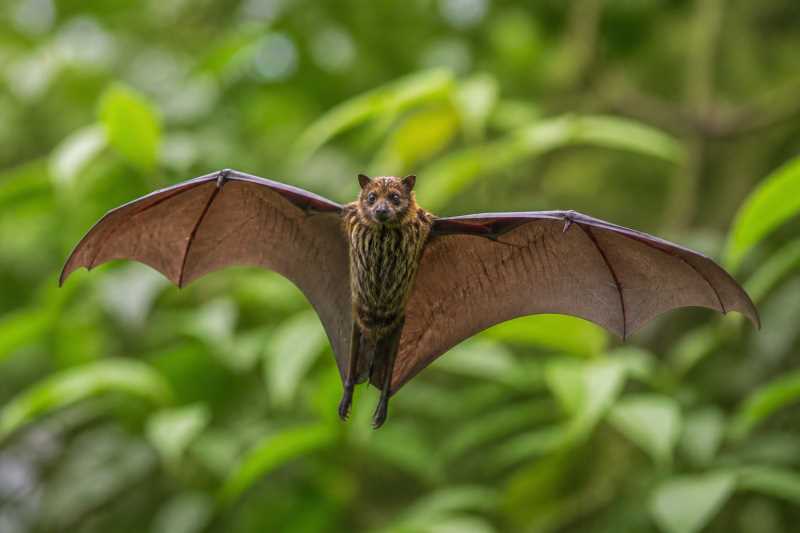
Wallace’s Stripe-faced Fruit Bat is a medium-sized fruit bat with a wingspan ranging from 60 to 80 centimeters and a body length of approximately 15 to 20 centimeters. One of the most striking features of this bat is its facial markings; it has a prominent stripe running down the center of its face, which gives it the name "Stripe-faced." Its fur is generally a combination of brown and grey tones, providing camouflage among the trees. The bat has large eyes and ears, adaptations that facilitate nocturnal activity and enhance its ability to navigate and forage in the dark.
The bat’s dentition is adapted to a frugivorous diet, with sharp canines and molars designed to process fruit efficiently. The wings of the Wallace’s Stripe-faced Fruit Bat are elongated and robust, allowing for agile flight through dense forest canopies.
Range and Habitat
Wallace’s Stripe-faced Fruit Bat is endemic to the Philippines, primarily found on the islands of Mindanao and Basilan. These bats inhabit tropical and subtropical forests, including both primary and secondary forests. They are commonly found in lowland areas but have also been observed at elevations of up to 1,000 meters.
The habitat of the Wallace’s Stripe-faced Fruit Bat is characterized by dense foliage and a high diversity of fruiting trees. These environments provide an abundance of food resources and roosting sites, which are critical for their survival. The bats prefer roosting in tree hollows, caves, and occasionally in man-made structures that offer protection from predators and harsh weather conditions.
Behavior and Diet
Wallace’s Stripe-faced Fruit Bat is primarily nocturnal, emerging at dusk to forage for food. Their diet consists mainly of fruits, nectar, and flowers, making them important pollinators and seed dispersers in their ecosystem. They have a preference for figs, bananas, and other native tropical fruits.
These bats are known for their social behavior, often roosting in small groups. Communication among individuals is facilitated by a range of vocalizations and scent markings. They use echolocation to navigate and locate food, although to a lesser extent than insectivorous bats, relying more on their keen eyesight and sense of smell.
During the mating season, males often engage in displays to attract females, including vocal calls and wing flapping. Females typically give birth to a single pup, which they care for until it is capable of independent flight.
Identification Tips (Field Recognition Cues)
Identifying Wallace’s Stripe-faced Fruit Bat in the field can be facilitated by focusing on several key characteristics:
- Facial Stripe: Look for the distinctive white stripe running down the center of the bat’s face, which is a primary identifying feature.
- Size and Wingspan: Note the medium size and large wingspan, which are indicative of fruit bats in general.
- Coloration: Observe the brown and grey fur coloration, which helps the bat blend into its natural surroundings.
- Roosting Habits: These bats can often be found roosting in tree hollows or caves during the day.
- Nocturnal Activity: They are active at night, making dusk and dawn the best times for observation.
Conservation Status (with Threats and Protections)
The conservation status of Wallace’s Stripe-faced Fruit Bat is currently listed as "Data Deficient" by the International Union for Conservation of Nature (IUCN). This classification indicates that there is not enough information available to make a precise assessment of its population trends and threats.
However, habitat destruction due to logging, agricultural expansion, and urban development poses significant threats to their survival. Additionally, hunting for bushmeat and capture for the illegal pet trade are potential risks.
Conservation efforts are focused on habitat preservation and restoration, as well as public education to reduce hunting pressures. Protected areas and wildlife reserves in the Philippines play a crucial role in safeguarding the habitats of these bats. Further research is needed to better understand their ecology and develop targeted conservation strategies.
Frequently Asked Questions
1. What does Wallace’s Stripe-faced Fruit Bat eat? Wallace’s Stripe-faced Fruit Bat primarily feeds on a variety of fruits, including figs, bananas, and other tropical fruits. They also consume nectar and flowers, playing a vital role in pollination and seed dispersal.
2. Where can I find Wallace’s Stripe-faced Fruit Bat? This species is endemic to the Philippines, mainly on the islands of Mindanao and Basilan. They inhabit tropical and subtropical forests, often roosting in tree hollows and caves.
3. Why is the conservation status of Wallace’s Stripe-faced Fruit Bat listed as Data Deficient? The "Data Deficient" status indicates that there is insufficient information about their population size and trends. More research is needed to understand their ecology and threats fully.
4. How do Wallace’s Stripe-faced Fruit Bats contribute to their ecosystem? These bats are important seed dispersers and pollinators, aiding in the regeneration and maintenance of tropical forest ecosystems. They help ensure the survival and propagation of various plant species.
5. What are the main threats to Wallace’s Stripe-faced Fruit Bat? The primary threats include habitat destruction due to deforestation, agricultural expansion, and urban development. Hunting and illegal trade also pose risks to their populations.
Related posts