New Georgia Monkey-faced Fruit Bat (Pteralopex taki): The Enigmatic Island Dweller
Introduction
The New Georgia Monkey-faced Fruit Bat, scientifically known as Pteralopex taki, is a rare and fascinating species of fruit bat endemic to the Solomon Islands. Revered for its unique features and ecological significance, this bat species plays a crucial role in its native habitat. Despite its importance, the New Georgia Monkey-faced Fruit Bat faces numerous challenges, primarily due to habitat destruction and hunting. This article delves into the intricate details of this remarkable mammal, offering insights into its physical characteristics, habitat preferences, behaviors, and the ongoing conservation efforts to protect it from extinction.
Physical Description
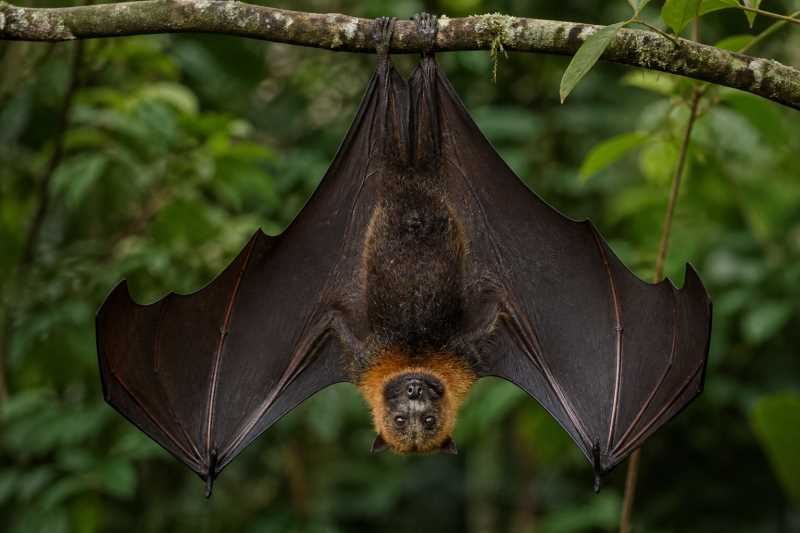
The New Georgia Monkey-faced Fruit Bat is a visually striking species with distinct physical features that set it apart from other bats. It is a large fruit bat, with a wingspan reaching up to 1.2 meters (approximately 4 feet) and a body length of around 25-30 centimeters. The bat is covered in a dense, woolly fur that is predominantly dark brown or black, with a lighter underbelly. Its most distinctive feature is its robust, monkey-like face, characterized by a short, broad snout and large, expressive eyes that contribute to its common name.
The ears of the New Georgia Monkey-faced Fruit Bat are relatively small compared to its body size, and its nose is adapted to aid in its keen sense of smell. The bat’s limbs are strong and muscular, supporting its arboreal lifestyle, and its wings are broad and well-suited for gliding through the dense forest canopy.
Range and Habitat
The New Georgia Monkey-faced Fruit Bat is endemic to the Solomon Islands, specifically found on the island of New Georgia and some surrounding islets. This region is characterized by dense tropical rainforests, which provide essential resources such as food and roosting sites for the bat.
These bats are typically found in lowland and montane forests, often preferring undisturbed areas with a rich diversity of fruiting trees. They roost in large colonies within the forest canopy, utilizing naturally occurring tree cavities or dense foliage for shelter.
Behavior and Diet
The New Georgia Monkey-faced Fruit Bat is primarily nocturnal, emerging at dusk to forage for food. As a frugivorous species, its diet consists mainly of a variety of native fruits, with a particular preference for figs and other fleshy fruit species. This dietary preference makes the bat an important seed disperser, contributing to the maintenance and regeneration of its forest habitat.
Socially, these bats are known to form large colonies, which can comprise several dozen individuals. Within these colonies, they exhibit complex social behaviors, including grooming, vocal communication, and cooperative roosting. These interactions play a vital role in maintaining social bonds and ensuring the colony’s stability.
Identification Tips (field recognition cues)
Identifying the New Georgia Monkey-faced Fruit Bat in the field requires careful observation of several key features:
- Facial Structure: Look for the characteristic monkey-like face with a short, broad snout and large eyes.
- Fur Color: Note the dark brown or black woolly fur with a lighter underbelly.
- Size: Observe the large size, with a wingspan up to 1.2 meters.
- Roosting Behavior: These bats are often found roosting in large colonies in dense forest canopies.
- Flight Pattern: Watch for their broad wings and distinctive gliding flight through the forest.
Conservation Status (with threats and protections)
The New Georgia Monkey-faced Fruit Bat is currently classified as "Endangered" on the IUCN Red List. This status reflects the significant threats it faces, primarily from habitat loss due to logging and agricultural expansion. Additionally, hunting poses a severe risk, as the bats are sometimes targeted for bushmeat.
Conservation efforts are underway to address these threats. Protected areas have been established to preserve critical habitats, and there are ongoing initiatives to raise awareness about the bat’s ecological importance. Local communities are being engaged in conservation programs, emphasizing sustainable land-use practices and the benefits of preserving biodiversity.
Frequently Asked Questions
Q1: Why is the New Georgia Monkey-faced Fruit Bat important to its ecosystem?
A1: The New Georgia Monkey-faced Fruit Bat plays a crucial role in its ecosystem as a seed disperser. By consuming and dispersing seeds of various fruit trees, the bat helps maintain forest diversity and health, which supports a wide range of other species.
Q2: What efforts are being made to protect the New Georgia Monkey-faced Fruit Bat?
A2: Conservation efforts include the establishment of protected areas, community engagement programs promoting sustainable practices, and initiatives to curb hunting by raising awareness about the bat’s ecological significance.
Q3: How can local communities contribute to the conservation of the New Georgia Monkey-faced Fruit Bat?
A3: Local communities can contribute by participating in conservation programs, adopting sustainable land-use practices, and supporting initiatives that promote biodiversity and habitat protection.
Q4: What are the main threats to the New Georgia Monkey-faced Fruit Bat?
A4: The primary threats to the bat include habitat destruction due to logging and agriculture, as well as hunting for bushmeat. Conservation efforts aim to mitigate these threats through protected areas and community education.
Q5: How can researchers and conservationists identify the New Georgia Monkey-faced Fruit Bat in the wild?
A5: Researchers and conservationists can identify the bat by its large size, distinctive monkey-like facial features, dark woolly fur, and roosting behavior in large colonies within dense forest canopies.
Related posts