Introduction
The Puebla Least Shrew, scientifically known as Cryptotis pueblensis, is a small, elusive mammal found primarily in central Mexico. This species belongs to the family Soricidae, which encompasses small insectivorous mammals commonly referred to as shrews. Despite its diminutive size, the Puebla Least Shrew plays a significant role in its ecosystem due to its insectivorous diet, which helps control insect populations. This article delves into the distinctive aspects of this fascinating creature, covering its physical characteristics, habitat, behavior, and conservation status.
Physical Description
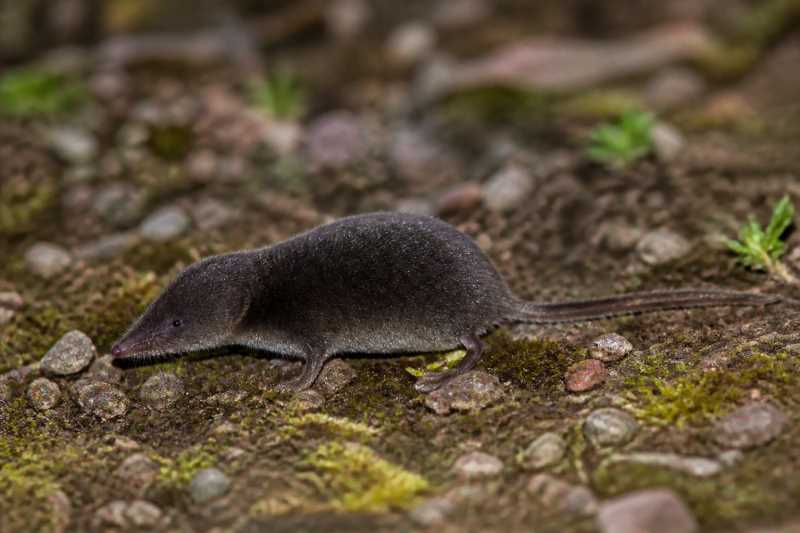
The Puebla Least Shrew is a tiny mammal that typically measures between 6 to 8 centimeters in length, including its tail, which generally accounts for about one-fifth of its total body length. Weighing only 3 to 5 grams, it is one of the smallest mammals in its range.
The shrew’s fur is dense and velvety, providing crucial insulation against temperature fluctuations in its habitat. The coloration is generally grayish-brown on the dorsal side, blending seamlessly into the earth tones of its surroundings, while the ventral side is a lighter gray. Its small eyes and ears are nearly obscured by the fur, a typical adaptation for a life spent in burrows and dense underbrush.
The Puebla Least Shrew’s snout is distinctly pointed, an adaptation that aids in foraging for insects and other small invertebrates that make up its diet. The sharp, spike-like teeth are well-suited for its insectivorous diet, allowing it to efficiently consume a variety of prey.
Range and Habitat
Cryptotis pueblensis is endemic to Mexico, with its range primarily concentrated in the state of Puebla and extending into parts of Veracruz and Oaxaca. The species inhabits a range of elevations, from lowland tropical forests to montane environments up to 2,500 meters above sea level.
The shrew prefers moist habitats with abundant ground cover, such as leaf litter and dense underbrush, which provide both protection from predators and a rich environment for foraging. Its habitats are often characterized by a mix of deciduous and evergreen trees, which contribute to a stable microclimate that supports a diverse array of invertebrate prey.
Behavior and Diet
The Puebla Least Shrew is primarily nocturnal, although it may also be active during twilight hours. Its activity patterns are largely dictated by its need to consume up to twice its body weight in food each day to maintain its high metabolic rate.
The diet of Cryptotis pueblensis consists largely of insects, earthworms, and other small invertebrates. The shrew uses its keen sense of smell to locate prey, often burrowing through leaf litter and soil to uncover hidden food sources. Its rapid metabolism necessitates frequent and opportunistic feeding, which in turn influences its foraging behavior.
Social behavior in the Puebla Least Shrew is limited, as it tends to be solitary outside of the breeding season. Breeding usually occurs once or twice a year, with females giving birth to litters of two to six young after a gestation period of about 21 days.
Identification Tips (Field Recognition Cues)
Identifying the Puebla Least Shrew in the field can be challenging due to its small size and secretive nature. However, a few key characteristics can aid in recognition:
- Size and Shape: Look for a very small mammal with a compact, elongated body and a short tail.
- Fur Color: Notice the grayish-brown fur on the dorsal side and lighter gray on the ventral side.
- Snout: A distinctly pointed snout, which is longer relative to its body size compared to other small mammals.
- Activity: Primarily nocturnal, so sightings are more likely in low light conditions.
- Habitat: Found in areas with dense ground cover and rich leaf litter, often at higher elevations.
Conservation Status (with Threats and Protections)
The Puebla Least Shrew is currently listed as "Data Deficient" by the International Union for Conservation of Nature (IUCN), primarily due to a lack of comprehensive studies on its population size and trends. However, the species faces several threats that could impact its conservation status in the future.
Threats:
- Habitat Loss: Deforestation and land conversion for agriculture and urban development in central Mexico pose significant threats to the shrew’s habitat.
- Climate Change: Alterations in temperature and precipitation patterns could impact the availability of prey and suitable habitats.
Protections:
- Habitat Conservation: Efforts to preserve and restore natural habitats in the shrew’s range are crucial for its survival.
- Research Initiatives: Ongoing studies aim to better understand the species’ ecology and distribution, which will inform future conservation strategies.
Frequently Asked Questions
What is the diet of the Puebla Least Shrew?
The Puebla Least Shrew primarily feeds on insects, earthworms, and other small invertebrates. Its high metabolic rate requires it to consume a substantial amount of food relative to its body weight each day.
Where can you find the Puebla Least Shrew?
This species is found in central Mexico, mainly in the state of Puebla, but also in parts of Veracruz and Oaxaca. It inhabits moist environments with dense ground cover.
How does the Puebla Least Shrew impact its ecosystem?
As an insectivore, the Puebla Least Shrew helps control insect populations, which can benefit plant life and contribute to the ecological balance within its habitat.
What are the main threats to the Puebla Least Shrew?
The primary threats include habitat loss due to deforestation and land conversion, as well as potential impacts from climate change affecting its food availability and habitat conditions.
How can the Puebla Least Shrew be protected?
Conservation efforts focusing on habitat preservation and restoration, along with increased research to understand its ecology, are essential for protecting this species.
Related posts