Introduction
The Sudan Gerbil (Gerbillus nancillus) is a small rodent species belonging to the family Muridae. Known for its adaptability to arid environments, this gerbil species is an intriguing subject of study for ecologists and biologists alike. Despite its small size, the Sudan Gerbil plays a significant role in the ecosystem, serving as both prey and seed disperser. This article delves into the various aspects of the Sudan Gerbil’s life, from its physical characteristics to its behavior and conservation status.
Physical Description
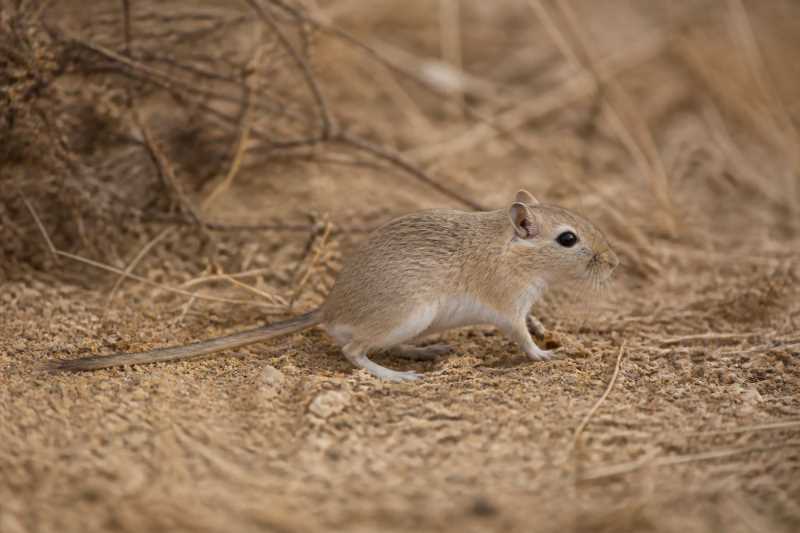
The Sudan Gerbil is a petite rodent, measuring approximately 10 to 12 centimeters in body length, with a tail that adds another 8 to 10 centimeters. Weighing between 30 to 50 grams, it is lightweight and agile. The fur of the Sudan Gerbil is typically sandy-brown or grayish on the dorsal side, which provides excellent camouflage in its natural habitat. The ventral side is usually white or cream-colored. One of the distinguishing features of this gerbil is its large, dark eyes and long whiskers, both adaptations for nocturnal life. Its hind legs are notably longer than its front legs, providing efficient locomotion for jumping and swift movements.
Range and Habitat
The Sudan Gerbil is primarily found in the Sahel and savannah regions of Africa, including countries like Sudan, Chad, and Niger. It thrives in arid and semi-arid environments, where it prefers sandy soils and sparse vegetation. This gerbil often occupies burrows, which it either digs or takes over from other animals. These burrows serve as protection from predators and the harsh daytime heat. The Sudan Gerbil is a nocturnal creature, emerging at night to forage and socialize.
Behavior and Diet
As a nocturnal animal, the Sudan Gerbil is most active during the night when it searches for food and interacts with other gerbils. It is an omnivore, with a diet comprising seeds, grasses, insects, and small invertebrates. In times of scarcity, it can survive on minimal water by metabolizing moisture from its food. Socially, the Sudan Gerbil is known to form loose colonies, where individuals communicate through a combination of vocalizations and scent marking.
The gerbil’s burrowing behavior not only provides shelter but also plays a crucial role in soil aeration and seed dispersal, contributing to the ecological health of its habitat.
Identification Tips
Identifying the Sudan Gerbil in the field involves noting several key characteristics:
- Size and Shape: Look for a small rodent with a body length of 10-12 cm and a proportionally long tail.
- Coloration: The sandy-brown or grayish fur with a lighter underside is a distinctive feature.
- Eyes and Ears: Large, dark eyes and relatively large ears are adapted for nocturnal activity.
- Movement: Observe the gerbil’s hopping movement, facilitated by its elongated hind legs.
- Habitat: Spotting this gerbil is more likely in arid, sandy environments during nighttime excursions.
Conservation Status
The IUCN Red List currently classifies the Sudan Gerbil as "Least Concern." However, this status does not mean the species is free from threats. Habitat destruction due to agricultural expansion and climate change poses significant risks to its population. Moreover, the use of pesticides can affect its food sources and health.
Conservation efforts for the Sudan Gerbil involve habitat preservation and research into its ecological role. Protected areas and nature reserves can help mitigate some of the threats, ensuring the survival of this species in its natural habitat.
Frequently Asked Questions
What is the lifespan of a Sudan Gerbil?
Sudan Gerbils typically live for about 3 to 4 years in the wild. In captivity, with optimal care, they might live slightly longer.
How do Sudan Gerbils communicate?
These gerbils use vocalizations, scent markings, and visual signals to communicate with each other, particularly during mating or territorial disputes.
Are Sudan Gerbils kept as pets?
While some gerbil species are popular as pets, the Sudan Gerbil is not commonly kept due to its specific habitat needs and conservation concerns.
What role does the Sudan Gerbil play in the ecosystem?
The Sudan Gerbil contributes to seed dispersal and soil aeration through its burrowing habits, thus supporting plant growth and maintaining ecological balance.
How do Sudan Gerbils adapt to arid environments?
They have adapted to survive with minimal water, obtaining moisture from their diet, and have developed nocturnal habits to avoid daytime heat.
Related posts