Introduction
The Andean Vesper Mouse, scientifically known as Calomys lepidus, is a fascinating small rodent species endemic to the Andean region of South America. This species is part of the Cricetidae family, which includes a diverse range of rodents, and is known for its adaptability to high-altitude environments. The Andean Vesper Mouse plays a crucial role in its ecosystem, contributing to seed dispersal and serving as prey for various predators. Despite its ecological importance, this species remains relatively understudied, making it an intriguing subject for both researchers and wildlife enthusiasts.
Physical Description
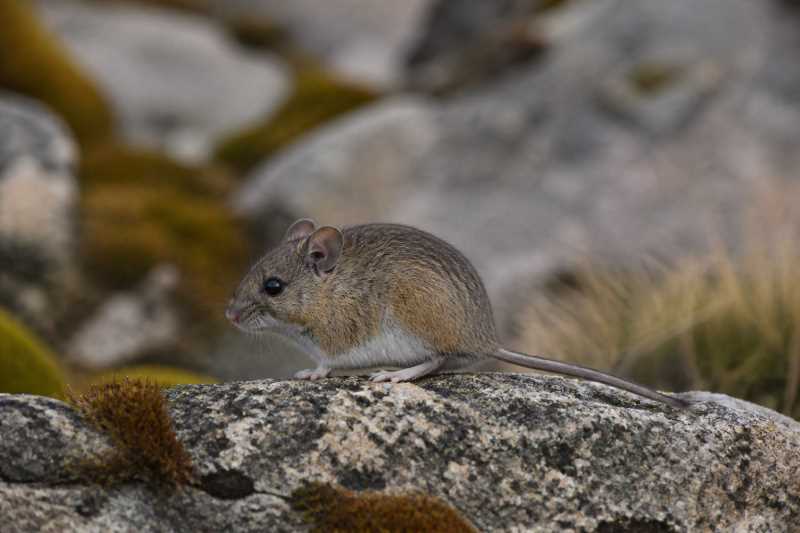
The Andean Vesper Mouse is a small rodent, typically measuring between 10 to 12 centimeters in body length, with a tail that adds an additional 8 to 10 centimeters. This species exhibits sexual dimorphism, with males generally being slightly larger than females. Its fur is dense and soft, providing insulation against the cold temperatures of its high-altitude habitat. The dorsal fur varies from grayish-brown to a more reddish-brown hue, while the ventral side is usually lighter, often white or pale gray. The tail is covered in short hairs and is bicolored, with a darker top and lighter underside.
One of the distinguishing features of the Andean Vesper Mouse is its large ears, which are well-adapted to detect predators and navigate its environment. Its eyes are relatively large, providing good vision in low-light conditions, a useful adaptation for its crepuscular and nocturnal lifestyle. The whiskers are long and sensitive, aiding in tactile exploration of its surroundings.
Range and Habitat
The Andean Vesper Mouse is primarily found in the high-altitude regions of the Andes Mountains, spanning countries such as Peru, Bolivia, Ecuador, and northern Chile. Its habitat ranges from montane forests to grasslands and shrublands, typically at elevations between 2,500 to 4,500 meters above sea level. This species is highly adaptable, capable of thriving in a variety of microhabitats within its range.
The Andean Vesper Mouse favors environments with dense vegetation, which provides both cover from predators and a rich source of food. It is often found in areas with abundant ground cover, such as tussock grasses and shrubs. These habitats not only offer protection but also facilitate the mouse’s burrowing behavior, which is essential for nesting and storing food.
Behavior and Diet
The Andean Vesper Mouse is primarily nocturnal, with peak activity occurring during the early evening and pre-dawn hours. This behavior helps it avoid many diurnal predators. It is a solitary creature, with individuals maintaining discrete territories marked by scent markings. These territories are often centered around a burrow, which serves as a refuge from predators and harsh weather conditions.
Diet-wise, the Andean Vesper Mouse is omnivorous. Its diet consists mainly of seeds, fruits, and insects, with a preference for the former. The availability of food resources can vary seasonally, prompting the mouse to exhibit opportunistic feeding behavior. During the wet season, when food is abundant, the mouse actively stores surplus food in its burrow for use during the leaner dry season.
Identification Tips
Identifying the Andean Vesper Mouse in the field requires attention to several key characteristics:
- Size and Proportions: Look for a small rodent with a body length of 10-12 cm and a tail length of 8-10 cm.
- Fur Coloration: Note the grayish-brown to reddish-brown dorsal fur and lighter ventral fur.
- Ears and Eyes: The large ears and prominent eyes are distinctive features.
- Tail: The bicolored tail, darker on top and lighter underneath, is a helpful identification cue.
- Behavior: Observing activity during twilight hours can indicate the presence of this nocturnal species.
Conservation Status
As of the latest assessments, the Andean Vesper Mouse is classified as a species of "Least Concern" by the International Union for Conservation of Nature (IUCN). This classification indicates that the species is currently not facing a significant risk of extinction in the wild. However, this status does not imply that the species is free from threats.
Threats
The primary threats to the Andean Vesper Mouse include habitat loss and degradation due to agricultural expansion, mining activities, and deforestation. Climate change also poses a potential threat by altering the high-altitude ecosystems where this species thrives. Additionally, predation by domestic animals, such as cats and dogs, can impact local populations.
Protections
Conservation efforts for the Andean Vesper Mouse include habitat protection through the establishment of national parks and reserves in the Andean region. These protected areas help preserve the natural ecosystems that support the species. Ongoing research and monitoring are crucial to understanding the population dynamics and ecological needs of the Andean Vesper Mouse, enabling more targeted conservation actions.
Frequently Asked Questions
What is the Andean Vesper Mouse’s primary habitat?
The Andean Vesper Mouse primarily inhabits high-altitude regions of the Andes Mountains, thriving in montane forests, grasslands, and shrublands at elevations between 2,500 to 4,500 meters.
Is the Andean Vesper Mouse endangered?
Currently, the Andean Vesper Mouse is classified as "Least Concern" by the IUCN. However, it faces threats from habitat loss and climate change, necessitating ongoing conservation efforts.
What does the Andean Vesper Mouse eat?
The Andean Vesper Mouse is an omnivore, with a diet consisting mainly of seeds, fruits, and insects. It adapts its feeding behavior based on seasonal food availability.
How can you identify an Andean Vesper Mouse in the wild?
Key identification features include its small size, grayish-brown to reddish-brown fur, large ears, bicolored tail, and nocturnal activity pattern.
Are there any conservation programs for the Andean Vesper Mouse?
Conservation efforts focus on habitat protection through national parks and reserves, as well as research and monitoring to better understand its ecological needs.
Related posts