Introduction
Phayre’s Squirrel, scientifically known as Callosciurus phayrei, is a fascinating mammal species that inhabits the lush forests of Southeast Asia. This medium-sized tree squirrel is named after the British naturalist Sir Arthur Phayre, who significantly contributed to the understanding of the flora and fauna of the region. Known for its vibrant appearance and agile movements, Phayre’s Squirrel plays a crucial role in the ecosystems it inhabits. This article explores various aspects of Phayre’s Squirrel, including its physical characteristics, natural habitat, behaviors, diet, and conservation status.
Physical Description
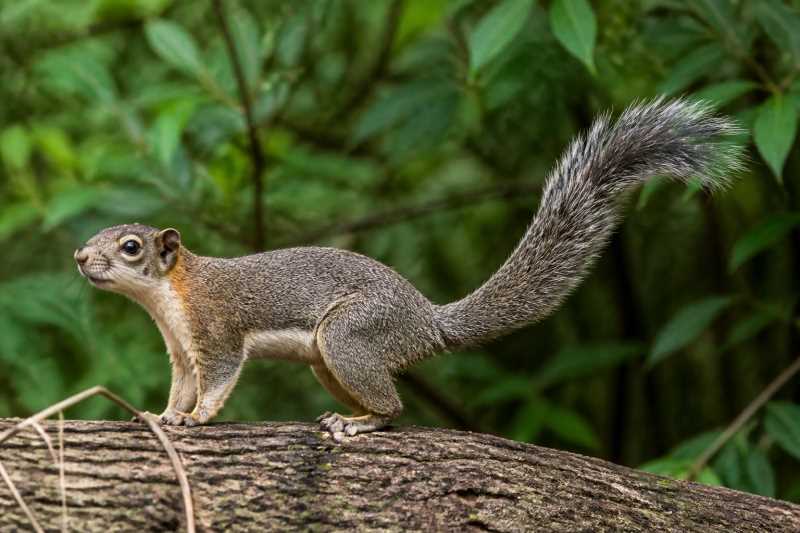
Phayre’s Squirrel is a visually striking species with a body length ranging from 25 to 30 centimeters, and a tail that extends another 25 to 30 centimeters, making it quite proportionate and balanced in its build. The weight of an adult typically falls between 300 and 450 grams. Its fur is predominantly a rich chestnut brown, with a distinctive creamy or whitish underbelly. This contrast in coloration is not only aesthetically pleasing but also serves a practical purpose, helping in camouflage against the bark of trees in its natural habitat.
The tail of Phayre’s Squirrel is bushy and acts as a counterbalance when it leaps from branch to branch. It is often darker than the body, with a blend of black and brown fur. The ears are short and rounded, lacking the tufts found in some other squirrel species. The eyes are large, providing excellent vision that is crucial for navigating through dense foliage and detecting predators.
Range and Habitat
Phayre’s Squirrel is native to the tropical and subtropical forests of Southeast Asia. Its range extends across several countries, including Myanmar, Thailand, Laos, Cambodia, and Vietnam. These squirrels are arboreal, spending most of their lives in the tree canopy. They thrive in diverse forest types, from lowland rainforests to montane forests, and are often found in both primary and secondary forest growth.
The habitat of Phayre’s Squirrel is characterized by a high density of trees that offer ample food resources and nesting sites. These environments provide the necessary cover and support for their arboreal lifestyle. The presence of water bodies like streams and rivers within these forests also plays a crucial role in their habitat preference, ensuring they have access to drinking water and diverse food sources.
Behavior and Diet
Phayre’s Squirrel exhibits fascinating behavioral patterns. It is primarily diurnal, being most active during the early morning and late afternoon. During these times, they can be observed foraging for food, which constitutes their primary daily activity. The diet of Phayre’s Squirrel is omnivorous, although it heavily leans towards herbivory.
Their diet mainly consists of fruits, nuts, seeds, and flowers. They are known to occasionally consume insects and small vertebrates, providing a balanced intake of nutrients. This varied diet not only supports their nutritional needs but also aids in seed dispersal, contributing to forest regeneration. Phayre’s Squirrels are known for their habit of caching food, storing nuts and seeds in the ground or in crevices for later consumption.
Socially, Phayre’s Squirrels are relatively solitary, coming together primarily during the breeding season. Communication among these squirrels involves a series of vocalizations and tail movements, which are used to express alarm or claim territory.
Identification Tips (Field Recognition Cues)
Identifying Phayre’s Squirrel in the wild requires attention to several key features:
- Coloration: Look for the distinctive chestnut brown upper body with a contrasting creamy or whitish underbelly.
- Tail: Observe the long, bushy tail which is darker than the body and used for balance and communication.
- Size: Note the medium size, with a body length of about 25-30 cm and a similar tail length.
- Sounds: Listen for their characteristic vocalizations, especially during the early morning or late afternoon.
- Movement: Watch for agile movements as they leap between branches, often pausing to survey their surroundings.
Conservation Status (with Threats and Protections)
Currently, Phayre’s Squirrel is classified as "Least Concern" by the IUCN Red List. However, like many species, it faces several threats that could impact its population stability in the future. Habitat loss due to deforestation for agriculture and logging is a significant threat. As their natural habitats are converted into agricultural land or urban areas, these squirrels face reduced living space and food resources.
In addition to habitat loss, hunting and trapping for the pet trade pose direct threats to their population. Although not as heavily targeted as some other wildlife species, local hunting can still affect their numbers, particularly in regions with high human population density.
Conservation efforts for Phayre’s Squirrel include habitat protection and management. Establishing protected areas and promoting sustainable forestry practices are crucial steps in preserving their natural environments. Additionally, raising awareness about the ecological role of squirrels can help garner support for their conservation.
Frequently Asked Questions
1. What do Phayre’s Squirrels eat?
Phayre’s Squirrels have an omnivorous diet, primarily consuming fruits, nuts, seeds, and flowers, with occasional insects and small vertebrates.
2. Where can Phayre’s Squirrels be found?
They are native to Southeast Asia, inhabiting the forests of Myanmar, Thailand, Laos, Cambodia, and Vietnam.
3. Are Phayre’s Squirrels endangered?
No, they are currently classified as "Least Concern" by the IUCN, though they face threats from habitat loss and hunting.
4. How do Phayre’s Squirrels communicate?
They use vocalizations and tail movements to communicate, especially to express alarm or during the breeding season.
5. What are the main threats to Phayre’s Squirrels?
The main threats include habitat loss due to deforestation and hunting for the pet trade.
Related posts