Introduction
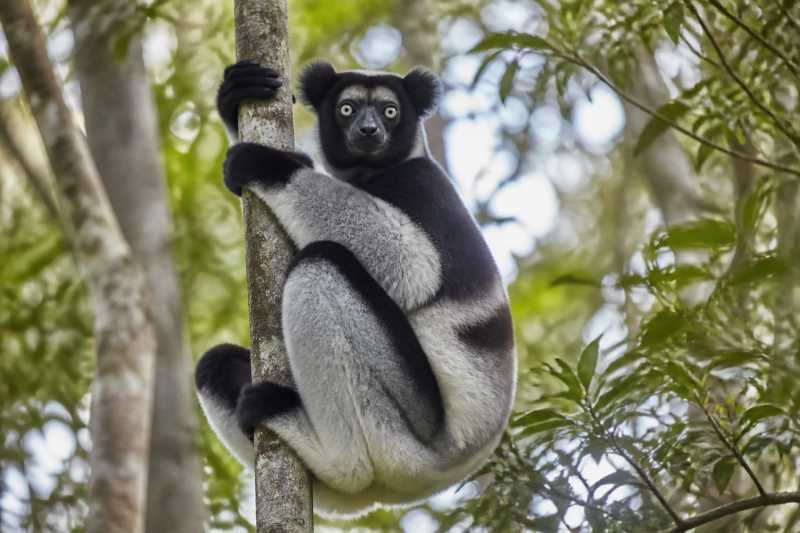
The Indri (Indri indri), also known as the babakoto, is one of the largest living species of lemur. Native to the island of Madagascar, the Indri is renowned for its striking black and white coloration, powerful vocalizations, and arboreal lifestyle. As a member of the lemur family, it holds a significant place in biodiversity and is a key subject of conservation efforts due to its endangered status. This article delves into various aspects of the Indri, exploring its physical characteristics, habitat, behaviors, and the urgent need for its conservation.
Physical Description
The Indri is the largest lemur species, with adults weighing between 6 to 9.5 kilograms (13 to 21 pounds). It stands out with its distinctive black and white fur pattern, although the exact coloration can vary among individuals. The Indri has a robust build with long limbs, which are well-suited for its life in the trees. Its hind legs are particularly powerful, allowing it to leap impressive distances between branches. The Indri’s face is mostly black, with bright, expressive eyes that are golden or brown. It lacks a tail, which is unusual for lemurs, contributing to its unique appearance.
Range and Habitat
Indri indri is endemic to Madagascar, specifically in the island’s eastern rainforests. These forests provide the essential canopy cover and abundant foliage necessary for their survival. The Indri inhabits the rainforests from the northern regions like the Anjanaharibe-Sud Special Reserve to areas further south such as Andringitra National Park. These environments are typically characterized by high rainfall and dense forest cover, offering the Indri both food resources and protection from predators. However, due to habitat destruction, their range has become increasingly fragmented.
Behavior and Diet
Indri indri exhibits diurnal activity, primarily active during the day. They are arboreal, spending most of their time in the trees, and live in small family groups typically consisting of two to six individuals. Communication within these groups is facilitated by their loud, distinctive calls, which can be heard up to 2 kilometers away. These calls play a crucial role in maintaining territory boundaries and social cohesion.
The Indri’s diet is predominantly folivorous, consisting mainly of leaves, supplemented by fruits, flowers, and seeds. They have a highly selective feeding habit, choosing only the youngest and most tender leaves. This dietary preference requires them to have large territories to ensure a consistent food supply.
Identification Tips (Field Recognition Cues)
Recognizing the Indri in the field requires attention to several key characteristics:
- Size and Build: Note the large size and lack of a tail.
- Coloration: Look for the distinctive black and white fur pattern.
- Vocalizations: Listen for their loud, haunting calls that resonate through the forest.
- Movement: Observe their powerful leaps between trees, a behavior typical of their species.
- Habitat: Indris are found in dense, humid rainforests.
Conservation Status (with Threats and Protections)
The Indri is classified as Critically Endangered by the International Union for Conservation of Nature (IUCN). The primary threats to their survival include habitat loss due to slash-and-burn agriculture, illegal logging, and encroachment by human settlements. Additionally, hunting for bushmeat, although culturally forbidden in some areas, poses a significant threat.
Conservation efforts are underway to protect the Indri, focusing on habitat preservation and restoration, legal protection, and community engagement to promote sustainable land use practices. Protected areas like the Mantadia National Park and the Marojejy National Park are crucial for their survival. Furthermore, international collaborations and ecotourism initiatives are helping to raise awareness and funds for conservation.
Frequently Asked Questions
1. What makes the Indri’s call unique? The Indri’s calls are unique due to their powerful, eerie sound, which can travel over long distances. These vocalizations are used for communication within family groups and territorial markings.
2. Why doesn’t the Indri have a tail? Unlike most lemurs, the Indri lacks a tail. Its arboreal lifestyle and powerful hind legs make a tail unnecessary for balance, which is typical in other tree-dwelling primates.
3. How can I help in conserving the Indri? Supporting conservation organizations, promoting sustainable ecotourism, and spreading awareness about the threats faced by the Indri are effective ways to contribute to their conservation.
4. Are Indris social animals? Yes, Indris are social and live in small family groups. Their social structure is maintained through vocalizations and grooming, which strengthen bonds between group members.
5. What is the lifespan of an Indri in the wild? The lifespan of an Indri in the wild is estimated to be around 15 to 20 years, although this can vary depending on environmental conditions and threats.
Related posts