Introduction
The Black Lemur, scientifically known as Eulemur macaco, is a fascinating primate species indigenous to the lush forests of Madagascar. As part of the Lemuridae family, these striking creatures are known for their charismatic appearance and vital role in the ecosystem. Black Lemurs are among the most recognizable lemurs due to their distinctive features and behaviors. This article explores the Black Lemur’s physical characteristics, habitat, behavior, and conservation challenges, providing a comprehensive guide for enthusiasts and researchers alike.
Lemurs, in general, are a group of primates unique to the island of Madagascar and the nearby Comoros Islands. They are considered one of the most primitive primate groups, having evolved separately from monkeys and apes approximately 62 to 65 million years ago. The Black Lemur is particularly noteworthy for its sexual dimorphism, where males and females exhibit different physical characteristics.
Physical Description
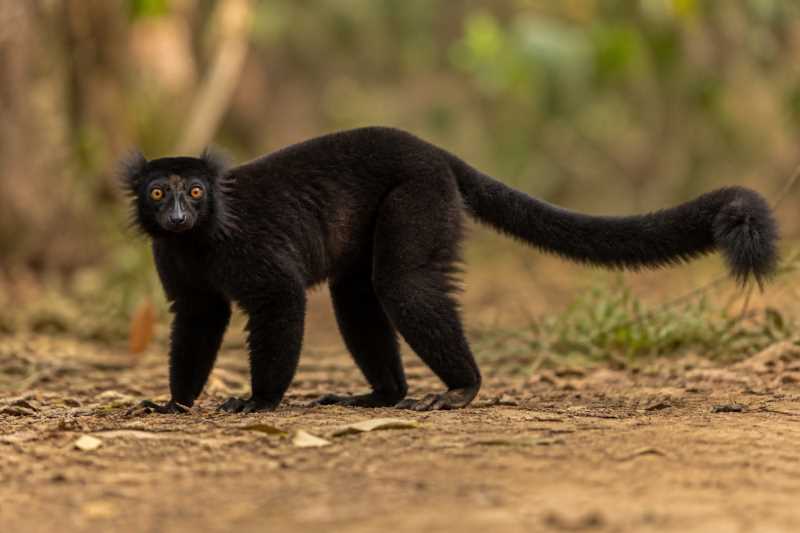
The Black Lemur exhibits a remarkable sexual dimorphism, making it relatively easy to distinguish between males and females. Adult males are typically characterized by their uniformly black fur, which gives the species its name. In contrast, adult females display a striking chestnut brown or reddish-brown coat, with a lighter underbelly and face. Both sexes have bright orange or golden eyes, which are a distinct feature among lemurs.
Black Lemurs have a body length ranging from 39 to 45 centimeters (15 to 18 inches), with a tail that is longer than their body, measuring between 51 to 65 centimeters (20 to 26 inches). This long tail is not prehensile but is used for balance as the lemurs navigate the forest canopy. The average weight of an adult Black Lemur is approximately 2 to 2.5 kilograms (4.4 to 5.5 pounds).
Their hands and feet are adapted for an arboreal lifestyle, with opposable thumbs and toes that aid in gripping branches. The facial structure of Black Lemurs includes a pronounced snout and a set of sharp teeth that are useful for their varied diet.
Range and Habitat
Black Lemurs are endemic to Madagascar, specifically found in the northwestern part of the island. Their range is primarily within the forests of the Sambirano region, which includes both lowland rainforests and montane forests. This region is characterized by a high level of biodiversity, with a rich variety of plant and animal species.
The habitat of Black Lemurs is diverse, comprising dense rainforest, dry deciduous forests, and secondary growth areas. They are highly adaptable and can thrive in different forest types as long as there is sufficient food and shelter. The dense canopy provides them with protection from predators and harsh weather conditions while offering ample feeding opportunities.
Behavior and Diet
Black Lemurs are social animals that live in groups typically ranging from 4 to 15 individuals. These groups usually consist of multiple males and females, with a dominant female often leading the group. Social bonds are reinforced through grooming and vocal communication, which help maintain group cohesion.
Their activity is primarily diurnal, with peak activity occurring in the early morning and late afternoon. During these times, Black Lemurs forage for food, which makes up a significant part of their daily routine.
The diet of Black Lemurs is omnivorous but primarily consists of fruits, which make up about 80% of their diet. They also consume leaves, flowers, insects, and occasionally small vertebrates. The availability of food sources can influence their range and movement patterns, as they may travel considerable distances in search of fruiting trees.
Identification Tips (Field Recognition Cues)
When trying to identify Black Lemurs in the field, there are several key characteristics to observe:
- Coloration: Males are entirely black, while females are reddish-brown with lighter underbellies.
- Eye Color: Both sexes have prominent orange or golden eyes.
- Tail Length: Their tails are longer than their bodies and are used for balance.
- Vocalizations: Listen for their distinctive calls, which include grunts, clicks, and high-pitched squeaks.
- Social Behavior: Look for groups of lemurs moving together through the canopy.
Conservation Status (with Threats and Protections)
The conservation status of the Black Lemur is currently listed as "Vulnerable" by the International Union for Conservation of Nature (IUCN). Several factors contribute to this classification, with habitat destruction and hunting being the most significant threats.
Threats
- Habitat Loss: Deforestation for agriculture, logging, and human settlement is leading to significant habitat fragmentation and degradation.
- Hunting and Capture: Black Lemurs are hunted for their meat and captured for the illegal pet trade.
- Climate Change: Changes in climate patterns can affect food availability and habitat conditions.
Protections
Efforts to protect Black Lemurs include the establishment of protected areas, such as national parks and reserves, where their natural habitats are conserved. Local and international organizations are also working to raise awareness and implement conservation programs that involve local communities in sustainable practices.
Captive breeding programs and research initiatives aim to further understand Black Lemur ecology and behavior, which can inform conservation strategies.
Frequently Asked Questions
What do Black Lemurs eat?
Black Lemurs primarily eat fruits, which constitute about 80% of their diet. They also consume leaves, flowers, insects, and occasionally small vertebrates.
Where can Black Lemurs be found?
Black Lemurs are found in the northwestern part of Madagascar, specifically in the Sambirano region, which includes lowland rainforests and montane forests.
Are Black Lemurs endangered?
While not currently endangered, Black Lemurs are classified as Vulnerable due to threats like habitat loss and hunting.
How can you tell male and female Black Lemurs apart?
Male Black Lemurs are entirely black, while females have reddish-brown fur with a lighter underbelly.
What is the role of Black Lemurs in their ecosystem?
Black Lemurs play a crucial role as seed dispersers, aiding in forest regeneration and maintaining ecological balance.
Related posts