Sun-tailed Monkey (Allochrocebus solatus): A Detailed Insight
Introduction
The Sun-tailed monkey (Allochrocebus solatus) is a fascinating primate species native to central Africa. Known for their unique physical characteristics and intriguing social behaviors, Sun-tailed monkeys are an essential part of the biodiversity within their habitat. This article explores various aspects of the Sun-tailed monkey, including their physical description, range and habitat, behavior, and diet, as well as conservation efforts aimed at protecting this remarkable species.
Physical Description
Sun-tailed monkeys are medium-sized primates, with an average body length ranging from 45 to 55 centimeters, excluding their long tails, which can add another 70 to 90 centimeters. These monkeys typically weigh between 5 and 10 kilograms, with males generally being larger than females.
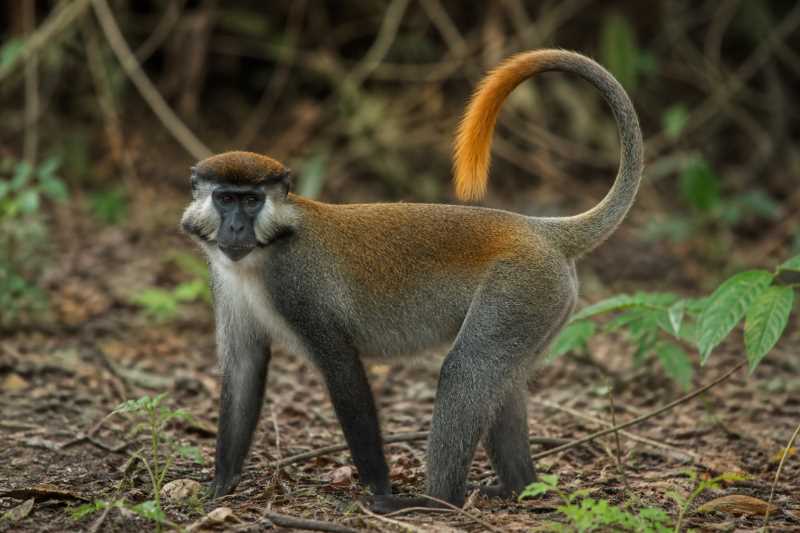
Their fur is primarily a rich, dark grey, with a striking golden or orange hue on the underside and inner limbs. This vibrant coloration is where they derive their common name, as it resembles the glow of the sun. Their faces are typically dark with lighter patches around their eyes, giving them a distinctive appearance.
Distinct Features
- Tail: The long, non-prehensile tail, often with a lighter tip, is used for balance and communication.
- Facial Markings: Light patches around the eyes and mouth give them a distinctive, expressive face.
- Sexual Dimorphism: Males are larger and more robust compared to females, which is common among primate species.
Range and Habitat
Sun-tailed monkeys are native to the dense, tropical rainforests of central Gabon, Africa. Their range is limited to this region, making them endemic to Gabon. They inhabit primary and secondary forests, thriving in areas with dense canopy cover that provides protection from predators and ample food resources.
Habitat Preferences
- Forest Canopy: They spend most of their time in the trees, using the canopy for foraging and avoiding ground-based predators.
- Water Sources: Proximity to rivers and streams is crucial, as these areas provide hydration and additional food resources.
- Human Disturbance: They prefer areas with minimal human disturbance, although habitat fragmentation is becoming a significant threat.
Behavior and Diet
Sun-tailed monkeys are diurnal and highly social animals, living in groups typically composed of 10 to 30 individuals. These groups are generally multi-male and multi-female, with a complex social hierarchy.
Social Structure
- Group Dynamics: Groups are led by dominant males, who have priority access to food and mates.
- Communication: Communication includes vocalizations, facial expressions, and body postures to convey messages and maintain social bonds.
Diet
Their diet is omnivorous, consisting mainly of fruits, leaves, flowers, seeds, and insects. They play a crucial role in seed dispersal, which is vital for the health of their forest ecosystem.
- Fruit: A primary food source, providing essential sugars and nutrients.
- Insects: An important protein source, especially during the dry season when fruit is less abundant.
Identification Tips (Field Recognition Cues)
Identifying Sun-tailed monkeys in the wild can be challenging due to their elusive nature and dense forest habitat. However, certain cues can aid in their identification:
- Vocalizations: Listen for their distinct calls, which include various shrieks and chatters.
- Tail Movement: Watch for the characteristic movement of their long tails, often held upright or used expressively.
- Fur Coloration: Look for the sun-like glow of their underbelly and limbs, which is unique among their habitat companions.
- Behavior: Observe their group dynamics and interactions, as they exhibit unique social behaviors.
Conservation Status (with Threats and Protections)
The Sun-tailed monkey is currently listed as "Vulnerable" by the International Union for Conservation of Nature (IUCN). The primary threats to their survival include habitat destruction, hunting, and the illegal pet trade.
Threats
- Deforestation: Logging and agricultural expansion are reducing their natural habitat significantly.
- Hunting: Although not a primary target, they are sometimes hunted for bushmeat.
- Pet Trade: Capture for the illegal pet trade poses a threat to their populations.
Protections
- Protected Areas: Parts of their range are within national parks and protected areas, providing some level of habitat preservation.
- Conservation Programs: Initiatives by local and international organizations aim to educate communities and enforce anti-poaching laws.
Frequently Asked Questions
What do Sun-tailed monkeys eat?
Sun-tailed monkeys have an omnivorous diet that primarily includes fruits, leaves, seeds, flowers, and insects. Their diet varies seasonally, depending on food availability.
Where can Sun-tailed monkeys be found?
These monkeys are endemic to central Gabon, Africa, residing mainly in dense tropical rainforests. They prefer areas with a dense canopy and access to water sources.
Are Sun-tailed monkeys endangered?
Sun-tailed monkeys are classified as "Vulnerable" due to habitat destruction, hunting, and the illegal pet trade. Conservation efforts are underway to protect this species.
How do Sun-tailed monkeys communicate?
They use a combination of vocalizations, facial expressions, and body postures to communicate within their social groups. These methods are crucial for maintaining group cohesion and social bonds.
What are the main threats to Sun-tailed monkeys?
The primary threats include deforestation, hunting for bushmeat, and capture for the illegal pet trade. Efforts to mitigate these threats focus on habitat preservation and law enforcement.
Related posts