Introduction
The Southeastern Woolly Mouse Opossum (Marmosa paraguayana) is a fascinating and lesser-known marsupial species that occupies the dense forest regions of South America. In recent years, this species has garnered attention due to its unique adaptations and ecological importance. This article delves into the various aspects of the Southeastern Woolly Mouse Opossum, exploring its physical characteristics, habitat preferences, behaviors, and more.
Physical Description
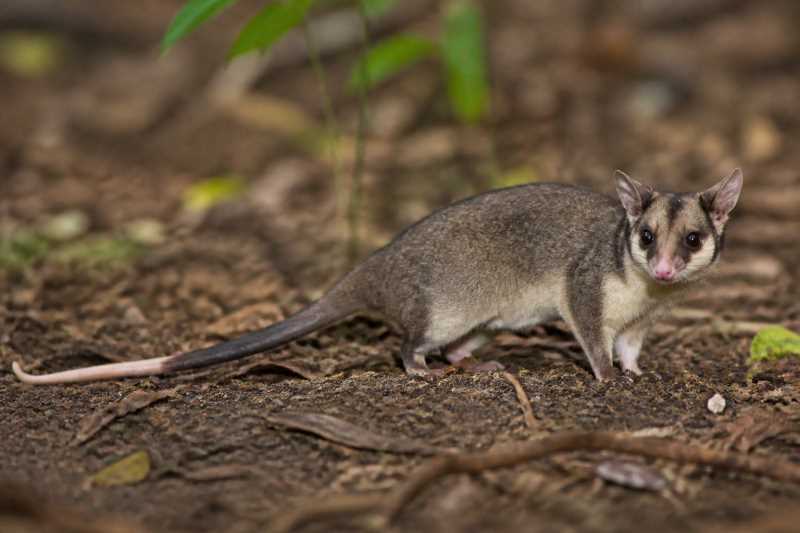
The Southeastern Woolly Mouse Opossum is distinguished by its small size and soft, woolly fur, which provides its name. Adult opossums of this species typically measure between 10 to 15 centimeters in body length, with a tail that can range from 15 to 20 centimeters, making the tail slightly longer than the body. This tail is prehensile, aiding in climbing and grasping, a vital adaptation for arboreal life.
The fur of the Southeastern Woolly Mouse Opossum is primarily a grayish-brown, with lighter underbellies that can sometimes exhibit a creamy hue. The fur’s woolly texture is particularly suited for insulation, helping the opossum maintain body heat in cooler forest environments. Their prominent, rounded ears and large, black eyes are adapted for nocturnal activity, enhancing their ability to navigate and forage in the dark.
Range and Habitat
Marmosa paraguayana is native to the southeastern regions of South America, with its range primarily covering parts of Brazil, Paraguay, and Argentina. These opossums thrive in dense, humid forests, including both primary and secondary growth forests. They are also found in gallery forests, which line rivers and streams, thus providing a rich biodiversity and abundant food sources.
The species is highly arboreal, spending most of its life in the trees. This preference for vertical habitats allows it to avoid many terrestrial predators and access a diverse array of food sources that are available above ground. However, habitat destruction due to logging and agricultural expansion poses significant threats to their preferred environments.
Behavior and Diet
The Southeastern Woolly Mouse Opossum is a solitary and nocturnal creature. During the day, it rests in nests made from leaves and other plant materials, typically situated in tree hollows or dense foliage. At night, these opossums become active, foraging for food and exploring their territory.
Their diet is omnivorous, consisting of fruits, insects, small invertebrates, and occasionally small vertebrates. The opossum’s ability to adapt its diet to available resources is crucial for survival in varying forest conditions. The prehensile tail and dexterous forelimbs are instrumental in foraging, allowing the opossum to reach food sources that are otherwise inaccessible.
Identification Tips (Field Recognition Cues)
Identifying the Southeastern Woolly Mouse Opossum in the wild requires careful observation of several key characteristics:
- Fur Texture and Color: Look for the distinctive woolly texture and the grayish-brown coloration. The lighter underbelly is another distinguishing feature.
- Size and Proportions: Note the small body size (10-15 cm) with a tail that is longer than the body (15-20 cm).
- Facial Features: The opossum’s large, black eyes and rounded ears are indicative of its nocturnal lifestyle.
- Habitat Preference: Observing their presence in dense forests and trees can help confirm identification, as they are rarely found on the ground.
- Behavioral Cues: Activity during nighttime and solitary behaviors are additional indicators.
Conservation Status (with Threats and Protections)
The International Union for Conservation of Nature (IUCN) currently lists the Southeastern Woolly Mouse Opossum as a species of Least Concern. However, this status does not imply that the species is free from threats. Habitat destruction, particularly due to deforestation and agricultural expansion, poses the greatest risk to their populations. As forests are cleared, the opossums lose critical habitat and face increased competition for resources.
Conservation efforts are essential to ensuring the long-term survival of the Southeastern Woolly Mouse Opossum. Protected areas and reserves in South America play a crucial role in preserving their natural habitats. Additionally, raising awareness about the ecological importance of biodiversity and sustainable land-use practices can contribute to their protection.
Frequently Asked Questions
Q1: What does the Southeastern Woolly Mouse Opossum eat?
A1: The Southeastern Woolly Mouse Opossum is omnivorous, feeding on fruits, insects, small invertebrates, and occasionally small vertebrates. Their diet is adapted to the resources available in their forest habitats.
Q2: Where can the Southeastern Woolly Mouse Opossum be found?
A2: This species is found in the southeastern regions of South America, particularly in Brazil, Paraguay, and Argentina, inhabiting dense, humid forests and gallery forests.
Q3: How does the Southeastern Woolly Mouse Opossum adapt to its environment?
A3: The opossum has several adaptations, including a prehensile tail for climbing, nocturnal habits for avoiding predators, and a woolly fur coat for insulation in cooler climates.
Q4: Is the Southeastern Woolly Mouse Opossum endangered?
A4: Currently, the Southeastern Woolly Mouse Opossum is not considered endangered, but habitat destruction remains a significant threat that could impact their populations in the future.
Q5: How can one identify a Southeastern Woolly Mouse Opossum in the wild?
A5: Look for their small size, woolly grayish-brown fur, large black eyes, and nocturnal behavior. They are typically found in trees within dense forest habitats.
Related posts