Introduction
The African Wild Ass (Equus africanus) is a remarkable species that represents the wild ancestor of the domestic donkey. Native to the arid regions of the Horn of Africa, this species plays a crucial role in the ecosystem, contributing to the biodiversity of its habitat. Despite its significance, the African Wild Ass faces numerous challenges threatening its survival, making it a focal point for conservation efforts.
Physical Description
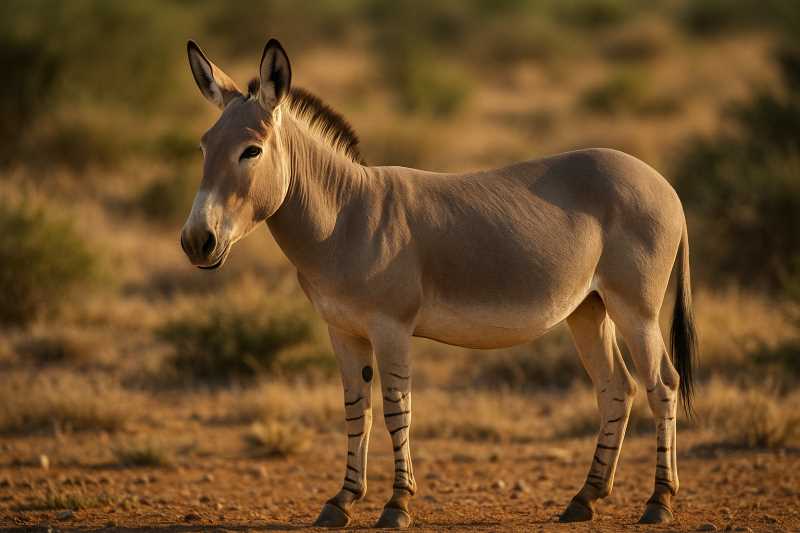
The African Wild Ass is a large, graceful animal with a distinctive appearance. It typically stands between 1.25 to 1.45 meters at the shoulder and weighs around 230 to 275 kilograms. The coat is generally a light gray to fawn color, providing excellent camouflage in its natural habitat.
One of the most striking features of the African Wild Ass is its narrow, dark dorsal stripe that runs from the base of the mane to the tail. Additionally, its legs are adorned with horizontal stripes, often compared to those of a zebra, particularly in the Somali Wild Ass subspecies. The mane is short and erect, and the tail ends with a tuft of hair. These physical traits not only aid in identification but also play a role in thermoregulation and social signaling.
Range and Habitat
Historically, the African Wild Ass roamed vast areas of northeastern Africa, including Eritrea, Ethiopia, and parts of Somalia. Today, its range has significantly diminished due to habitat loss and human encroachment. The primary habitats of the African Wild Ass include arid and semi-arid regions, characterized by sparse vegetation and extreme temperatures.
These areas often consist of rocky hills, stony plains, and dry riverbeds, where the species can find sparse grazing opportunities. The African Wild Ass is well-adapted to these harsh environments, capable of surviving with limited water resources. They often travel long distances in search of food and water, demonstrating remarkable endurance and resilience.
Behavior and Diet
The African Wild Ass is primarily a grazer, feeding on a variety of grasses, herbs, and shrubs. Its diet is influenced by seasonal availability, with the ability to browse on woody plants during dry seasons when grasses are scarce. This dietary flexibility is crucial for survival in its unpredictable environment.
Socially, African Wild Asses are known for their solitary or small group behavior. They may form temporary associations, especially around water sources, but are not as gregarious as some other equid species. Males, known as jacks, often maintain territories that encompass critical resources like water and grazing areas, while females, or jennies, may roam between territories.
Identification Tips (Field Recognition Cues)
Identifying the African Wild Ass in the field requires attention to several key features:
- Coloration: Look for the light gray to fawn coat with a distinctive dark dorsal stripe.
- Leg Stripes: Note the horizontal leg stripes, particularly pronounced in the Somali Wild Ass.
- Size and Build: Observe the animal’s robust yet elegant build, with strong legs and a solid torso.
- Mane and Tail: The short, erect mane and tufted tail are distinctive features.
- Behavior: Pay attention to their movement patterns, often seen traveling in small groups or alone.
Conservation Status (with Threats and Protections)
The African Wild Ass is classified as Critically Endangered on the IUCN Red List. Several factors contribute to its precarious status:
- Habitat Loss: Expansion of agriculture and settlements has led to significant habitat degradation.
- Competition with Livestock: Domestic animals compete for limited resources, exacerbating food and water scarcity.
- Hunting and Poaching: The species is hunted for its meat and by local communities for subsistence.
- Climate Change: Increasing aridity and unpredictable weather patterns threaten their survival.
Conservation efforts are underway to protect this species, including habitat restoration, anti-poaching measures, and community education programs. Protected areas have been established, and there is ongoing research to better understand the species’ ecology and needs.
Frequently Asked Questions
1. What is the natural habitat of the African Wild Ass?
The African Wild Ass thrives in arid and semi-arid regions of northeastern Africa, including rugged terrain such as rocky hills and dry riverbeds. These environments provide the sparse vegetation necessary for their diet.
2. How does the African Wild Ass survive in such harsh conditions?
Adaptations such as an efficient digestive system, the ability to travel long distances for water, and a diet that includes a variety of plant species allow the African Wild Ass to endure extreme conditions.
3. What are the main threats to the African Wild Ass?
Key threats include habitat loss due to human encroachment, competition with livestock for resources, hunting, and the impacts of climate change.
4. Are there any conservation efforts in place for the African Wild Ass?
Yes, conservation measures include establishing protected areas, implementing anti-poaching laws, and conducting research to inform future conservation strategies.
5. How can individuals help in the conservation of the African Wild Ass?
Supporting organizations dedicated to wildlife conservation, raising awareness about the species’ plight, and advocating for sustainable land-use practices can contribute to the conservation of the African Wild Ass.
Related posts