Introduction
The Romanian Golden Hamster, scientifically known as Mesocricetus newtoni, holds a unique place in the biodiversity of Eastern Europe. This small yet intriguing mammal is part of the Cricetidae family and is closely related to other species in the Mesocricetus genus. Despite its common name, the Romanian Golden Hamster is not as widely known as its cousin, the Syrian or Golden Hamster (Mesocricetus auratus), often kept as a pet around the world. This article delves into the various aspects of the Romanian Golden Hamster, from its physical characteristics to its conservation status, providing a comprehensive understanding of this fascinating species.
Physical Description
The Romanian Golden Hamster is a medium-sized member of the hamster family, characterized by its compact and sturdy body structure. Adult hamsters typically measure between 12 to 17 centimeters in length, with a tail of about 1.5 to 2 centimeters. Their weight ranges from 100 to 150 grams, with males generally being larger than females.
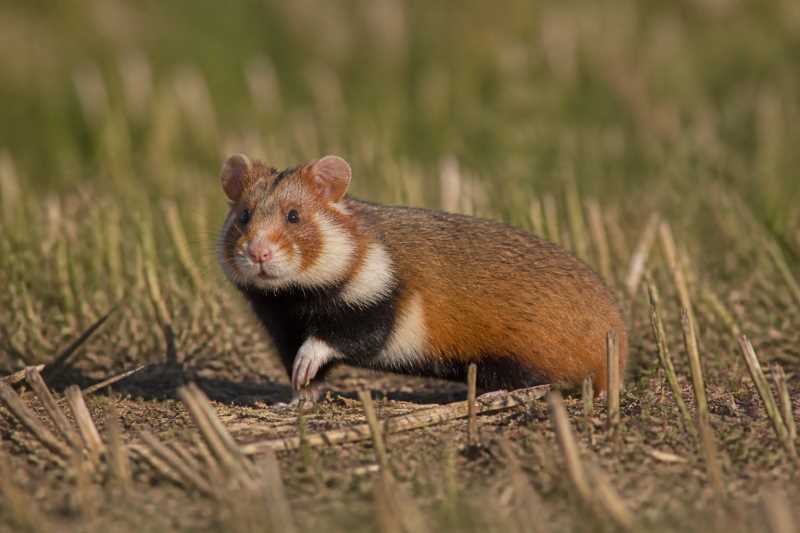
Their fur is predominantly golden-brown, which provides excellent camouflage among the dry grasslands and agricultural fields they inhabit. The ventral side is usually lighter, often exhibiting a creamy or white coloration. Their fur is dense and soft, offering much-needed insulation against the variable temperatures of their natural habitat.
The Romanian Golden Hamster has large, dark eyes that are well-adapted for low-light conditions, and their ears are small yet prominent. A distinctive feature of this species is their cheek pouches, which they use to store and transport food. These pouches can stretch significantly, allowing the hamster to collect large amounts of food in a single foraging trip.
Range and Habitat
The Romanian Golden Hamster is endemic to the Balkans, primarily found in Romania and Bulgaria. They inhabit regions characterized by steppe-like grasslands, agricultural fields, and occasionally the edges of deciduous forests. These areas provide the essential resources for their survival, including food, shelter, and suitable burrowing grounds.
The hamster’s range is influenced by the availability of loose, well-drained soils suitable for digging their elaborate burrow systems. These burrows can be extensive, comprising several chambers used for nesting, food storage, and as a refuge from predators and harsh weather conditions. The choice of habitat often reflects a balance between the need for cover and the proximity to food sources, primarily seeds and grains.
Behavior and Diet
Romanian Golden Hamsters are primarily nocturnal creatures, displaying peak activity during the twilight hours. This behavior reduces their exposure to diurnal predators. They are solitary and territorial, with adults maintaining and defending their own burrow systems.
Their diet is omnivorous but predominantly herbivorous. It includes seeds, grains, fruits, and occasionally insects and small invertebrates, which provide additional protein. The hamster’s cheek pouches play a crucial role in their foraging strategy, allowing them to transport and store food efficiently.
During the warmer months, hamsters are active, spending significant time foraging and storing food. In contrast, their activity levels decrease during winter, with some individuals entering a state of torpor, a form of hibernation, to conserve energy.
Identification Tips (Field Recognition Cues)
Identifying the Romanian Golden Hamster in the wild can be challenging due to its elusive nature and resemblance to other small mammals. However, several key characteristics can aid in field identification:
- Fur Coloration: Look for the distinctive golden-brown fur with a lighter underside, a hallmark of the species.
- Size and Shape: Note the medium size and robust body structure, typical of the Mesocricetus genus.
- Cheek Pouches: Observe their behavior when foraging, as the use of cheek pouches is a notable trait.
- Burrow Systems: Spotting their burrows, usually marked by small mounds of excavated soil, can indicate their presence.
- Activity Patterns: Search during dusk or dawn when these hamsters are most active.
Conservation Status (with Threats and Protections)
The Romanian Golden Hamster is classified as Near Threatened on the IUCN Red List. The primary threats to their population include habitat loss due to agricultural expansion, urbanization, and the use of pesticides that reduce their food supply.
Conservation efforts are in place to protect this species, focusing on habitat preservation and restoration. Protected areas have been established to safeguard critical habitats, and there is ongoing research to better understand their ecology and adapt conservation strategies accordingly. Public awareness campaigns are also crucial in mitigating human-induced threats and promoting coexistence with local agriculture.
Frequently Asked Questions
What is the Romanian Golden Hamster’s natural habitat? The Romanian Golden Hamster inhabits steppe-like grasslands and agricultural fields in Romania and Bulgaria. They prefer areas with loose soil for burrowing and adequate food sources.
How can you identify a Romanian Golden Hamster? Identifying a Romanian Golden Hamster involves looking for its golden-brown fur, medium size, and the use of cheek pouches during foraging. Observing their burrows can also be a clue.
Are Romanian Golden Hamsters endangered? While not currently endangered, Romanian Golden Hamsters are classified as Near Threatened due to habitat loss and other human-induced factors. Conservation efforts are ongoing to protect their populations.
What do Romanian Golden Hamsters eat? Their diet mainly consists of seeds, grains, and fruits, supplemented with insects and small invertebrates for additional protein. They use cheek pouches to transport and store food.
What are the main threats to the Romanian Golden Hamster? The primary threats include habitat destruction, agricultural expansion, and pesticide use, all of which impact their food availability and living conditions.
Related posts