Introduction
The Yellow-faced Pocket Gopher, scientifically known as Cratogeomys castanops, is a fascinating species of rodent that belongs to the family Geomyidae. This gopher is notable for its distinct morphological features and its ecological role within its habitat. Native to the United States and northern Mexico, this species has adapted remarkably well to its environment, with unique physical and behavioral characteristics that make it a subject of interest among researchers and wildlife enthusiasts alike.
Yellow-faced Pocket Gophers are often recognized by their burrowing habits, which play a crucial role in soil aeration and nutrient distribution. Their presence in agricultural fields can be a double-edged sword: they improve soil health but also pose challenges to crop productivity. Understanding the biology and ecology of the Yellow-faced Pocket Gopher is essential for managing its populations effectively while maintaining a balance between conservation needs and agricultural interests.
Physical Description
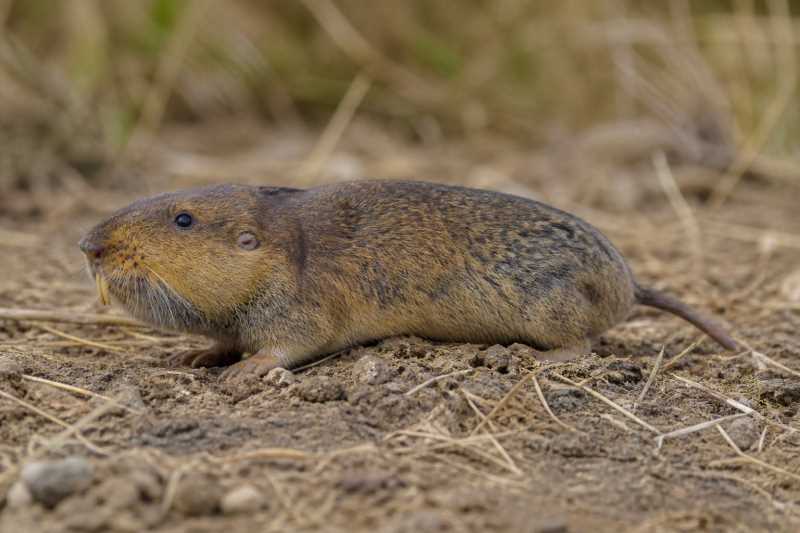
The Yellow-faced Pocket Gopher is a medium-sized rodent, typically measuring between 18 to 25 centimeters in length, including its short tail. One of the defining features of this gopher is its yellowish-brown fur, which can vary slightly in hue depending on the geographical location. The "yellow-faced" moniker comes from the lighter coloration on its face, particularly around the nose and cheeks.
These gophers have stocky bodies with strong forelimbs adapted for digging. Their forepaws are equipped with long, sharp claws that facilitate efficient burrowing. The eyes and ears of the Yellow-faced Pocket Gopher are relatively small, an adaptation that minimizes the entry of dirt while navigating underground.
Another distinctive feature of this species is its cheek pouches, which are fur-lined and extend back from the mouth. These pouches are used for transporting food and nesting materials. The dental arrangement includes large incisors that are well-suited for gnawing through tough plant roots and soil.
Range and Habitat
The Yellow-faced Pocket Gopher is primarily found in the southwestern United States, including states such as Texas, New Mexico, and Arizona. Its range extends into northern Mexico, where it inhabits regions with similar environmental conditions. These gophers prefer loose, sandy soils that are easier to excavate, making them common residents of grasslands, prairies, and agricultural fields.
Their burrow systems are extensive and can cover significant areas. These burrows provide shelter from predators and harsh weather conditions, as well as a secure location for raising young. The gophers’ preference for certain soil types often influences their distribution, with populations being denser in areas where the soil composition is ideal for burrowing.
Behavior and Diet
Yellow-faced Pocket Gophers are primarily solitary creatures, exhibiting territorial behavior particularly among males. They communicate through vocalizations and scent markings to establish and defend their territories. The burrow systems they create can be complex, comprising multiple tunnels and chambers for different purposes, such as nesting and food storage.
Their diet consists mainly of roots, tubers, and other plant materials. They are known to consume grasses, forbs, and occasionally cultivated crops, which can lead to conflicts with agricultural activities. The gophers use their cheek pouches to transport food back to their burrows, where they store it for later consumption.
Despite being primarily herbivorous, Yellow-faced Pocket Gophers play a vital role in their ecosystems. Their burrowing activities aerate the soil, facilitate water infiltration, and help recycle nutrients, contributing to the health of their habitats.
Identification Tips (Field Recognition Cues)
Identifying the Yellow-faced Pocket Gopher in the field can be challenging due to its subterranean lifestyle. However, there are several cues to look for:
- Burrow Openings: Look for fresh mounds of soil with a characteristic crescent shape, indicating the presence of an active burrow.
- Fur Coloration: Observe the yellowish-brown fur and lighter facial markings if you manage to spot the gopher above ground.
- Cheek Pouches: The presence of large, fur-lined cheek pouches is a distinctive feature.
- Behavior: Notable for carrying food in their cheek pouches and creating extensive burrow systems.
Conservation Status (With Threats and Protections)
The conservation status of the Yellow-faced Pocket Gopher is generally considered stable, although local populations may face threats from habitat destruction and agricultural expansion. As land is converted for farming and urban development, the gophers’ natural habitats are often fragmented or lost entirely.
In some areas, they are regarded as pests due to their tendency to damage crops and irrigation systems. Control measures, such as trapping and habitat modification, are sometimes employed to manage gopher populations in agricultural regions.
Despite these challenges, the Yellow-faced Pocket Gopher is not currently listed as threatened or endangered. Conservation efforts focus on maintaining habitat connectivity and promoting sustainable agricultural practices that minimize conflicts between gophers and human activities.
Frequently Asked Questions
Why is this species unique?
The Yellow-faced Pocket Gopher is unique due to its specialized adaptations for a subterranean lifestyle. Its digging capabilities, cheek pouches for transporting food, and role in soil aeration make it a crucial component of its ecosystem.
What are the main threats to the Yellow-faced Pocket Gopher?
The main threats include habitat loss due to agricultural and urban development, as well as direct control measures aimed at reducing their numbers in crop fields. These threats can lead to population declines in certain areas.
How do Yellow-faced Pocket Gophers benefit their ecosystem?
Their burrowing activities enhance soil health by aerating it, facilitating water infiltration, and redistributing nutrients. This activity supports plant growth and overall ecosystem productivity.
What should farmers do to manage gopher populations?
Farmers can adopt integrated pest management strategies that include habitat modification, trapping, and the use of natural predators to control gopher populations while minimizing ecological impact.
Is the Yellow-faced Pocket Gopher protected by law?
Currently, the Yellow-faced Pocket Gopher is not protected by specific conservation laws, as it is not considered threatened. However, habitat protection and sustainable land-use practices are encouraged to support its populations.
Related posts