Introduction
The Blackish Shrew-opossum, scientifically known as Caenolestes convelatus, is a fascinating and little-known mammal native to South America. Belonging to the order Paucituberculata, this species is part of the family Caenolestidae, which is often referred to as shrew-opossums. These mammals are unique to the Andean regions and are an integral part of the ecosystem, contributing to the biodiversity of their habitats. In this article, we will explore various aspects of the Blackish Shrew-opossum, including its physical characteristics, habitat, behavior, and conservation status.
Physical Description
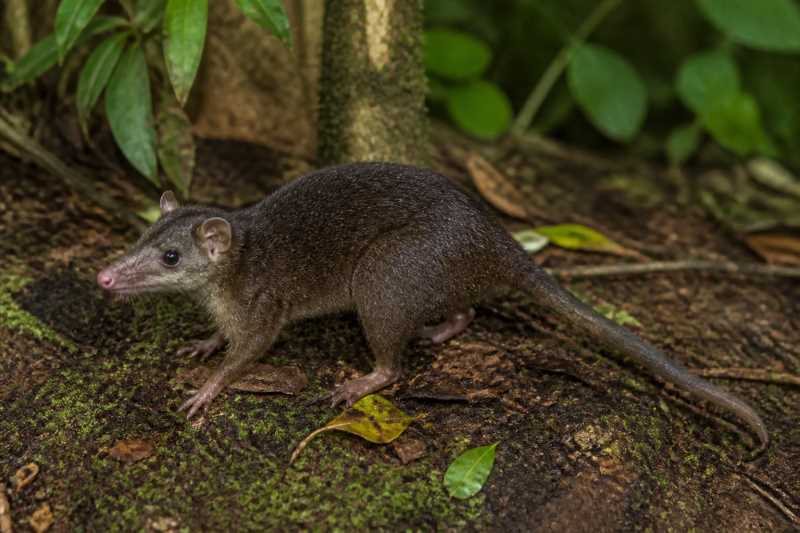
The Blackish Shrew-opossum is a small marsupial characterized by its distinctive physical traits. Adults typically measure about 9 to 14 centimeters in body length, with a tail length that can range from 8 to 11 centimeters. This species exhibits a dark, almost blackish fur, which provides excellent camouflage against the forest floor. The fur is dense and soft, offering protection against the cold temperatures of its high-altitude habitat.
This mammal possesses a pointed snout and small, rounded ears, features that are adaptive for its insectivorous diet. The eyes are relatively small, suggesting a reliance more on other senses such as touch and smell. The limbs are short and robust, ending in sharp claws that aid in digging and foraging. The tail is prehensile, providing balance and aiding in climbing through the dense underbrush.
Range and Habitat
The Blackish Shrew-opossum is endemic to the Andean regions, primarily found in Ecuador. Its range is restricted to high-altitude forests and paramos, typically at elevations between 1,500 to 4,000 meters above sea level. These habitats are characterized by dense vegetation, a cool climate, and high humidity levels, providing an ideal environment for the species.
The forest floors, rich with leaf litter and decomposing organic matter, offer abundant food resources such as insects and small invertebrates. The unique microhabitats within these areas, including fallen logs and dense underbrush, provide shelter and breeding grounds necessary for the survival of the Blackish Shrew-opossum.
Behavior and Diet
The Blackish Shrew-opossum is predominantly nocturnal, with most of its activity occurring during the night. This behavior is beneficial as it reduces the risk of predation and allows the species to capitalize on the abundance of nocturnal insects. During the day, these mammals take refuge in burrows or under dense vegetation to avoid predators and harsh weather conditions.
In terms of diet, the Blackish Shrew-opossum is primarily insectivorous, feeding on a variety of insects, larvae, and small invertebrates. Their keen sense of smell aids in locating prey beneath the forest litter. They use their sharp claws to dig and their elongated snouts to probe into narrow spaces where insects might be hiding.
Identification Tips (Field Recognition Cues)
Identifying the Blackish Shrew-opossum in the wild requires keen observation due to its elusive nature and excellent camouflage. Key identification cues include:
- Coloration: Look for the distinctive dark, blackish fur that blends into the forest floor.
- Size: Note the small body size, with a head-body length of 9 to 14 cm and a tail length of 8 to 11 cm.
- Habitat: Focus on high-altitude Andean forests and paramos where this species is known to reside.
- Behavior: Observe nocturnal activities and listen for rustling sounds in the leaf litter, which may indicate foraging behavior.
Conservation Status (With Threats and Protections)
The Blackish Shrew-opossum is currently classified as "Data Deficient" by the International Union for Conservation of Nature (IUCN). This classification highlights the lack of comprehensive data regarding its population trends and distribution, largely due to its elusive nature and limited range.
Threats to this species include habitat destruction due to agricultural expansion, logging, and human settlement. Climate change also poses a significant threat by altering the delicate balance of its high-altitude ecosystem. Conservation efforts are crucial to safeguard the remaining habitats and to implement measures that mitigate these threats.
Protection measures include the establishment of protected areas within its range and efforts to enhance habitat connectivity. Research initiatives aimed at gathering more data on population dynamics and ecological requirements are essential for effective conservation planning.
Frequently Asked Questions
Why is this species unique?
The Blackish Shrew-opossum is unique due to its limited distribution in the Andean regions and its specialized ecological niche. Its evolutionary adaptations, such as nocturnal behavior and insectivorous diet, make it a distinctive member of the marsupial family.
What role does it play in the ecosystem?
As an insectivore, the Blackish Shrew-opossum plays a vital role in controlling insect populations, contributing to the ecological balance within its habitat. Its presence indicates a healthy ecosystem with sufficient food resources and habitat diversity.
How can we help in its conservation?
Supporting conservation efforts through donations to wildlife organizations and advocating for the protection of its natural habitat are effective ways to aid in the conservation of the Blackish Shrew-opossum. Raising awareness about the species and its ecological importance can also drive policy changes and conservation initiatives.
Are there any cultural significances associated with this species?
While the Blackish Shrew-opossum may not hold significant cultural importance, its existence is vital for maintaining the biodiversity of the Andean regions. Protecting such species ensures the preservation of ecological heritage and natural history.
Related posts