The Little Pied Flycatcher: A Jewel of the Avian World
In the lush, verdant landscapes of the Himalayan foothills and the tropical forests of Southeast Asia, an avian gem flits gracefully through the foliage. The Little Pied Flycatcher (Ficedula westermanni) is a small passerine bird that has captured the interest of ornithologists and birdwatchers alike due to its striking appearance and intriguing behaviors. This article delves into the unique characteristics, habitat, behavior, and conservation status of this remarkable bird.
Characteristics and Identification
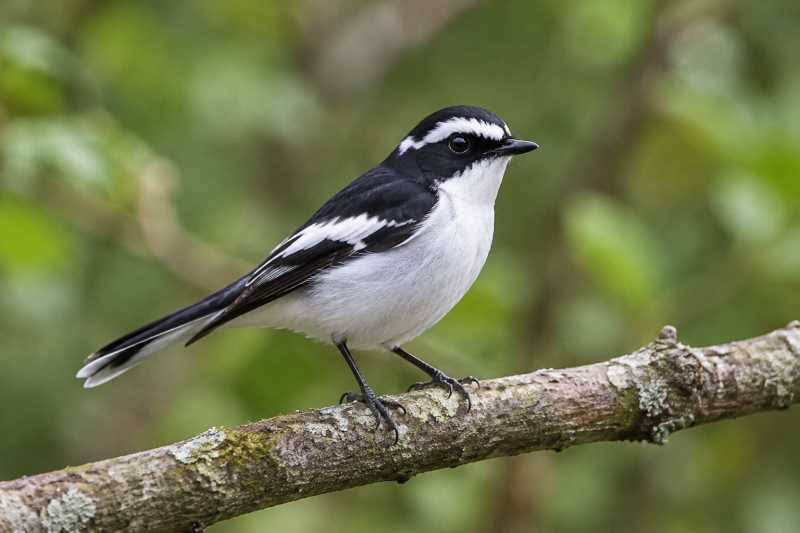
The Little Pied Flycatcher is a diminutive bird, measuring approximately 10 to 12 centimeters in length and weighing around 8 to 12 grams. Despite its small size, it is renowned for its distinctive and striking plumage. The male Little Pied Flycatcher is adorned with a glossy black and white coloration, with a stark contrast between its jet-black head, back, and wings, and its bright white underparts. This dichotomy gives it the "pied" appearance from which it derives its name. In contrast, the female is more subdued, with olive-brown upperparts and a paler underbelly, allowing her to blend seamlessly into her surroundings.
The bird’s compact body is complemented by a short tail and a straight, slender bill perfectly suited for its insectivorous diet. Its keen eyesight aids in the detection of prey, making it an adept aerial hunter.
Habitat and Distribution
Ficedula westermanni is primarily found in the montane forests of the Himalayas, stretching from the eastern regions of Nepal through Bhutan, northeast India, and into Myanmar and southern China. Their range extends further south into the lush forests of Thailand, Vietnam, Laos, and Malaysia, reaching as far as the Indonesian islands of Sumatra and Java.
These birds thrive in elevations ranging from 600 to 3,500 meters, preferring the dense canopy cover of subtropical and tropical montane forests. They are often spotted in areas with abundant insect life, such as forest edges, clearings, and along streams.
Behavior and Ecology
The Little Pied Flycatcher is a solitary bird, often observed alone or in pairs. It is known for its agile and acrobatic flight, darting rapidly between branches in pursuit of insects. Its feeding strategy involves perching quietly on a branch before launching an aerial attack to snatch flying insects mid-air. This behavior not only showcases its agility but also its precision and timing.
During the breeding season, which typically occurs from April to June, males become particularly vocal, delivering a series of melodious whistles and trills to establish territory and attract mates. The species is monogamous, with pairs forming strong bonds. Nests are usually constructed in natural cavities or crevices, lined with soft materials such as moss, feathers, and plant fibers. Females lay a clutch of about 3 to 5 eggs, which they incubate for approximately two weeks until hatching.
Conservation Status and Challenges
The International Union for Conservation of Nature (IUCN) currently lists the Little Pied Flycatcher as a species of "Least Concern." This status is largely due to its wide distribution and presumed large population. However, the species is not immune to the threats posed by habitat destruction and fragmentation, particularly in regions where deforestation for agriculture and urban development is prevalent.
Conservation efforts in regions where the Little Pied Flycatcher resides are crucial to ensuring its habitat remains intact. Protecting forested areas and promoting sustainable land-use practices are essential strategies to safeguard the future of this species.
Conclusion
The Little Pied Flycatcher, with its striking plumage and captivating behaviors, serves as a symbol of the rich biodiversity found in the montane and tropical forests of Asia. As an indicator species, its presence reflects the health of its ecosystem. By understanding and appreciating the ecological role and the challenges faced by the Little Pied Flycatcher, we can better appreciate the interconnectedness of our natural world and the importance of its preservation.
The continued observation and study of the Little Pied Flycatcher not only enhance our awareness of avian diversity but also inspire efforts to protect the delicate environments that support such incredible wildlife. Through concerted conservation efforts, we can ensure that future generations will continue to marvel at the beauty and grace of the Little Pied Flycatcher in its natural habitat.
Related posts