The Bornean Leafbird: A Jewel of Malaysia’s Avifauna
The Bornean Leafbird, known scientifically as *Chloropsis kinabaluensis*, is a captivating avian species native to the lush montane forests of Borneo, an island renowned for its rich biodiversity. This bird, with its striking plumage and melodious song, captures the interest of ornithologists and bird enthusiasts alike, symbolizing the vibrant and often threatened ecosystems of Southeast Asia.
Taxonomy and Physical Description
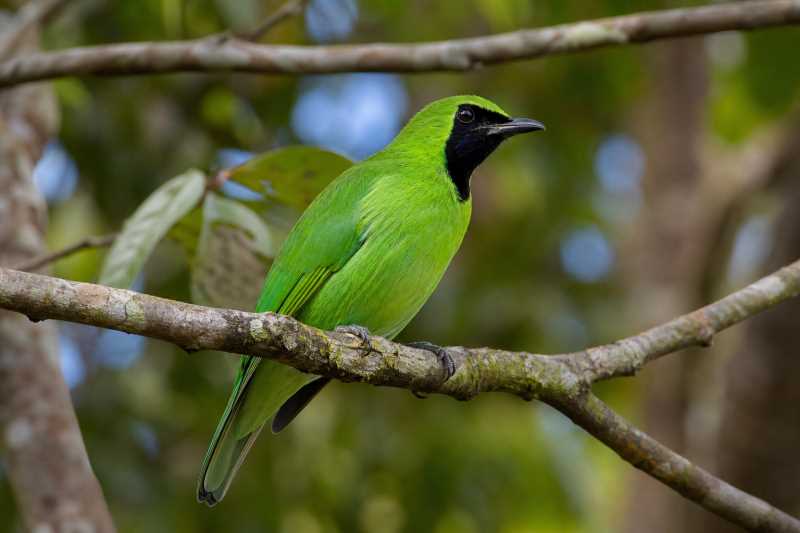
*Chloropsis kinabaluensis* belongs to the family Chloropseidae, which includes several species of leafbirds primarily distributed across South and Southeast Asia. The Bornean Leafbird is distinguished by its vivid green plumage, which provides excellent camouflage among the leafy canopies it inhabits. Males typically showcase a more vibrant color palette, with brighter greens and occasional bluish hues around the throat and face, while females tend to have a more subdued appearance.
One of the most distinctive features of the Bornean Leafbird is its slender yet robust build, adapted perfectly for a life amidst the trees. Its beak is slightly curved, designed for a diet that predominantly consists of fruits, nectar, and insects. This adaptation not only aids in its survival but also positions the leafbird as a crucial pollinator and seed disperser within its ecosystem.
Habitat and Distribution
The Bornean Leafbird is endemic to the island of Borneo, specifically thriving in the montane forests of Sabah and Sarawak, regions known for their dense foliage and diverse flora and fauna. These birds are most frequently observed at elevations ranging from 900 to 2,000 meters, where the cooler climate and abundant vegetation provide an ideal habitat.
The montane forests of Borneo, characterized by their unique assemblage of plant and animal life, face numerous threats from logging and agricultural expansion. Despite these challenges, the Bornean Leafbird continues to adapt, showcasing its resilience and ecological importance.
Behavior and Ecology
Bornean Leafbirds are diurnal and highly active, often seen flitting through the treetops in search of food. Their diet is diverse, allowing them to exploit a variety of food sources available in their habitat. In addition to fruits and nectar, they are known to consume insects, which they skillfully capture in mid-air.
These birds are also known for their vocal prowess. Males, in particular, produce a series of melodious calls, which serve both to attract mates and to establish territorial boundaries. This vocal communication is an integral aspect of their behavioral ecology, reflecting the complex social structures within their populations.
Conservation Status and Challenges
Currently, the Bornean Leafbird is not classified as threatened or endangered. However, its habitat is increasingly under pressure from human activities such as logging and land conversion for agriculture. These activities not only reduce the available habitat but also fragment the landscape, making it difficult for bird populations to maintain genetic diversity and adapt to environmental changes.
Conservation efforts aimed at protecting the montane forests of Borneo are crucial for the survival of the Bornean Leafbird. Initiatives that focus on sustainable forest management, coupled with ecotourism that promotes the appreciation of Borneo’s natural heritage, are essential in mitigating the impacts of habitat loss.
The Role of Ecotourism and Citizen Science
Ecotourism has emerged as a viable strategy to support conservation efforts in Borneo. By promoting responsible tourism, local communities can benefit economically while also contributing to the preservation of their natural environment. Birdwatching tours, in particular, have gained popularity, drawing visitors eager to catch a glimpse of the Bornean Leafbird and other endemic species.
Citizen science initiatives also play a pivotal role in conservation. By engaging local residents and visitors in data collection and monitoring, these programs help build a comprehensive understanding of the species’ distribution and behavior. Such initiatives foster a sense of stewardship and highlight the interconnectedness of human and ecological health.
Conclusion
The Bornean Leafbird, with its vibrant plumage and ecological significance, stands as a testament to the rich biodiversity of Borneo’s montane forests. While not currently endangered, the species faces challenges that require proactive conservation measures. Through sustainable practices, ecotourism, and community engagement, there is hope for the continued survival of this avian jewel, ensuring that future generations can also experience the wonder and beauty of the Bornean Leafbird.
In protecting the Bornean Leafbird, we preserve not just a species but a vital component of Borneo’s ecological tapestry. As awareness grows and conservation efforts intensify, there is an opportunity to secure a future where both the birds and the forests they inhabit can thrive in harmony.
Related posts