Introduction
The Sumatran Water Shrew, scientifically known as Chimarrogale sumatrana, is a fascinating yet lesser-known species of shrew indigenous to the lush environments of Southeast Asia. This small mammal is particularly interesting due to its semi-aquatic lifestyle, a rare trait among shrews. Though not as celebrated as other wildlife of the region, the Sumatran Water Shrew plays a crucial role in its ecosystem. This article delves into the various aspects of this intriguing species, from its physical characteristics to its conservation status.
Physical Description
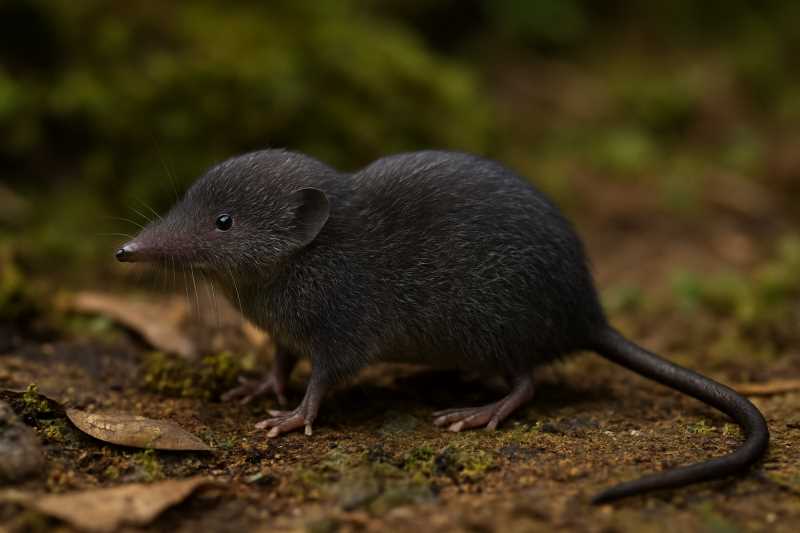
The Sumatran Water Shrew is a small, nimble creature characterized by its sleek, streamlined body, which is adapted for an aquatic lifestyle. It typically measures around 12 to 16 centimeters in length, with an additional tail length of 8 to 10 centimeters. The shrew’s dense fur is water-repellent, aiding in its swimming abilities, and usually exhibits a dark gray or brown color, providing camouflage among the wet rocks and vegetation.
One of the distinguishing features of this species is its long, flexible snout, which is packed with sensory whiskers. These whiskers are vital for detecting prey underwater. Additionally, the shrew’s hind feet are slightly webbed, enhancing its ability to navigate swiftly through water. Despite its small size, the Sumatran Water Shrew’s sharp teeth and strong jaws are well adapted for capturing and consuming a variety of prey.
Range and Habitat
The Sumatran Water Shrew is primarily found in the montane and submontane regions of Sumatra, Indonesia. It inhabits clear, fast-flowing streams and rivers, often in forested areas that provide both cover and a rich supply of food. The shrew’s habitat is characterized by rocky substrates, which offer ideal conditions for hunting and foraging.
This species is highly dependent on clean, unpolluted water sources, making it a vital indicator of ecosystem health. Unfortunately, its habitat is increasingly threatened by human activities such as deforestation, agriculture, and urban development, which lead to water pollution and habitat fragmentation.
Behavior and Diet
The Sumatran Water Shrew is known for its solitary and territorial nature. It is primarily nocturnal, spending the night hours hunting for food. Its diet consists mainly of aquatic insects, small fish, and crustaceans. The shrew uses its sensitive whiskers to detect movements in the water, allowing it to hone in on prey with remarkable precision.
Although it is a proficient swimmer, the Sumatran Water Shrew also forages along stream banks, utilizing both aquatic and terrestrial food sources. This dual feeding strategy is essential for its survival, especially in environments where food availability can be unpredictable.
Identification Tips (Field Recognition Cues)
Identifying the Sumatran Water Shrew in the field requires careful observation due to its elusive nature. Here are some key recognition cues:
- Size and Shape: Look for a small, slender mammal with a body length of 12 to 16 cm and a long tail.
- Fur and Coloration: Note the dark gray or brown water-repellent fur.
- Habitat: Search near clean, fast-flowing streams or rivers in forested areas.
- Behavior: Observe for nocturnal activity and swimming or foraging along water bodies.
- Distinctive Features: Long snout with whiskers and slightly webbed hind feet.
Conservation Status (with Threats and Protections)
The Sumatran Water Shrew is currently listed as "Data Deficient" by the International Union for Conservation of Nature (IUCN). This classification highlights the lack of detailed information on its population trends and distribution, which complicates conservation efforts.
Threats to the species include habitat loss due to deforestation and agricultural expansion, pollution from industrial activities, and climate change, which can alter water availability and quality. Conservation measures are crucial to ensure the survival of this species. Efforts such as habitat protection, pollution control, and ecological research are needed to better understand and mitigate the threats facing the Sumatran Water Shrew.
Frequently Asked Questions
1. Where can I find the Sumatran Water Shrew? The Sumatran Water Shrew is native to Sumatra, Indonesia, and typically inhabits montane and submontane regions with clear, fast-flowing streams.
2. What does the Sumatran Water Shrew eat? Its diet consists mainly of aquatic insects, small fish, and crustaceans. It uses its sensitive whiskers to detect prey underwater.
3. How is the Sumatran Water Shrew adapted to its aquatic environment? The shrew has water-repellent fur, slightly webbed feet for swimming, and a long snout with sensory whiskers for detecting prey underwater.
4. What threats does the Sumatran Water Shrew face? The shrew faces threats from habitat loss due to deforestation, pollution, and climate change, which impact water quality and availability.
5. What conservation efforts are in place for the Sumatran Water Shrew? Conservation efforts focus on habitat protection, pollution control, and ecological research to better understand and protect the species.
Related posts