The Taveta Weaver: An Intricate Artisan of the Avian World
The Taveta Weaver (Ploceus castaneiceps) is a small, vibrant bird belonging to the Ploceidae family, which is known for its impressive nest-building techniques and vibrant plumage. This fascinating species is native to the grasslands and open woodlands of East Africa, particularly around the Taveta region in southern Kenya and northern Tanzania. With its distinct characteristics and behaviors, the Taveta Weaver continues to intrigue ornithologists and bird enthusiasts alike.
Morphological Features
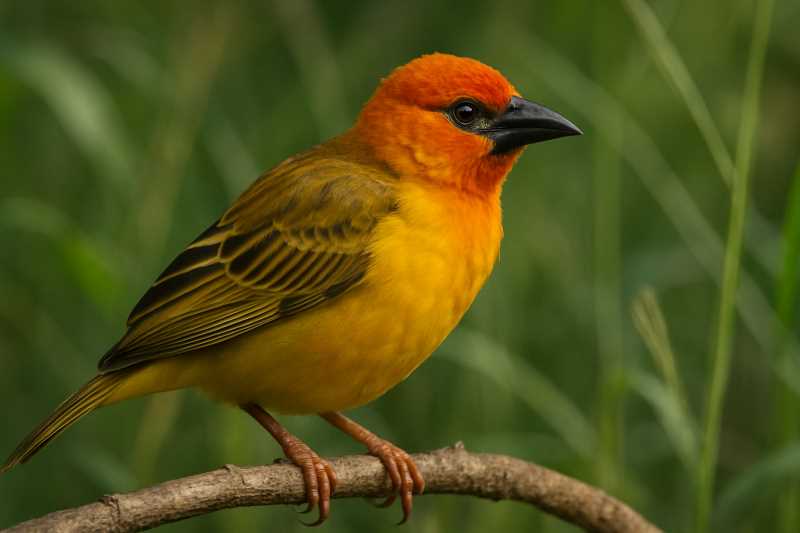
One of the most striking features of the Taveta Weaver is its bright and colorful plumage. Males boast a stunning combination of yellow and chestnut colors, with a vivid yellow crown and nape, contrasted by a rich chestnut on the face and throat. Their upperparts are olive green, and the underparts display a vibrant yellow, making them easily recognizable amongst other avian species. Females and juveniles, on the other hand, exhibit a more subdued coloration, predominantly in shades of brown and olive, which offers them better camouflage against predators.
The Taveta Weaver measures about 14 centimeters in length, with a wingspan ranging from 19 to 22 centimeters. Despite their small size, these birds are known for their robust and conical beaks, which are well-suited for their diet primarily consisting of seeds, grains, and occasionally insects.
Habitat and Distribution
The Taveta Weaver is primarily found in the savannahs and acacia-dominated woodlands of East Africa. They thrive in areas with ample vegetation, which provides both food and nesting materials. Their preference for such habitats ensures they remain in regions where they can access the necessary resources to support their breeding and foraging habits.
While the Taveta Weaver is native to Kenya and Tanzania, their range is relatively localized, with populations congregating near water sources such as rivers and wetlands. These environments not only offer a steady supply of food but also provide a suitable environment for constructing their intricate nests.
Behavior and Social Structure
Taveta Weavers are highly social birds and often form large colonies, particularly during the breeding season. Their social behavior is a fascinating aspect of their ecology, as these birds engage in cooperative breeding and exhibit complex social structures. The colonies are typically established in proximity to water bodies, where the abundance of resources supports their communal lifestyle.
These birds are known for their elaborate courtship displays, where males perform various acrobatic maneuvers and sing melodious songs to attract females. The males are also responsible for constructing nests, which they weave meticulously using grasses and reeds. The architectural prowess of Taveta Weavers is evident in their intricately woven nests, which are suspended from tree branches to avoid ground predators. The nests have a distinctive oval shape with an entrance at the bottom, offering protection and insulation for the eggs and chicks inside.
Reproduction and Lifespan
The breeding season for Taveta Weavers coincides with the rainy season, which ensures an ample supply of food for the growing chicks. Females typically lay between two to four eggs, which are incubated solely by the female while the male continues to provide food and protection. The eggs hatch after about two weeks, and the chicks remain in the nest for another two to three weeks before fledging.
While the exact lifespan of the Taveta Weaver in the wild is not extensively documented, it is estimated that these birds can live up to 10 years under favorable conditions. Their lifespan is influenced by factors such as predation, availability of food, and environmental conditions.
Conservation Status
As of the current evaluations, the Taveta Weaver is listed as a species of Least Concern by the International Union for Conservation of Nature (IUCN). This classification indicates that the species does not face any immediate threat of extinction across its natural range. However, habitat destruction and environmental changes pose potential risks to their populations.
Conservation efforts aimed at preserving the natural habitats of the Taveta Weaver are crucial in ensuring the long-term survival of this species. Protecting wetlands and woodlands from agricultural expansion and deforestation is essential to maintain the ecological balance that supports the Taveta Weaver and other wildlife in the region.
Conclusion
The Taveta Weaver is a remarkable example of avian ingenuity and adaptability. Its vibrant plumage, intricate nesting habits, and social behaviors make it a captivating subject of study for ornithologists and bird watchers. Ensuring the preservation of its natural habitat is vital to maintaining the biodiversity of the East African region, allowing future generations to witness the marvels of this colorful and industrious bird.
In conclusion, the Taveta Weaver stands as a testament to the beauty and complexity of nature, exemplifying the intricate relationships between species and their environments. By understanding and appreciating such species, we can foster a deeper connection with the natural world and contribute to its conservation.
Related posts