The San Blas Jay: A Vibrant Avian Spectacle
The San Blas Jay (Cyanocorax sanblasianus) is a captivating species that enchants birdwatchers and ornithologists alike with its striking appearance and vibrant social behavior. Native to the lush forests and subtropical regions of western Mexico, this bird is a testament to the region’s rich biodiversity. This article delves into the San Blas Jay’s taxonomy, habitat, behavior, and conservation status, offering a comprehensive overview of this remarkable avian species.
Taxonomic Classification and Physical Description
Belonging to the Corvidae family, the San Blas Jay is one of the many colorful and intelligent members of the jay family. The species is named after the San Blas region in Nayarit, Mexico, where it is commonly found. The scientific name, Cyanocorax sanblasianus, reflects its genus and specific epithet, highlighting its vivid blue coloration and regional specificity.
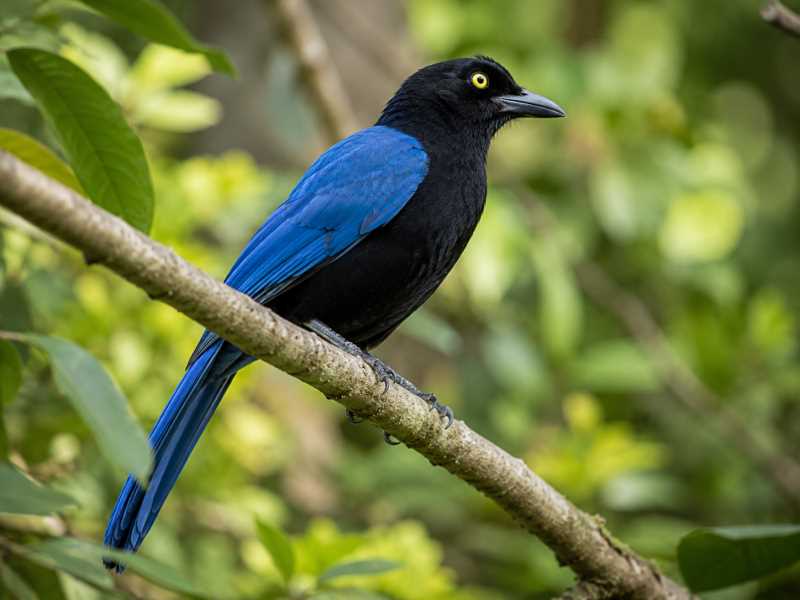
The San Blas Jay is a medium-sized bird, measuring approximately 30 to 35 centimeters in length. It boasts a striking plumage, predominantly a vivid blue on its back, wings, and tail, with a contrasting black head, throat, and breast. The underparts are paler, often a soft gray or white, providing a distinct contrast with its darker upper body. Its eyes are a striking yellow, adding to its distinctive appearance.
Habitat and Distribution
The San Blas Jay inhabits a range of ecosystems, primarily favoring subtropical or tropical dry forests, moist lowland forests, and mangrove swamps. These habitats are crucial for its survival, providing ample food sources and nesting sites. The species is primarily distributed along the Pacific slopes of western Mexico, from southern Sonora to northern Jalisco.
The bird’s adaptability to various types of forests and its tolerance of human-altered landscapes make it a versatile species. However, its preference for undisturbed habitats highlights the importance of preserving these ecosystems to ensure the species’ continued survival.
Behavior and Social Structure
Cyanocorax sanblasianus is known for its complex social behavior, often forming large, noisy flocks. These groups are not only social but also cooperative, engaging in activities like collective foraging and mobbing predators. Such behaviors are indicative of the bird’s high intelligence, a hallmark of the Corvidae family.
The San Blas Jay’s diet is omnivorous, consisting of fruits, seeds, insects, and small vertebrates. Its foraging strategy is opportunistic, taking advantage of the seasonal availability of food resources. The bird is also known to cache food, a behavior that reveals its problem-solving abilities and memory.
Breeding typically occurs during the rainy season, when food is abundant. The species is monogamous, with pairs working cooperatively to build nests, incubate eggs, and rear chicks. Nests are usually constructed in trees, and both parents share responsibilities, reflecting the bird’s social and cooperative nature.
Vocalizations
The San Blas Jay is not just visually striking but also vocally expressive. Its vocal repertoire is extensive, consisting of a variety of calls used for communication within flocks, establishing territory, and alerting others to potential threats. These vocalizations are often loud and raucous, contributing to the bird’s conspicuous presence in its natural habitat.
Conservation Status and Threats
According to the International Union for Conservation of Nature (IUCN), the San Blas Jay is currently listed as a species of Least Concern. This status reflects its relatively stable population and wide distribution. However, ongoing threats such as habitat destruction due to logging, agriculture, and urban development pose significant challenges to its long-term survival.
Conservation efforts are essential to protect the San Blas Jay’s habitat and ensure the species does not become threatened. Initiatives that focus on habitat preservation, sustainable land-use practices, and raising awareness about the importance of biodiversity are crucial. Additionally, further research into the species’ ecology and behavior can help inform conservation strategies and policy decisions.
Conclusion
The San Blas Jay is a remarkable bird that embodies the vibrancy and diversity of Mexico’s avifauna. Its striking appearance, complex social behavior, and adaptability make it a fascinating subject for study and conservation. As we continue to explore and understand the ecological roles of such species, the San Blas Jay serves as a reminder of the intricate connections that sustain our natural world. Protecting this species and its habitat ensures not only its survival but also the preservation of the ecosystems it inhabits.
In a rapidly changing world, the San Blas Jay stands as a symbol of resilience and adaptability, urging us to recognize and preserve the beauty and complexity of nature.
[References]
– BirdLife International. “Cyanocorax sanblasianus.” IUCN Red List of Threatened Species.
– Madge, S., & Burn, H. (1994). “Crows and Jays: A Guide to the Crows, Jays and Magpies of the World.”
– Peterson, R. T., & Chalif, E. L. (1973). “A Field Guide to Mexican Birds: Mexico, Guatemala, Belize, El Salvador.”
Related posts