Northern Glider (Petaurus abidi)
Introduction
The Northern Glider, scientifically known as Petaurus abidi, is a lesser-known marsupial species that inhabits the tropical forests of Papua New Guinea. Part of the family Petauridae, this glider is closely related to other gliding marsupials, including the more famous Sugar Glider. Known for its distinctive ability to glide from tree to tree, the Northern Glider is an intriguing subject for both researchers and wildlife enthusiasts. Despite its fascinating adaptations and unique ecological niche, the Northern Glider remains a poorly understood and vulnerable species. This article explores the various aspects of its biology, ecology, and conservation.
Physical Description
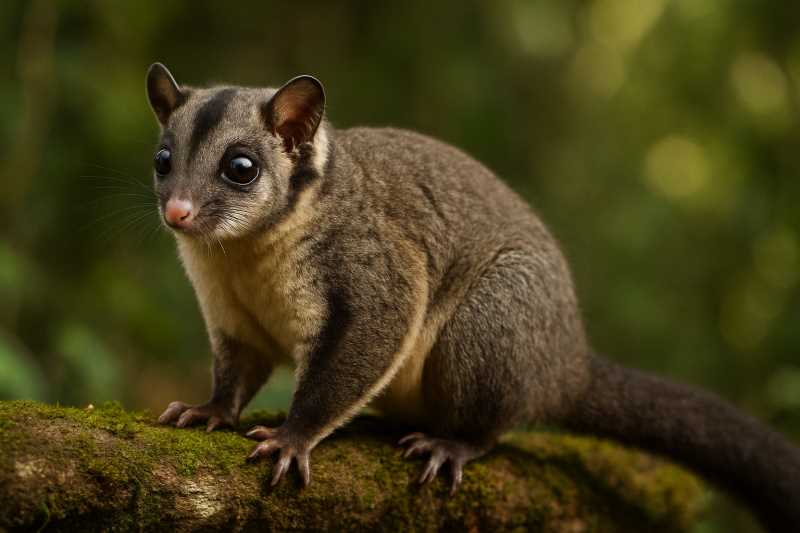
The Northern Glider is a small to medium-sized marsupial with a body length typically ranging between 25 to 30 cm, not including the tail, which can add an additional 30 to 40 cm. The glider’s fur is predominantly grey, with a darker dorsal stripe running from the nose to the base of the tail. Its large, forward-facing eyes are adapted for nocturnal activity, providing excellent night vision. The glider’s limbs are equipped with sharp claws for climbing, and its patagium—a stretch of skin extending from the wrist to the ankle—enables its remarkable gliding ability.
Range and Habitat
The Northern Glider is endemic to the montane forests of Papua New Guinea, particularly in the central mountain ranges. It thrives in altitudes ranging from 1,200 to 2,800 meters above sea level. These forests provide the tree canopy continuity necessary for gliding. The glider’s habitat is characterized by dense vegetation, a rich diversity of flora, and a complex vertical structure that supports its arboreal lifestyle.
Behavior and Diet
Primarily nocturnal, the Northern Glider is most active during the night when it forages for food. Its diet consists of a variety of plant materials, including nectar, sap, and fruits, as well as insects and small invertebrates. The glider employs its sharp teeth to pierce the bark of trees to access sap, a significant component of its diet. Social creatures, Northern Gliders live in small family groups and communicate through a range of vocalizations and scent markings.
Identification Tips (Field Recognition Cues)
Spotting a Northern Glider in the wild can be challenging due to its nocturnal habits and arboreal lifestyle. However, there are several identification tips that can aid in field recognition:
- Dorsal Stripe: Look for the distinctive dark stripe running down the back.
- Large Eyes: Their prominent eyes are adapted for night vision.
- Gliding Membrane: Notice the patagium, a key feature for gliding.
- Vocalizations: Listen for their characteristic calls, especially around dusk.
- Tree Scratches: Check for scratches on tree bark, indicative of their feeding activity.
Conservation Status (With Threats and Protections)
The Northern Glider is currently classified as Vulnerable by the International Union for Conservation of Nature (IUCN). The primary threats to its survival include habitat destruction due to logging and land conversion for agriculture. Additionally, climate change poses a long-term threat by altering the glider’s montane habitat.
Conservation efforts are underway to protect this species, focusing on habitat preservation and the establishment of protected areas. Raising awareness about the ecological role of the Northern Glider is crucial for its conservation. Furthermore, research initiatives aim to better understand its ecology and adapt conservation strategies accordingly.
Frequently Asked Questions
What is the Northern Glider’s primary diet?
The Northern Glider primarily feeds on sap, nectar, and fruits, supplemented by insects and small invertebrates. It uses its sharp teeth to access tree sap, a critical part of its diet.
How does the Northern Glider glide?
The Northern Glider glides using a membrane called the patagium, which stretches from its wrist to its ankle. This adaptation allows it to glide efficiently between trees, covering distances of up to 100 meters in a single leap.
Where can I find Northern Gliders?
Northern Gliders are found in the montane forests of Papua New Guinea, at elevations between 1,200 to 2,800 meters. Spotting them requires patience and a keen eye due to their nocturnal and arboreal nature.
What are the main threats to the Northern Glider?
The Northern Glider faces threats from habitat destruction due to logging and agricultural expansion. Climate change also poses a significant threat by affecting its montane forest habitat.
How can we help in the conservation of Northern Gliders?
Supporting conservation initiatives that focus on habitat preservation and raising awareness about the Northern Glider’s ecological importance are critical steps toward its conservation. Participating in or funding research can also contribute to more effective conservation strategies.
Related posts