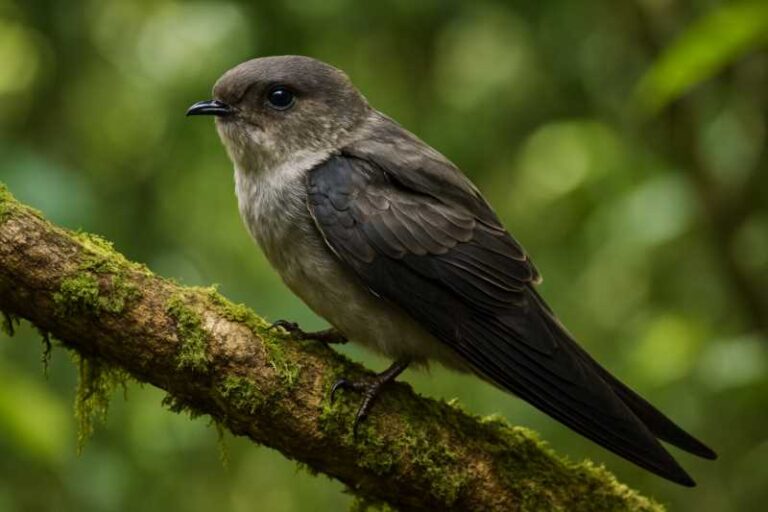
The Slaty-backed Forktail: An Ornithological Jewel of the Himalayan Foothills
The Slaty-backed Forktail (*Enicurus schistaceus*), a small passerine bird belonging to the Muscicapidae family, is a striking avian species that captures the imagination of birdwatchers and ornithologists alike. With its vibrant plumage and distinctive tail features, this bird is not only an object of beauty but also a fascinating subject for scientific study. Found predominantly along the streams and rivers of the Himalayan foothills, it plays a significant role in the ecosystem while offering insights into avian adaptation and speciation.
Habitat and Distribution
The Slaty-backed Forktail inhabits the lush, verdant riparian zones of the Himalayas, extending from northern India through Nepal and Bhutan, and into the southern regions of China. These areas are characterized by their fast-flowing streams and rivers, surrounded by dense, subtropical forests. The species thrives in these environments, where it can often be seen hopping deftly among rocks and foraging along the water’s edge. The altitude range of this bird varies from about 300 meters to 2,500 meters, though it is most commonly found between 700 meters and 1,800 meters.
Its distribution is relatively fragmented, as the bird is highly dependent on specific habitat conditions. The clear, unpolluted streams are crucial for its survival, making it sensitive to environmental changes and habitat destruction. Conservation efforts are therefore essential to ensure the preservation of its natural habitats, especially in the face of increasing human encroachment and climate change.
Physical Characteristics
The Slaty-backed Forktail is easily recognizable by its contrasting black-and-white plumage and its namesake slaty-grey back. The bird’s most distinctive feature is its long, deeply forked tail, which it flicks continuously as it moves. This tail is not merely ornamental; it serves a crucial role in balance and agility, allowing the bird to navigate its rocky, fast-flowing habitat with precision.
The bird’s head and upper parts are predominantly black, except for a striking white supercilium that extends from the base of the beak to the nape. Its wings are black with a prominent white bar, and the belly is a contrasting white. The combination of these colors makes the Slaty-backed Forktail a visually striking species, easily spotted by those familiar with its habitat and behavior.
Behavior and Ecology
The Slaty-backed Forktail is primarily insectivorous, feeding on a diet of insects and other small invertebrates found along the water’s edge. It employs a methodical foraging strategy, often seen picking through leaf litter or probing crevices in search of food. The bird’s feeding habits play a vital role in controlling insect populations and maintaining ecological balance within its habitat.
Notably, the Slaty-backed Forktail exhibits a unique behavior of flicking its tail up and down as it perches or moves. This action is believed to be a form of communication, possibly signaling to mates or deterring predators. The bird is also known for its melodic song, characterized by a series of clear, flute-like notes that resonate through its forested environment.
During the breeding season, which typically occurs from April to July, the Slaty-backed Forktail constructs its nest close to water, often on a ledge or in a crevice. The nest is a cup-shaped structure made of moss, leaves, and other plant materials, providing a safe haven for its eggs. The female usually lays two to four eggs, which she incubates while the male assists in feeding and protecting the young once they hatch.
Conservation Status
Currently, the Slaty-backed Forktail is classified as a species of “Least Concern” by the International Union for Conservation of Nature (IUCN), thanks to its relatively stable population. However, localized threats such as habitat destruction, pollution, and climate change pose significant risks to its long-term survival. Conservationists emphasize the importance of protecting its natural habitats and preserving the quality of the riparian ecosystems that support its life cycle.
In regions where human activities threaten its habitat, initiatives are needed to promote sustainable development and environmental stewardship. Such efforts are crucial not only for the Slaty-backed Forktail but also for the myriad of other species that share its ecosystem.
Conclusion
The Slaty-backed Forktail is a magnificent example of nature’s artistry and adaptability, thriving in the challenging environments of the Himalayan foothills. Its striking appearance and ecological significance make it a subject of interest not just for bird enthusiasts but for anyone interested in the natural world. As we continue to explore and understand the complexities of its existence, we are reminded of the delicate balance that sustains biodiversity and the urgent need to protect it.
By fostering a deeper appreciation and understanding of such species, we can inspire conservation efforts that ensure the Slaty-backed Forktail continues to grace our planet with its presence for generations to come.
Related posts