Anderson’s Shrew (Suncus stoliczkanus): A Comprehensive Guide
Introduction
Anderson’s Shrew, scientifically known as Suncus stoliczkanus, is a small mammal belonging to the family Soricidae. This elusive creature is named in honor of the British zoologist John Anderson who made significant contributions to the study of Asian fauna. Despite its small size, Anderson’s Shrew plays an integral role in the ecosystems it inhabits, contributing to the control of insect populations. This article delves into the physical characteristics, habitat preferences, behavior, diet, and conservation status of this intriguing species, providing readers with a thorough understanding of Anderson’s Shrew.
Physical Description
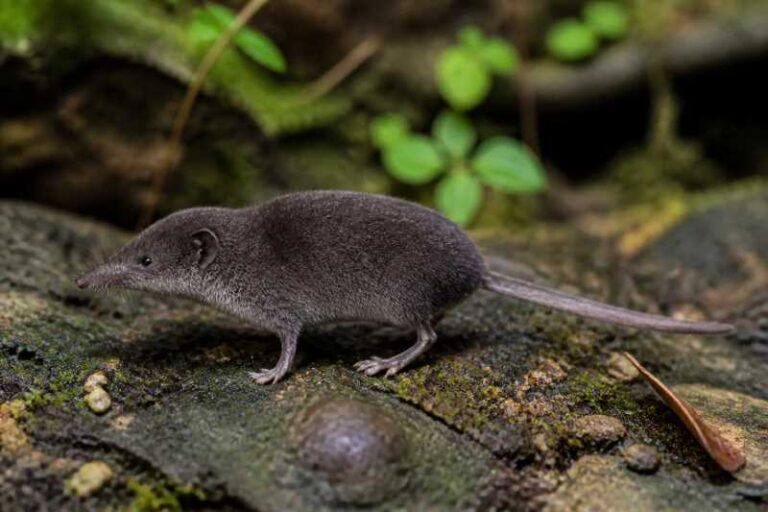
Anderson’s Shrew is a diminutive mammal, with adults typically measuring around 6 to 8 centimeters in body length, excluding the tail, which adds an additional 3 to 4 centimeters. The average weight ranges from 5 to 12 grams. The shrew’s fur is soft and dense, offering protection against the elements and predators. Its coloration is generally a muted grayish-brown, which provides excellent camouflage in its natural habitat.
The shrew’s snout is elongated and flexible, a characteristic feature of the Soricidae family. This adaptation enables it to probe into narrow crevices and soil for insects and invertebrates. Its eyes are small, reflecting its reliance on acute hearing and smell rather than vision. The ears are also reduced in size, yet highly sensitive, allowing the shrew to detect even the slightest rustle in its environment.
Range and Habitat
Anderson’s Shrew is primarily found in the subtropical and tropical regions of Southeast Asia, with a distribution range that includes countries such as Myanmar, Thailand, Laos, and Vietnam. The species is known to inhabit a variety of environments, from deciduous and evergreen forests to grasslands and shrublands.
This shrew species exhibits a remarkable ability to adapt to diverse habitats, including agricultural lands and gardens, where they find abundant food sources. However, they are most commonly associated with moist and shaded areas that offer ample cover and foraging opportunities.
Behavior and Diet
Anderson’s Shrew is a solitary and nocturnal creature, spending much of the day hidden in burrows or dense vegetation to avoid predators. It becomes active at night when it forages for food. The shrew’s diet consists primarily of insects and other invertebrates, including beetles, ants, termites, and earthworms. Occasionally, it may consume small vertebrates or plant material.
The shrew’s high metabolic rate necessitates frequent feeding, often consuming up to twice its body weight in food each day. This voracious appetite helps regulate insect populations, making the shrew an important ecological player in its habitat.
Identification Tips
Identifying Anderson’s Shrew in the field can be challenging due to its elusive nature and resemblance to other shrew species. However, there are a few key characteristics that can aid in recognition:
- Size: Look for a small mammal, typically no larger than 8 centimeters in body length.
- Coloration: Note the grayish-brown fur which provides camouflage against the forest floor.
- Snout: Observe the long, pointed snout used for probing soil and crevices.
- Behavior: Watch for nocturnal movements and listen for high-pitched squeaks, indicative of shrew activity.
Conservation Status
The conservation status of Anderson’s Shrew is currently listed as "Least Concern" by the International Union for Conservation of Nature (IUCN). However, the species faces several threats that could impact its populations in the future.
Threats
- Habitat Loss: Deforestation and agricultural expansion are leading to significant habitat degradation and fragmentation.
- Pesticides: The use of pesticides in agriculture can result in the decline of insect populations, reducing food availability for the shrews.
- Climate Change: Alterations in temperature and precipitation patterns may impact the habitats and food sources of Anderson’s Shrew.
Protections
Efforts to conserve Anderson’s Shrew focus on habitat protection and sustainable land-use practices. Protected areas and reserves in Southeast Asia play a crucial role in preserving the natural habitats of this species. Additionally, raising awareness and promoting sustainable agricultural practices can mitigate some of the threats facing Anderson’s Shrew.
Frequently Asked Questions
What does Anderson’s Shrew eat?
Anderson’s Shrew primarily feeds on insects and other invertebrates, such as beetles, ants, termites, and earthworms. Its diet may occasionally include small vertebrates or plant matter.
Where can Anderson’s Shrew be found?
This shrew species is found in Southeast Asia, including Myanmar, Thailand, Laos, and Vietnam. It inhabits deciduous and evergreen forests, grasslands, and even agricultural areas.
How does Anderson’s Shrew contribute to its ecosystem?
Anderson’s Shrew plays a vital role in controlling insect populations due to its high metabolic rate and voracious appetite. This helps maintain ecological balance.
What are the main threats to Anderson’s Shrew?
The primary threats include habitat loss due to deforestation and agriculture, pesticide use, and climate change, which affect both habitat and food availability.
How can Anderson’s Shrew be identified in the wild?
Key identification features include its small size, grayish-brown fur, elongated snout, and nocturnal behavior, often accompanied by high-pitched squeaks.
Related posts