Introduction
The Madras Treeshrew, scientifically known as Anathana ellioti, is a fascinating mammal that belongs to the order Scandentia. Despite its name, the Madras Treeshrew is not a member of the shrew family but is more closely related to primates. This species is native to the Indian subcontinent and has garnered attention due to its unique characteristics and ecological significance. In this comprehensive article, we will delve into the various aspects of the Madras Treeshrew, including its physical description, habitat, behavior, and conservation status, providing an invaluable resource for wildlife enthusiasts and researchers alike.
Physical Description
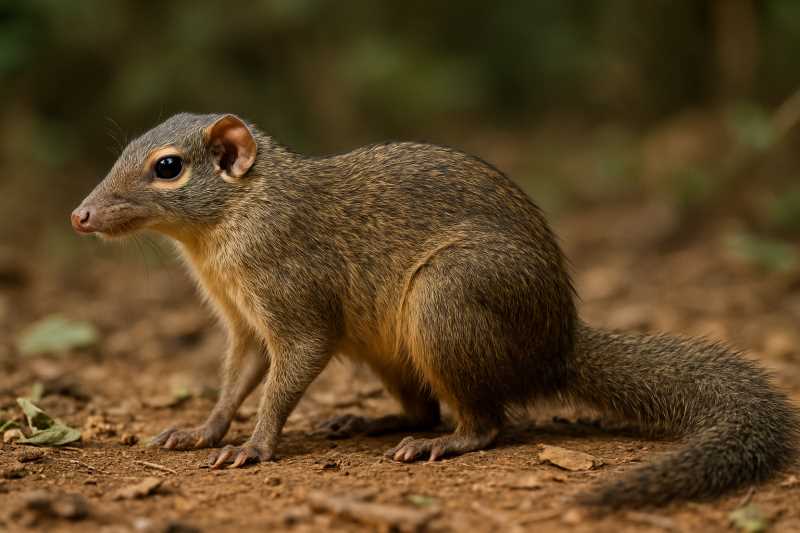
The Madras Treeshrew is a small, agile mammal, characterized by its slender build and distinctive features. Adults typically measure between 16 to 18 centimeters in body length, with a tail that adds an additional 15 to 18 centimeters. This tail is not only long but also bushy, aiding in balance and agility as the treeshrew navigates its arboreal habitat.
Their fur is soft and dense, predominantly colored in shades of brown with a slightly lighter underbelly. The dorsal side may exhibit a mix of dark brown and black hues, providing a degree of camouflage against the forest floor and tree bark. One of the most distinguishing features of the Madras Treeshrew is its elongated snout and sharp, curved claws, adaptations that are essential for foraging and climbing.
The eyes of the Madras Treeshrew are large and expressive, adapted for their diurnal lifestyle. These features, combined with their keen sense of smell, make them adept at detecting predators and prey alike.
Range and Habitat
The Madras Treeshrew is predominantly found in the southern and eastern parts of India, including the states of Tamil Nadu, Andhra Pradesh, Karnataka, Maharashtra, and Odisha. Its range is relatively limited, which has implications for its conservation.
This species thrives in a variety of habitats, ranging from dry deciduous forests to moist evergreen forests. They are particularly fond of areas with dense undergrowth and ample tree cover, which provide both food resources and protection from predators. The Madras Treeshrew is an arboreal creature, spending a significant amount of its time in the trees, although it is also known to forage on the ground.
Behavior and Diet
Madras Treeshrews are primarily diurnal, meaning they are active during the day. They are known for their high energy levels and agile movements, often observed darting through the trees in search of food. This species is solitary by nature, with individuals maintaining defined territories that they mark and defend against intruders.
Their diet is omnivorous, consisting of a variety of fruits, seeds, insects, and small vertebrates. They play a crucial role in seed dispersal, contributing to forest regeneration. The Madras Treeshrew uses its keen sense of smell and sharp claws to find and capture its food, often foraging in the early morning and late afternoon.
Identification Tips
Identifying the Madras Treeshrew in the wild requires attention to several key characteristics:
- Size and Shape: Look for a small mammal with a body length of approximately 16-18 cm and a similarly sized bushy tail.
- Coloration: Note the brown fur with a lighter underbelly, and darker dorsal markings.
- Behavior: Watch for agile movements in trees and on the ground, typical of a treeshrew.
- Sounds: Listen for their vocalizations, which include clicks and chirps used for communication.
Conservation Status
The International Union for Conservation of Nature (IUCN) currently lists the Madras Treeshrew as a species of "Least Concern." However, this status should not lead to complacency. The primary threats to their population include habitat destruction due to deforestation, agricultural expansion, and urbanization.
Conservation efforts are focused on habitat preservation and restoration. Protected areas and wildlife reserves in India play a crucial role in safeguarding the natural habitats of the Madras Treeshrew. Continued research and monitoring are essential to understand population dynamics and inform conservation strategies.
Frequently Asked Questions
What is the typical lifespan of a Madras Treeshrew?
The Madras Treeshrew has a lifespan of approximately 2 to 3 years in the wild. In captivity, where they are free from predators and have a steady food supply, they may live slightly longer.
How does the Madras Treeshrew contribute to its ecosystem?
Madras Treeshrews play a vital role in their ecosystem by aiding in seed dispersal and controlling insect populations. Their foraging habits help to spread seeds across their habitat, promoting forest regeneration.
Are Madras Treeshrews endangered?
Currently, the Madras Treeshrew is not considered endangered, classified as "Least Concern" by the IUCN. However, habitat loss poses a significant threat to their populations, necessitating ongoing conservation efforts.
Can Madras Treeshrews be kept as pets?
Madras Treeshrews are wild animals and are not suitable for domestication. It is illegal and unethical to keep them as pets, as they require specific environmental conditions and space to thrive.
What adaptations help the Madras Treeshrew survive in its habitat?
The Madras Treeshrew’s long tail aids in balance, while its sharp claws and keen sense of smell are essential for foraging. Its fur coloration provides camouflage, helping it avoid predators.
In conclusion, the Madras Treeshrew is a unique and important species within its ecosystem. Understanding its characteristics, behaviors, and the challenges it faces is crucial for its conservation and the preservation of biodiversity in its native regions.
Related posts