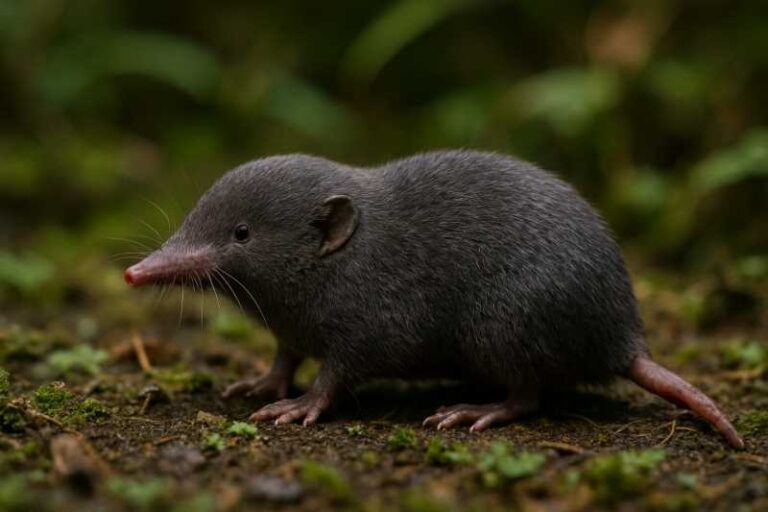
Equivalent-teeth Shrew Mole (Uropsilus aequodonenia)
Introduction
The Equivalent-teeth Shrew Mole, scientifically known as Uropsilus aequodonenia, is a fascinating and elusive mammal species found in the mountainous regions of Asia. This unique creature belongs to the Talpidae family and is a member of the ancient and lesser-known genus Uropsilus. Despite its name, the shrew mole is not a true mole but shares many similar characteristics, such as its fossorial lifestyle and adaptations for life underground.
Physical Description
The Equivalent-teeth Shrew Mole is a small mammal with a body length ranging from 8 to 12 centimeters, and it typically weighs between 30 to 50 grams. Its fur is dense and velvety, providing excellent insulation against the cold temperatures of its mountain habitat. The color of its fur is usually a dark gray or brown, which helps it blend seamlessly into its environment.
One of the most distinctive features of this species is its elongated snout, which is highly sensitive and used for detecting prey underground. The shrew mole has small, beady eyes that are poorly developed due to its subterranean lifestyle. Its forelimbs are robust and equipped with long claws, perfect for digging through soil and leaf litter. Unlike true moles, the Equivalent-teeth Shrew Mole has a tail, which is about half the length of its body, aiding in balance and maneuverability.
Range and Habitat
The Equivalent-teeth Shrew Mole is native to the mountainous regions of central and southern China, including the provinces of Sichuan, Yunnan, and Guizhou. It inhabits high-altitude areas, typically ranging from 1,500 to 3,500 meters above sea level. These regions are characterized by cool temperatures, high humidity, and dense vegetation, providing an ideal environment for this fossorial creature.
This species prefers habitats with loose, moist soil, which makes digging easier and supports a rich supply of invertebrate prey. It is commonly found in forested areas, particularly in coniferous and mixed deciduous forests, as well as in alpine meadows and shrublands.
Behavior and Diet
The Equivalent-teeth Shrew Mole is a solitary and primarily nocturnal animal, spending most of its time underground in search of food. Its diet consists mainly of invertebrates, including earthworms, beetles, and other small insects, which it locates using its sensitive snout. The shrew mole’s ability to consume large quantities of food relative to its body size is crucial for maintaining its high metabolic rate.
This species constructs extensive burrow systems, which provide shelter from predators and harsh weather conditions. The burrows are typically shallow and consist of multiple chambers used for nesting, food storage, and resting. The shrew mole is known for its relentless digging, often creating new tunnels and expanding its underground network.
Identification Tips
Identifying the Equivalent-teeth Shrew Mole in the field can be challenging due to its secretive nature. However, there are several key characteristics to look for:
- Snout: Look for an elongated, sensitive snout that is more pronounced than those of true moles.
- Fur: Observe the dense, dark gray or brown fur, which is soft and velvety to the touch.
- Size: Note the small body size, typically 8 to 12 centimeters in length, with a tail approximately half the body length.
- Habitat: Check for the presence of burrows in moist, forested areas at high altitudes.
- Behavior: The shrew mole is often active at night, so nocturnal observations may be more successful.
Conservation Status
The Equivalent-teeth Shrew Mole is currently classified as "Least Concern" by the International Union for Conservation of Nature (IUCN). However, like many mountain-dwelling species, it faces potential threats from habitat destruction and climate change. Deforestation and agricultural expansion in its native range can lead to the loss of suitable habitats, while climate change may alter the delicate balance of its high-altitude ecosystems.
Conservation efforts for this species focus on preserving its natural habitat and promoting sustainable land-use practices. Protected areas and national parks in China play a crucial role in safeguarding the environment necessary for the survival of the Equivalent-teeth Shrew Mole.
Frequently Asked Questions
1. What is the diet of the Equivalent-teeth Shrew Mole?
The Equivalent-teeth Shrew Mole primarily feeds on invertebrates such as earthworms, beetles, and small insects. Its elongated snout is highly sensitive, helping it locate prey underground.
2. Where can I find the Equivalent-teeth Shrew Mole?
This species is found in the mountainous regions of central and southern China, particularly in the provinces of Sichuan, Yunnan, and Guizhou. It inhabits high-altitude forests and alpine meadows.
3. How does the Equivalent-teeth Shrew Mole differ from true moles?
While the Equivalent-teeth Shrew Mole shares a fossorial lifestyle with true moles, it belongs to a separate genus, Uropsilus. It has a longer snout, a visible tail, and is more closely related to shrews than to moles.
4. What are the main threats to the Equivalent-teeth Shrew Mole?
The primary threats include habitat destruction due to deforestation and agricultural expansion, as well as potential impacts from climate change altering its high-altitude habitat.
5. What conservation measures are in place for the Equivalent-teeth Shrew Mole?
Conservation measures include protecting its natural habitat through the establishment of national parks and reserves, along with promoting sustainable land-use practices to prevent habitat loss.
Related posts