Introduction
The Western Midday Jird, scientifically known as Meriones penicilliger, is a remarkable rodent species belonging to the family Muridae. This lesser-known mammal is a part of the gerbil subfamily and is primarily found in the arid and semi-arid regions of North Africa. The Western Midday Jird has adapted to thrive in harsh desert environments, making it an intriguing subject of study for researchers interested in desert ecology. This article delves into the physical description, habitat, behavior, and conservation status of this fascinating species, providing a comprehensive understanding for enthusiasts and scholars alike.
Physical Description
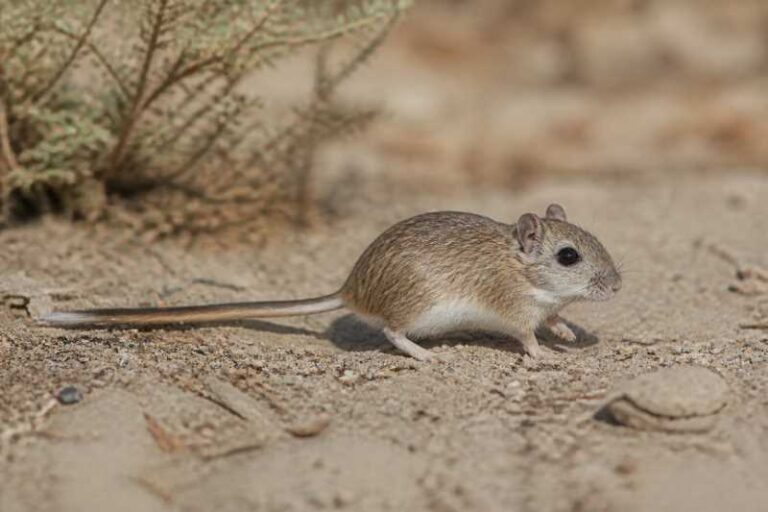
The Western Midday Jird is a medium-sized rodent characterized by its robust build and agile movements. Adults typically measure between 13 to 17 centimeters in body length, with a tail extending an additional 10 to 15 centimeters. This species exhibits sexual dimorphism, with males generally larger than females.
The fur of the Western Midday Jird is soft and dense, serving as an excellent insulator against the desert’s temperature extremes. The dorsal side of the jird is usually sandy-brown, which provides effective camouflage against the desert sands, while the ventral side is a lighter, creamy color. The tail is distinctly tufted at the end, aiding in balance and maneuverability.
The head of the Western Midday Jird is characterized by large, black eyes that enhance its night vision—a crucial adaptation for its nocturnal lifestyle. Its ears are relatively large and rounded, providing excellent hearing to detect predators and communicate with fellow jirds.
Range and Habitat
Geographically, the Western Midday Jird is distributed across several North African countries, including Morocco, Algeria, Tunisia, and parts of Libya. It predominantly inhabits desert and semi-desert areas, thriving in regions with sparse vegetation and sandy soils.
This species is highly adaptable and can be found in a variety of desert habitats, from rocky outcrops to sand dunes. The Western Midday Jird often constructs elaborate burrow systems that provide shelter from the harsh desert sun and protection from predators. These burrows are typically located in areas with loose soil, allowing the jird to excavate with ease.
Behavior and Diet
The Western Midday Jird is primarily nocturnal, spending the daylight hours nestled in its burrow and emerging at night to forage for food. Its diet is omnivorous, consisting of seeds, grains, insects, and occasionally small vertebrates. This dietary flexibility allows the jird to exploit a wide range of food resources, which is vital for survival in the unpredictable desert environment.
Socially, the Western Midday Jird is known to be a gregarious species, often forming colonies. These colonies provide a social structure that facilitates breeding and enhances protection against predators. Communication among jirds involves a complex system of vocalizations and body language, which play a crucial role in maintaining social bonds.
Reproduction in Western Midday Jirds is seasonal, with breeding typically occurring in the spring when food resources are more abundant. Female jirds give birth to litters of three to eight young after a gestation period of approximately 25 days. The young are weaned within three weeks and reach sexual maturity at about three months of age.
Identification Tips (field recognition cues)
Identifying the Western Midday Jird in the wild can be a rewarding challenge for naturalists and wildlife enthusiasts. Here are some key identification tips:
- Size and Shape: Look for a medium-sized rodent with a robust build and a long, tufted tail.
- Coloration: Note the sandy-brown dorsal fur and lighter, creamy ventral side, which serve as effective camouflage in desert habitats.
- Behavior: Observe nocturnal activity patterns and burrow entrances, which indicate the presence of these jirds.
- Vocalizations: Listen for distinctive chattering calls, especially at dusk and dawn.
- Tracks and Signs: Search for small rodent tracks near burrow entrances and foraging sites.
Conservation Status (with threats and protections)
The conservation status of the Western Midday Jird is currently classified as "Least Concern" by the International Union for Conservation of Nature (IUCN). This classification reflects the species’ wide distribution and presumed large population. However, localized threats do exist, primarily stemming from habitat degradation and climate change.
Human activities such as agriculture and urbanization have led to habitat fragmentation, which can impact jird populations by reducing available resources and increasing vulnerability to predators. Climate change poses an additional threat by altering the desert ecosystems that the jird relies upon.
Conservation efforts for the Western Midday Jird should focus on habitat preservation and sustainable land-use practices. Establishing protected areas in key habitats and promoting awareness of the species’ ecological role are vital steps in ensuring its long-term survival.
Frequently Asked Questions
1. What is the lifespan of the Western Midday Jird?
The Western Midday Jird has an average lifespan of 2 to 4 years in the wild. Factors such as predation, food availability, and environmental conditions can influence individual lifespans.
2. How does the Western Midday Jird adapt to desert environments?
The Western Midday Jird has several adaptations for desert living, including nocturnal behavior to avoid daytime heat, burrow systems for shelter, and a varied diet that allows it to exploit diverse food sources.
3. What predators does the Western Midday Jird face?
Common predators of the Western Midday Jird include snakes, birds of prey, and carnivorous mammals. The jird’s keen senses and social behavior help mitigate predation risks.
4. Are Western Midday Jirds kept as pets?
While some gerbil species are popular pets, the Western Midday Jird is not commonly kept in captivity due to its specific habitat needs and less widespread distribution.
5. How does climate change impact the Western Midday Jird?
Climate change can alter the desert ecosystems that the Western Midday Jird inhabits, potentially affecting food availability, habitat conditions, and the distribution of predators.
Related posts