Voss’ Porcupine: An In-Depth Exploration of Coendou vossi
Introduction
Voss’ Porcupine, scientifically known as Coendou vossi, is a fascinating yet relatively obscure member of the rodent family, endemic to South America. These nocturnal creatures are part of the Erethizontidae family, which comprises other New World porcupines. Known for their unique appearance and intriguing behaviors, Voss’ Porcupines are a subject of interest among researchers and wildlife enthusiasts alike. This article delves into various aspects of Coendou vossi, including their physical description, habitat, behavior, and conservation status, providing a comprehensive understanding of this remarkable species.
Physical Description
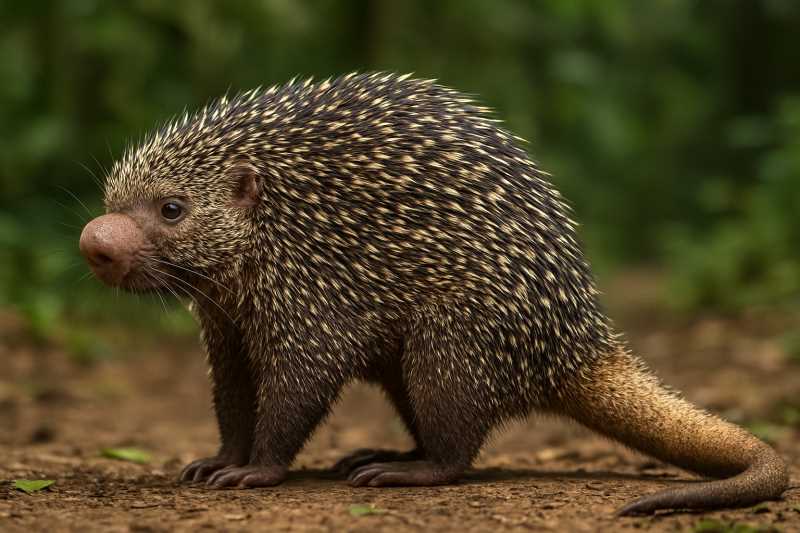
Coendou vossi is a small to medium-sized porcupine that exhibits the characteristic features of New World porcupines. These animals typically weigh between 3 to 5 kilograms and measure approximately 30 to 60 centimeters in length, not including their prehensile tails, which can add another 30 to 40 centimeters.
The most striking feature of Voss’ Porcupine is its spiny covering. The quills are modified hairs made of keratin, providing a formidable defense mechanism against predators. Unlike the quills of Old World porcupines, which are more rigid, the quills of Coendou vossi are shorter, softer, and interspersed with fur, giving them a bristly appearance.
Their fur varies in color, often displaying shades of brown, black, or gray, which helps them blend into their forested environments. The face of Voss’ Porcupine is often lighter, with a small, rounded nose and large, expressive eyes that aid in their nocturnal lifestyle.
Range and Habitat
Coendou vossi is primarily found in the tropical and subtropical forests of South America, with a range extending across countries like Brazil, Venezuela, and Colombia. This species thrives in dense, humid forests where they can find ample food and shelter.
These porcupines are arboreal, spending most of their lives in trees. Their prehensile tails are a crucial adaptation, allowing them to grasp branches securely as they navigate the forest canopy. Voss’ Porcupine prefers areas with plenty of tree cover, where they can avoid predators and find a diverse diet.
Behavior and Diet
Voss’ Porcupine is primarily nocturnal, sleeping during the day in tree hollows or dense foliage and becoming active at night. They are solitary creatures, with each individual maintaining a distinct territory that they mark using scent glands.
Their diet is predominantly herbivorous, consisting of leaves, fruits, seeds, and bark. Voss’ Porcupines are also known to gnaw on wood, which helps keep their continuously growing teeth at a manageable length. Their foraging behavior plays a crucial role in seed dispersal, contributing to the health and diversity of their forest habitat.
Identification Tips (Field Recognition Cues)
Identifying Coendou vossi in the field can be challenging due to their elusive nature and nocturnal habits. However, there are several key characteristics to look for:
- Size and Shape: Look for a medium-sized, stocky animal with a characteristic rounded body shape.
- Quills and Fur: Their quills are shorter and interspersed with fur, which can range in color from brown to black.
- Tail: A long, prehensile tail is a distinctive feature, often seen wrapped around branches.
- Behavior: Observe their nocturnal activity and arboreal lifestyle, usually found high in the forest canopy.
Conservation Status (with Threats and Protections)
Currently, the conservation status of Coendou vossi is not well-documented, primarily due to a lack of comprehensive studies. However, like many forest-dependent species, they face potential threats from habitat destruction and fragmentation due to logging and agricultural expansion.
Conservation efforts are crucial to ensure the survival of Voss’ Porcupine. Protecting their natural habitat through the establishment of nature reserves and promoting sustainable land-use practices are vital strategies. Further research is needed to better understand their population dynamics and ecological role, helping to inform effective conservation policies.
Frequently Asked Questions
What is the primary habitat of Voss’ Porcupine?
Voss’ Porcupine primarily inhabits tropical and subtropical forests in South America, particularly in regions with dense tree cover, which provides food and protection.
How does Voss’ Porcupine defend itself from predators?
Voss’ Porcupine defends itself using its quills, which are modified hairs capable of deterring predators. These quills are softer than those of Old World porcupines but still provide substantial protection.
Are Voss’ Porcupines endangered?
The conservation status of Voss’ Porcupine is not clearly defined due to insufficient data. However, they are potentially threatened by habitat loss, highlighting the need for conservation efforts.
What do Voss’ Porcupines eat?
Their diet is mainly herbivorous, consisting of leaves, fruits, seeds, and bark. They also gnaw on wood to maintain their teeth.
How do Voss’ Porcupines contribute to their ecosystem?
Voss’ Porcupines play a crucial role in seed dispersal through their foraging activities, aiding in maintaining the biodiversity and health of their forest ecosystems.
Related posts