The Unadorned Flycatcher: An Unassuming Jewel of the Andes
In the lush, verdant expanses of the Andean cloud forests, a small, seemingly inconspicuous bird quietly goes about its daily activities. The Unadorned Flycatcher, scientifically known as *Myiophobus inornatus*, might not boast the flamboyant plumage or the melodious song that draw attention to many other avian species, but it is an enchanting subject of study for ornithologists and bird enthusiasts alike. This article delves into the intriguing world of the Unadorned Flycatcher, exploring its habitat, behavior, and the subtle beauty that makes it a unique member of the avian community.
Habitat and Distribution
The Unadorned Flycatcher is predominantly found in the montane forests of the Andes, ranging from Colombia in the north through Ecuador and into Peru. These regions offer the perfect habitat for the species, where the dense canopy and abundant insect life create an ideal environment for foraging and nesting. The cloud forests, characterized by frequent mists and a rich diversity of plant life, provide the flycatcher with ample cover and food resources.
Typically residing at elevations between 1,500 and 3,000 meters, the Unadorned Flycatcher prefers the cooler, humid conditions of these high-altitude forests. Its presence is often an indicator of healthy, undisturbed habitat, as it thrives in environments that have not been significantly altered by human activity.
Physical Characteristics
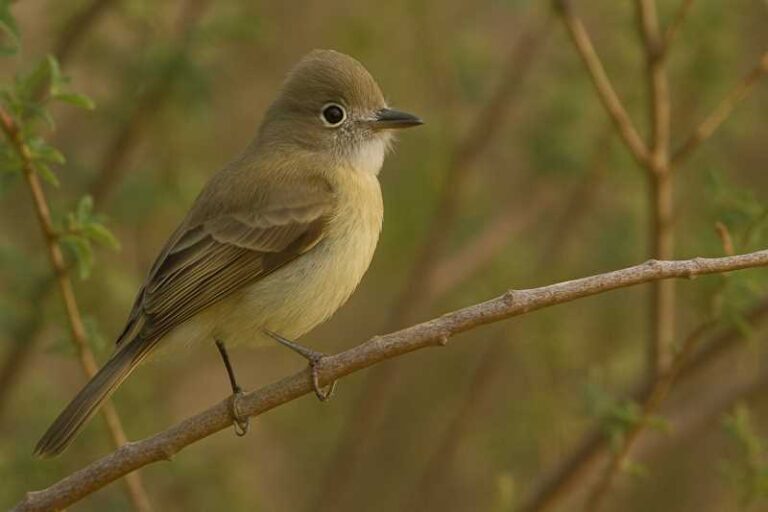
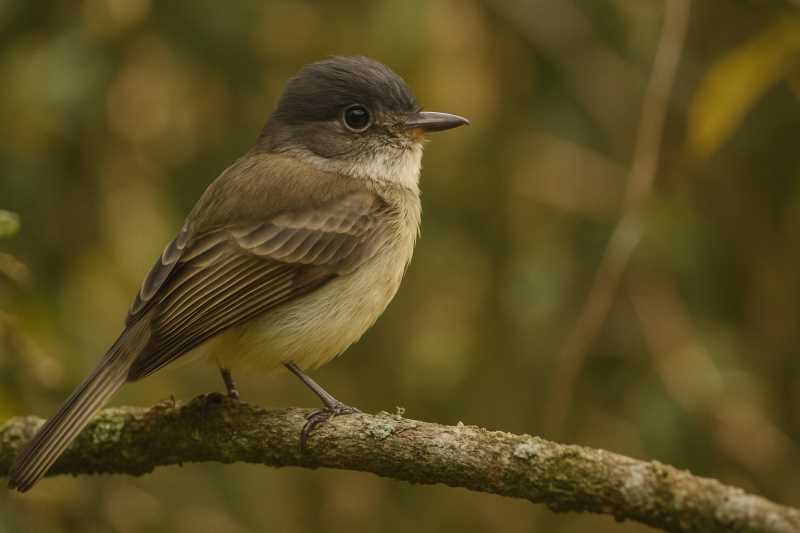
True to its name, the Unadorned Flycatcher lacks the ornate plumage that many of its relatives exhibit. Instead, it sports a modest, olive-brown coloration on its upperparts, with a paler, yellowish hue on the underparts. This subdued coloring aids in camouflage, allowing the bird to blend seamlessly into its leafy surroundings.
Despite its unassuming appearance, the Unadorned Flycatcher is a master of aerial maneuvers. Its compact body, measuring approximately 12 centimeters in length, is well-suited for agile flight, enabling it to adeptly pursue and capture insects mid-air. The bird’s bill is relatively short and broad, perfectly adapted for snatching prey during these aerial pursuits.
Behavior and Diet
The Unadorned Flycatcher is an insectivore, primarily feeding on a variety of insects and small arthropods. It often employs a ‘sit-and-wait’ hunting strategy, perching silently on a branch before launching into a swift, acrobatic flight to catch its prey. This behavior is typical of many flycatcher species, highlighting their remarkable adaptation to their ecological niche.
Socially, the Unadorned Flycatcher is generally solitary or found in pairs, especially during the breeding season. It is known for its quiet demeanor, seldom vocalizing except for a series of soft calls that serve as communication between mates or signaling its presence to other birds in the vicinity.
Breeding and Nesting
During the breeding season, which corresponds with the rainy season in the Andes, the Unadorned Flycatcher becomes more active. Pairs will establish and defend small territories where they build their nests. The nest is typically a cup-shaped structure, constructed with twigs, moss, and other plant materials, and is well-hidden among the dense foliage.
Females usually lay two to three eggs, which are incubated for about two weeks before hatching. Both parents share the responsibility of feeding and caring for the young, which fledge the nest around three weeks after hatching. The commitment to parental duties is a testament to the species’ investment in the survival of their offspring.
Conservation Status
Currently, the Unadorned Flycatcher is classified as a species of Least Concern by the International Union for Conservation of Nature (IUCN). However, like many species that inhabit the cloud forests of the Andes, it faces threats from habitat loss due to deforestation and agricultural expansion. Conservation efforts aimed at preserving these critical habitats are essential to ensure the continued survival of this and many other species.
The Appeal of the Unadorned Flycatcher
While the Unadorned Flycatcher may not capture the immediate attention of those seeking vibrant plumage or complex songs, it nonetheless represents a fascinating component of the Andean ecosystem. Its subtle beauty, adaptability, and specialized ecological role make it a worthwhile subject of admiration and study.
In conclusion, the Unadorned Flycatcher exemplifies the intricate balance of nature in the Andean cloud forests. By understanding and appreciating such species, we can better appreciate the complexity of ecological interactions and the importance of preserving these environments for future generations. The Unadorned Flycatcher, though modest in appearance, is undeniably a jewel of the Andes, deserving of our attention and conservation efforts.
Related posts