Introduction
Trujillo’s Yellow Bat (Scotophilus trujilloi) is a fascinating species within the vesper bat family, known for its distinct yellowish fur and unique behavioral traits. This bat species, identified relatively recently, has garnered interest from both bat enthusiasts and conservationists. Its distinctive appearance and ecological role make it an important part of its native ecosystem. Understanding the various aspects of Trujillo’s Yellow Bat can provide insights into the biodiversity of the regions it inhabits and the broader implications for bat conservation worldwide.
Physical Description
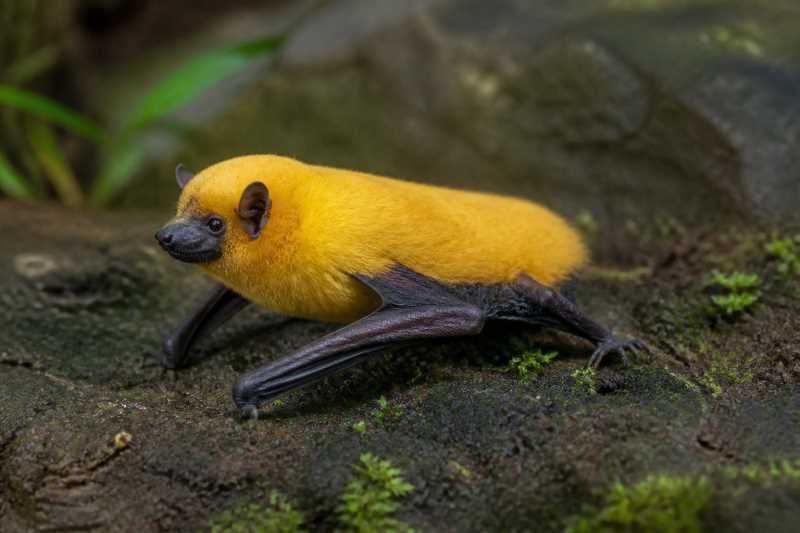
Trujillo’s Yellow Bat is easily recognizable by its vibrant yellowish-brown fur, which provides excellent camouflage in its natural habitat. This species has a medium-sized body, with an average length ranging from 9 to 12 cm and a wingspan of approximately 35 cm. The fur on its back is a rich golden-yellow, while the underparts are slightly paler, providing a striking contrast.
The bat’s ears are moderately large and rounded, aiding in its echolocation abilities. Its eyes are small, consistent with many nocturnal species, and its snout is short and broad. The wings are long and narrow, designed for swift and agile flight through dense forest canopies and open areas alike.
Range and Habitat
Trujillo’s Yellow Bat is primarily found in the tropical and subtropical regions of Central and South America. Its range extends from southern Mexico through Central America and into northern parts of South America, including countries like Colombia and Venezuela.
This species prefers habitats that offer a combination of forested areas and open spaces, such as savannas and agricultural landscapes. It is commonly found roosting in tree cavities, under large leaves, and occasionally in man-made structures. The bat’s adaptability to various habitats is a testament to its resilience, although it still faces threats from habitat destruction and fragmentation.
Behavior and Diet
Trujillo’s Yellow Bat is predominantly nocturnal, emerging at dusk to forage for food. It is an insectivorous species, with a diet that consists mainly of moths, beetles, and other flying insects. The bat’s echolocation capabilities are highly developed, allowing it to detect and capture prey with remarkable precision.
During the day, Trujillo’s Yellow Bat roosts in small colonies, often comprising family groups. These colonies offer protection and social interaction, which are vital for the bat’s survival and reproduction. Breeding typically occurs once a year, with females giving birth to one or two pups after a gestation period of approximately three months.
Identification Tips (Field Recognition Cues)
Identifying Trujillo’s Yellow Bat in the field requires attention to several key characteristics:
- Fur Coloration: Look for the distinctive yellowish-brown fur, which is brighter on the back and paler underneath.
- Size and Shape: Note the medium size, with a wingspan of around 35 cm, and its long, narrow wings.
- Flight Pattern: Observe the bat’s agile and swift flight, often low to the ground or through forest canopies.
- Echolocation Calls: Utilize bat detectors to listen for its high-frequency echolocation calls, typically in the range of 40 to 60 kHz.
- Roosting Behavior: Check tree cavities and under large leaves for roosting colonies during the day.
Conservation Status (With Threats and Protections)
The conservation status of Trujillo’s Yellow Bat is currently classified as "Near Threatened" by the IUCN. This classification is due to several factors threatening its population, including habitat destruction, deforestation, and agricultural expansion.
Threats:
- Habitat Loss: Deforestation for agriculture and urban development has led to significant habitat loss and fragmentation.
- Pesticides: The use of pesticides in agriculture can reduce insect populations, impacting the bat’s food supply.
- Climate Change: Altered weather patterns can affect the availability of suitable roosting and foraging sites.
Protections:
- Protected Areas: Some regions where the bat is found are designated as protected areas, helping to mitigate habitat loss.
- Conservation Programs: Local and international conservation organizations are working to preserve habitats and promote sustainable land use practices.
Efforts to preserve Trujillo’s Yellow Bat focus on habitat restoration, legal protections, and raising awareness about the species’ ecological role.
Frequently Asked Questions
- What is the diet of Trujillo’s Yellow Bat?
Trujillo’s Yellow Bat primarily feeds on insects, including moths, beetles, and other flying insects. Its diet is facilitated by its excellent echolocation abilities, allowing it to hunt efficiently at night.
- Where can Trujillo’s Yellow Bat be found?
This species is found in tropical and subtropical regions of Central and South America, ranging from southern Mexico to northern South America, including Colombia and Venezuela. It inhabits forested areas, savannas, and agricultural landscapes.
- How does Trujillo’s Yellow Bat contribute to its ecosystem?
As an insectivorous species, Trujillo’s Yellow Bat plays a crucial role in controlling insect populations, thus contributing to the balance of its ecosystem. It also aids in seed dispersal and pollination, supporting plant biodiversity.
- What are the main threats to Trujillo’s Yellow Bat?
The primary threats include habitat loss due to deforestation, agricultural expansion, and the use of pesticides. Climate change also poses a significant challenge by altering its natural habitat.
- How can I help in the conservation of Trujillo’s Yellow Bat?
Supporting conservation organizations, promoting sustainable land use practices, and raising awareness about the species are essential steps. Encouraging local efforts to protect natural habitats can also make a significant impact.
Trujillo’s Yellow Bat is a remarkable species with a vital ecological role. Protecting it requires a concerted effort from conservationists, local communities, and policymakers worldwide.
Related posts