Introduction
The Syrian Five-toed Jerboa, scientifically known as Scarturus aulacotis, is a fascinating small mammal that captivates the interest of naturalists and researchers alike. This remarkable creature is part of the Dipodidae family, which consists of jerboas, jumping rodents native to the arid regions of Asia and North Africa. With its unique adaptations for desert life and its distinctive mode of locomotion, the Syrian Five-toed Jerboa is an exemplary model of evolutionary ingenuity. This article explores the various aspects of this intriguing species, from its physical characteristics to its habitat, behavior, and conservation status.
Physical Description
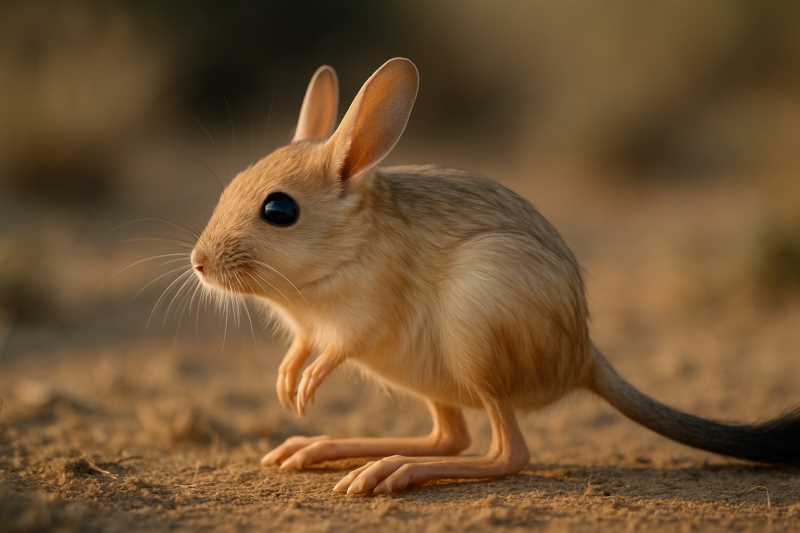
The Syrian Five-toed Jerboa is a small rodent with a body length ranging from 10 to 12 centimeters, excluding its long tail, which can measure up to 18 centimeters. The jerboa’s most striking physical feature is its disproportionately long hind legs, designed for jumping and enabling it to cover significant distances in a single leap. This adaptation is key to its survival in its harsh desert environment, allowing it to evade predators and travel efficiently in search of food.
The jerboa’s fur is typically sandy or pale brown, providing excellent camouflage against the desert backdrop. Its fur is soft and dense, offering protection against the extreme temperatures of its habitat. The body is supported by a thin, elongated tail with a tuft of black and white fur at the tip, which aids in balance during movement. The jerboa’s head is relatively small, with large eyes adapted for nocturnal activity and keen hearing that helps detect predators. Its forelimbs are short and equipped with five toes, which are used for digging and manipulating food.
Range and Habitat
The Syrian Five-toed Jerboa is primarily found in the Middle East, with its range extending across Syria, Jordan, Iraq, and parts of Saudi Arabia. It inhabits arid and semi-arid regions, preferring sandy and stony deserts, as well as semi-desert steppes. The jerboa is well-adapted to these harsh environments, where temperatures can fluctuate dramatically between day and night.
Jerboas construct intricate burrow systems that serve as shelter from predators and extreme weather conditions. These burrows are often located in areas with loose soil, which allows for easier excavation. The burrows consist of multiple chambers and entrances, providing the jerboa with escape routes and storage areas for food.
Behavior and Diet
The Syrian Five-toed Jerboa is primarily nocturnal, emerging from its burrow at night to forage for food. This behavior helps it avoid the intense heat of the day and reduces the risk of predation. Jerboas are solitary creatures, coming together only during the breeding season.
Their diet mainly consists of seeds, grasses, and desert vegetation. The jerboa is also known to consume insects, which provide an additional source of protein. Its foraging behavior is highly adapted to its environment; the jerboa can survive on minimal water intake, deriving moisture from its food and reducing the need for frequent drinking.
Identification Tips (Field Recognition Cues)
Identifying the Syrian Five-toed Jerboa in the wild can be a rewarding experience. Here are some tips to help you recognize this species:
- Look for the Jump: The jerboa’s distinctive hopping gait, facilitated by its long hind legs, is a key field recognition cue.
- Note the Tail: Observe the long, tufted tail, which is often held aloft as the jerboa moves.
- Listen for Nocturnal Activity: Jerboas are most active at night, so listen for sounds of movement in sandy or stony areas.
- Spot the Burrow Entrances: Look for small, round burrow entrances in sandy soil, indicative of jerboa habitation.
- Check for Camouflage: The jerboa’s fur blends with its surroundings, so keen observation is necessary to spot them.
Conservation Status (With Threats and Protections)
The Syrian Five-toed Jerboa is currently classified as "Least Concern" by the International Union for Conservation of Nature (IUCN). However, its population is subject to pressures that could impact its status in the future.
Threats:
- Habitat Destruction: Urbanization and agricultural expansion are leading to the degradation and fragmentation of the jerboa’s natural habitat.
- Climate Change: Altered weather patterns and increased desertification pose significant threats to the availability of suitable habitats.
- Predation: Natural predators, such as birds of prey and desert foxes, continue to impact jerboa populations.
Protections:
- Protected Areas: Some regions within the jerboa’s range have been designated as protected areas, helping to conserve vital habitats.
- Research and Monitoring: Continued study and monitoring of jerboa populations assist in understanding and mitigating threats.
Frequently Asked Questions
What adaptations help the Syrian Five-toed Jerboa survive in the desert?
The jerboa’s long hind legs allow it to leap great distances, aiding in predator evasion and efficient travel. Its fur provides camouflage and temperature regulation, while its burrow system offers shelter.
How does the Syrian Five-toed Jerboa find water in the desert?
The jerboa primarily derives moisture from its diet of seeds and plants, minimizing its need for direct water sources.
What is the breeding behavior of the Syrian Five-toed Jerboa?
Jerboas are solitary and only come together during the breeding season. Females typically give birth to one or two litters per year, with each litter consisting of two to four young.
How can I help conserve the Syrian Five-toed Jerboa?
Supporting conservation organizations and initiatives that focus on habitat preservation and research can contribute to the long-term survival of this species.
Are there any unique behaviors exhibited by the Syrian Five-toed Jerboa?
Yes, their nocturnal foraging and unique locomotion are fascinating behaviors that have adapted to their desert lifestyle.
Related posts