Introduction
The Spotted Linsang (Prionodon pardicolor) is a captivating and elusive mammal that is often overshadowed by more famous members of the carnivore family. This species, belonging to the Viverridae family, is a small carnivorous mammal native to the dense forests of Asia. Often mistaken for cats or small civets due to their sleek bodies and striking patterns, Spotted Linsangs are fascinating creatures with unique adaptations and behaviors. This article delves into the intriguing world of the Spotted Linsang, providing insights into their physical characteristics, habitat, behavior, and conservation status.
Physical Description
The Spotted Linsang is a slender, elongated mammal, with a body length ranging from 36 to 41 centimeters (14 to 16 inches) and a tail that can be as long as or longer than the body itself, measuring about 32 to 36 centimeters (12.5 to 14 inches). The average weight of an adult Spotted Linsang is between 0.6 to 1 kilogram (1.3 to 2.2 pounds).
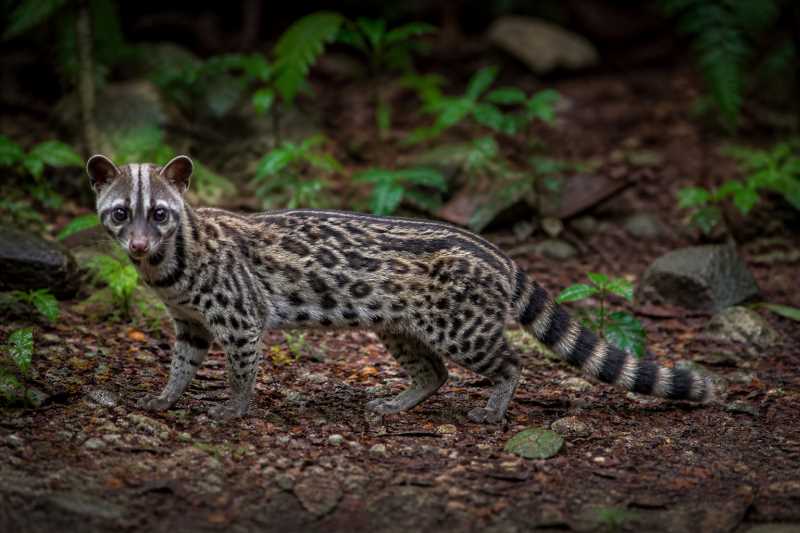
Their fur is short and dense, primarily beige or light tan, adorned with distinct dark brown to black spots that are aligned in rows along the body. This striking pattern provides excellent camouflage against the dappled light of their forest habitat. The tail is ringed with dark bands, adding to their distinctive appearance.
The Spotted Linsang has a pointed snout, small rounded ears, and sharp retractable claws, adaptations that are ideal for their arboreal lifestyle. Their sharp teeth and strong jaws are well-suited for a carnivorous diet, allowing them to efficiently hunt and consume prey.
Range and Habitat
The Spotted Linsang is native to the forests of Southeast Asia, with their range extending across countries such as India, Bhutan, Nepal, Myanmar, Thailand, Laos, Vietnam, and southern China. They are primarily found in dense tropical and subtropical forests, including both evergreen and deciduous forests.
These creatures prefer habitats that offer plenty of tree cover, as they are adept climbers and spend a significant amount of time in the trees. They are also found at varying altitudes, from lowland forests to mountainous regions, adapting to the diverse environments that Southeast Asia offers.
Behavior and Diet
Spotted Linsangs are primarily nocturnal, meaning they are most active during the night when they hunt and explore their territory. They are solitary animals, and each individual maintains a defined home range, which they mark with scent glands to communicate with other linsangs.
Their diet is carnivorous, consisting mainly of small mammals, birds, reptiles, and insects. They are opportunistic hunters, using their keen senses and agility to track and capture prey. The retractable claws and sharp teeth of the Spotted Linsang make them efficient predators, allowing them to tackle a variety of prey within their forest habitat.
Identification Tips (Field Recognition Cues)
Identifying the Spotted Linsang in the wild can be challenging due to their elusive nature and excellent camouflage. However, there are several field recognition cues that can aid in their identification:
- Distinctive Coat Pattern: Look for the characteristic spotted pattern on a beige or light tan background, with rows of dark spots that distinguish them from similar species.
- Long, Ringed Tail: The tail, often longer than the body, is ringed with dark bands and serves as a key identification feature when observing these creatures in the trees.
- Size and Shape: The slender, elongated body and pointed snout of the Spotted Linsang differentiate it from more robust carnivores.
- Arboreal Movement: Observing their agile movement through the trees, especially at night, can also indicate the presence of a Spotted Linsang.
Conservation Status (With Threats and Protections)
The International Union for Conservation of Nature (IUCN) currently classifies the Spotted Linsang as ‘Least Concern.’ However, like many forest-dwelling species, they face several threats that could impact their populations if not managed effectively.
Threats:
- Habitat Loss: Deforestation for agriculture, logging, and urban development is the primary threat to the Spotted Linsang, reducing the available habitat for these arboreal mammals.
- Hunting and Poaching: Although not a primary target, Spotted Linsangs are occasionally hunted for their fur or captured for the illegal pet trade.
- Environmental Changes: Climate change and environmental degradation can alter the ecosystems that support Spotted Linsangs, making it difficult for them to find suitable habitats and prey.
Protections:
- Many countries within the Spotted Linsang’s range have established protected areas and national parks that offer a refuge for these mammals.
- Conservation efforts aimed at preserving forest habitats indirectly benefit Spotted Linsangs by maintaining the ecosystems they depend on.
- Continued research and monitoring can help assess population trends and inform conservation strategies to ensure their long-term survival.
Frequently Asked Questions
What is the diet of the Spotted Linsang?
The Spotted Linsang primarily feeds on small mammals, birds, reptiles, and insects. They are skilled hunters, using their sharp claws and keen senses to capture a variety of prey in their forest habitat.
How does the Spotted Linsang adapt to its arboreal lifestyle?
Adaptations such as retractable claws, a long tail for balance, and a slender body help the Spotted Linsang navigate through trees with agility and precision, making them adept climbers.
Are Spotted Linsangs endangered?
Currently, the Spotted Linsang is classified as ‘Least Concern’ by the IUCN, but they face threats such as habitat loss and hunting, which could impact their populations in the future.
Where can I find Spotted Linsangs in the wild?
Spotted Linsangs are found in dense tropical and subtropical forests across Southeast Asia, including countries like India, Nepal, Myanmar, Thailand, and southern China.
What is the main threat to the Spotted Linsang?
The primary threat to the Spotted Linsang is habitat loss due to deforestation for agriculture, logging, and urban development, which reduces their natural habitat and resources.
Related posts